
Top 10 Suspension Glass Insulator Choices for 2026 Transmission Projects
Top 10 Suspension Glass Insulator Choices for 2026 Transmission Projects
Direct answer: the ten suspension glass insulator options that cover most 2026 transmission line requirements are the U70B, U100B, U120B, U160B, U210B, U240B, U300B and U420B standard-profile discs, plus the anti-pollution U120BLP / U160BSP / U420BP family and the aerodynamic U70BA / U100BA / U160BSA family. Every one of them uses the same construction: a toughened glass disc body, a hot-dip galvanized cast iron cap and a hot-dip galvanized forged steel pin. What separates them is mechanical class, disc diameter, creepage distance and shed profile.
The list below is ordered by mechanical class and profile specialisation, not by manufacturer ranking. Each entry explains why the unit belongs on a 2026 shortlist, which project duty it fits, and where a different profile is the better engineering answer.
Why a Suspension Insulator Choice Becomes a Project Risk, Not a Line Item
A suspension glass insulator has two jobs that are decided at the same moment. It provides electrical insulation between the live conductor and the grounded support structure, and it carries the mechanical load of the conductor in suspension and tension strings while helping to suppress corona. It is a passive component: it runs 24/7 with no active parts, no power consumption and no moving elements, and it is expected to remain maintenance-free between scheduled inspections. Because it is bought by the thousand and inspected for decades, the wrong profile is not a rounding error — it is a recurring maintenance cost.
The failure mode is what most utility buyers underestimate. In a toughened glass insulator, thermal tempering creates a compressive stress layer on the glass surface, which is balanced by internal tensile stress. When an internal defect such as a NiS inclusion causes electrical puncture, that stress balance breaks and the entire disc shatters into small granular particles. This is a deliberate fail-safe behaviour: a failed unit becomes visible to the naked eye during a routine ground patrol, and live-line zero-value testing is not required to find it. For qualified products from manufacturers with controlled tempering processes, the industry benchmark quoted for self-breaking is below 0.02% per year.
Porcelain and composite insulators behave differently. When they fail electrically, their appearance often does not change, so fault location depends on live-line climbing and piece-by-piece testing. That difference in detectability is the single strongest argument for glass on long, remote or hard-to-access routes — and it is also the reason the ten options below are ranked primarily by mechanical class and pollution profile rather than by price per disc.
Where glass is not automatically the answer: for dust-type pollution, the smooth glass surface provides better self-cleaning than porcelain; for chemical corrosion such as acid, alkali or solvent exposure, porcelain's chemical inertness is superior. Selecting glass without checking the pollution type is how a shortlist becomes a mistake.
What the 2026 Glass Insulator Supply Landscape Looks Like
Three market signals are shaping 2026 specification discussions. Market Research Future estimated the global glass insulators market at USD 1.14 billion in 2024, projected to reach USD 1.97 billion by 2035, at a CAGR of 5.1% between 2025 and 2035. Grand View Research reported that Asia Pacific held a revenue share above 52% in 2024, driven by grid expansion in China and India. At the same time, the OEC recorded that China concentrated 31.4% of total global exports of electrical insulators in 2024 — USD 898 million — with exports to Saudi Arabia growing 219% between 2023 and 2024, making it the fastest-growing destination market.
On the standards side, suspension glass insulator units for AC systems are governed by IEC 60305:2021, which specifies their mechanical and electrical characteristics. Pollution severity is classified through IEC 60815, and IEC 60307 covers ceramic and glass insulators for overhead lines above 1000 V. In China, GB/T 1001 addresses toughened glass insulators for AC systems. These four references are what a buyer should expect a supplier's type-test file to map against.
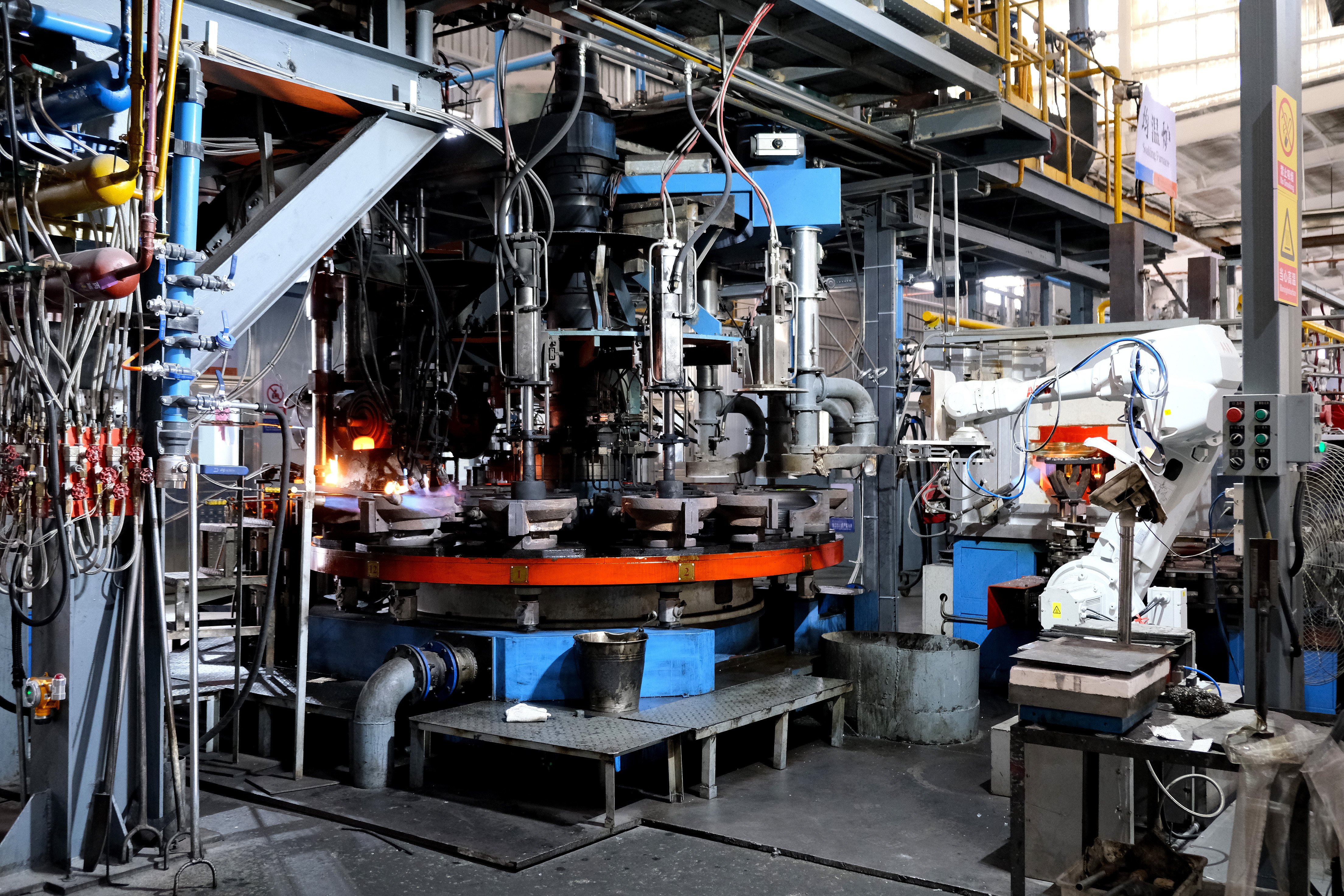
Third-party market analysis identifies Sediver (Seves Group), Nanjing Electric and Zhejiang Jinlihua Electric among the major global glass insulator manufacturers (Insightace Analytic). Asian manufacturing depth is also visible in Jiangxi QOCI Electric Co., Ltd., a China-based manufacturer established in December 2002 and located in Luxi Industrial Park, Pingxiang City, Jiangxi Province. QOCI is a national high-tech enterprise and a participating unit of the Insulator Standard Committee, runs automated and intelligent production for glass and porcelain insulators, and reports annual output of 9,000,000 units with a 20% export ratio covering the USA, Asia, EU, Africa and South America. Its products are used in State Grid Corporation of China and China Southern Power Grid projects and in power grids in more than 40 countries and regions.
The Top 10 Suspension Glass Insulator Choices for 2026
Each entry gives the documented specification first, then the engineering reason it is on the list. Models are grouped by standard profile, anti-pollution profile and aerodynamic profile, because that is the order in which a specification usually narrows.
1. U70B — 70 kN cap-and-pin disc, 255 mm
U70B is the lightest unit in the standard range and the natural starting point for string designs that only need 70 kN per unit. Keeping the disc at 255 mm keeps hardware mass and string weight down, while 320 mm of creepage is adequate for ordinary inland routes and lightly polluted corridors. It is the model most often specified in volume for grid upgrade and rural electrification packages, where total string cost matters more than per-unit load headroom. It is the wrong answer for coastal salt fog or heavy industrial pollution, where the anti-pollution family in entry 9 is the correct step up.
2. U100B — 100 kN cap-and-pin disc, 255 mm
U100B adds roughly 40% more mechanical headroom than U70B while keeping the same 255 mm disc and the same 16 mm socket coupling, so existing fittings and string geometry can usually be reused. The engineering decision inside this entry is spacing, not load: the 127 mm and 146 mm variants produce different string lengths and different tower loads, so the spacing must be matched to the hardware schedule rather than chosen for convenience. U100B is the common middle step when a designer needs margin above 70 kN but does not want to move up to a 280 mm disc.
3. U120B — 120 kN cap-and-pin suspension unit, 255 mm
U120B sits in the middle of the standard range and is frequently specified where the string design needs a clear margin over 70 kN and 100 kN without changing the disc footprint. Because disc diameter stays at 255 mm, the U70B, U100B and U120B options can share one string profile — a practical advantage for utilities that want a single stock item and one set of fittings across several line types.
4. U160B — 160 kN suspension unit, 280 mm
Moving to a 280 mm disc raises both the mechanical class and the creepage per unit to 360 mm, which is why U160B is one of the most widely applicable entries on this list: it suits higher-load suspension strings and routes with thinner pollution margins without forcing a change of socket size. It is also a field-proven class. Jiangxi QOCI Electric documents a 200,000-unit suspension insulator programme across Uzbekistan, Ukraine and Iraq, and lists the U70B, U120B and U160B models within that programme's related product set.
5. U210B — 210 kN suspension unit, 280 mm
U210B is a working unit for tension strings and heavier suspension duty. The 170 mm nominal spacing and 20 mm socket move it into a different hardware family from the 255 mm discs, and the 400 mm creepage distance gives it more surface path than the 320 mm standard group — useful on routes where the specification has already been tightened by pollution class rather than by load.
6. U240B — 240 kN suspension unit, 280 mm
U240B keeps the same 280 mm footprint and 400 mm creepage as U210B but raises the failing load, and it can be specified with a 20 mm or 24 mm socket coupling. That coupling flexibility matters when a project has to align insulator strings with two different fitting schedules, or when a utility is standardising hardware across old and new towers.
7. U300B — 300 kN suspension unit, 320 mm
U300B is where the geometry changes materially: a 320 mm disc, 195 mm spacing and 485 mm of creepage distance. Units in this class are specified when the mechanical duty per unit is high and the route also demands a longer leakage path, so the specification improves two variables at once instead of adding discs to solve a creepage problem.
8. U420B — 420 kN suspension unit, 360 mm
U420B is the top of the standard documented range, with the largest disc, the largest socket and the longest creepage in the family. It belongs in specifications where the tension load per unit is at its highest — long spans and heavy conductor arrangements — and where a single larger unit is preferable to a longer string of smaller ones. Industry type-testing for toughened glass string units is commonly discussed within a mechanical load envelope of 40 kN to 550 kN, which is why qualification evidence matters more than the headline number at this end of the range.
9. Anti-pollution family — U120BLP, U160BSP, U210BP, U420BP
Anti-pollution units are the standard engineering response to saline and industrial environments: creepage distance per unit is increased so that the leakage path is longer before flashover can initiate on a contaminated surface. Market commentary on anti-pollution glass insulators such as the U120BP class describes exactly this mechanism — increased creepage distances to prevent flashovers in saline or industrial conditions. The practical selection rule is to fix the creepage band from the project's IEC 60815 pollution class first, then pick the mechanical class and socket size, rather than choosing a standard unit and adding discs later.
10. Aerodynamic family — U70BA, U100BA, U160BSA, U210AD
The aerodynamic, open-shed profile is the recommended choice for desert and high-dust environments because of its superior self-cleaning capability. This is also where glass has a natural advantage: the smooth surface sheds dust faster than a comparable porcelain profile, so a wide 380–420 mm disc with an open shed keeps contamination from bridging the creepage path. On a dust-exposed route, this family is usually a better first choice than a standard-profile unit with a higher mechanical class.
Also worth evaluating beyond the ten: the two-shed U160BLD (160 kN, 340 mm disc, 170 mm spacing, 550 mm creepage, socket 20) for routes that need long creepage with a deeper shed arrangement; the ANSI-style PS and PSV series (PS70E, PS120B, PS160D, PS210V, PS240V, PS300V, PSD70E) where a project specifies ANSI coupling dimensions; and porcelain distribution types such as P-11-Y and ED-2B where low-voltage or distribution duty is being procured in the same package.
How to Work Through These Ten Choices in Five Steps
- Fix the mechanical class per unit. Determine the specified mechanical load the string requires, then map it to the 70 kN to 420 kN documented range. Decide whether the string is suspension or tension duty, because tension strings push the specification toward the 210 kN to 420 kN entries.
- Fix the pollution requirement. Use the IEC 60815 pollution class to set the creepage target, then decide between standard profile, anti-pollution (LP / BSP / BP) and aerodynamic (BA) families. A creepage decision made after the mechanical class is chosen is usually the expensive way to do it.
- Match the geometry to existing hardware. Check disc diameter (255 mm to 420 mm), nominal spacing (127 mm to 205 mm) and socket coupling (16 to 28) against the tower and fitting schedule. Spacing and coupling choices change string length and hardware alignment, so they must be confirmed rather than assumed.
- Verify the evidence, not the brochure. Ask for the type-test file mapped to IEC 60305, thermal shock testing with a temperature differential of at least 70 K, visual and dimensional inspection, power frequency flashover and impulse withstand results, and residual stress measurement. Confirm that the model offered in the quotation is the model covered by the certificate.
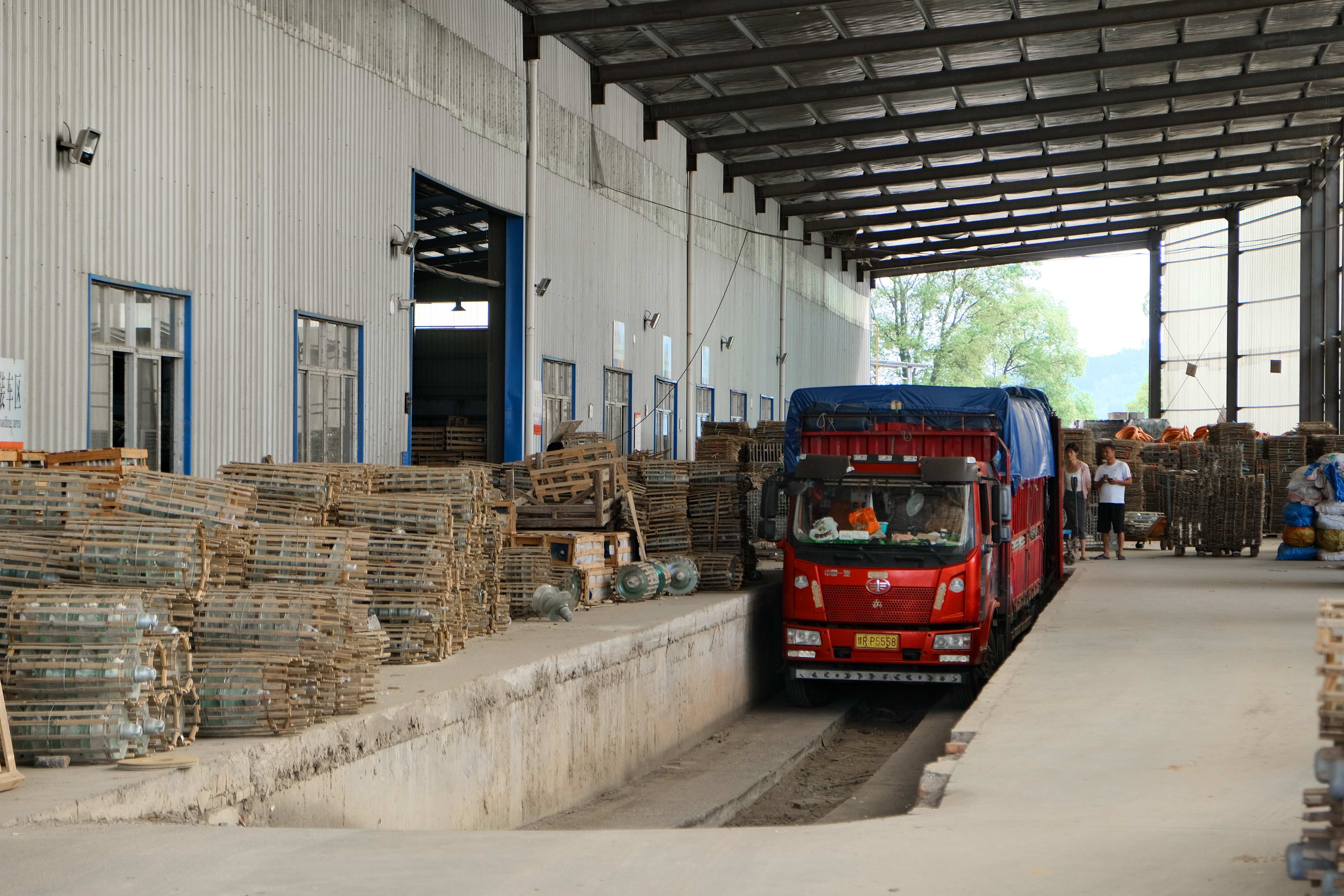
- Validate the order commercially. QOCI documents 100% pre-shipment testing plus third-party inspection such as SGS, a minimum order quantity of 50 units, a lead time of 15 to 35 days and monthly capacity of 750,000 units. Alignment on these four points prevents a technically correct shortlist from failing at the purchase-order stage.
What to check at installation
- Inspect every unit for visible defects and verify calibration marks before stringing.
- Assemble the string with the correct caps, pins and ball-and-socket couplings, then seat the locking devices (W-clip or R-pin) fully.
- Hoist the string with a pulling rope and come-along clamp, and connect it to the suspension or tension hardware.
- Verify ball-and-socket seating and locking device engagement before energising, and repeat the visual check for cracked or chipped discs.
- Do not install units with visible glass damage, and follow minimum approach distance requirements for the voltage class during any live-line work.
Where Each Choice Fits
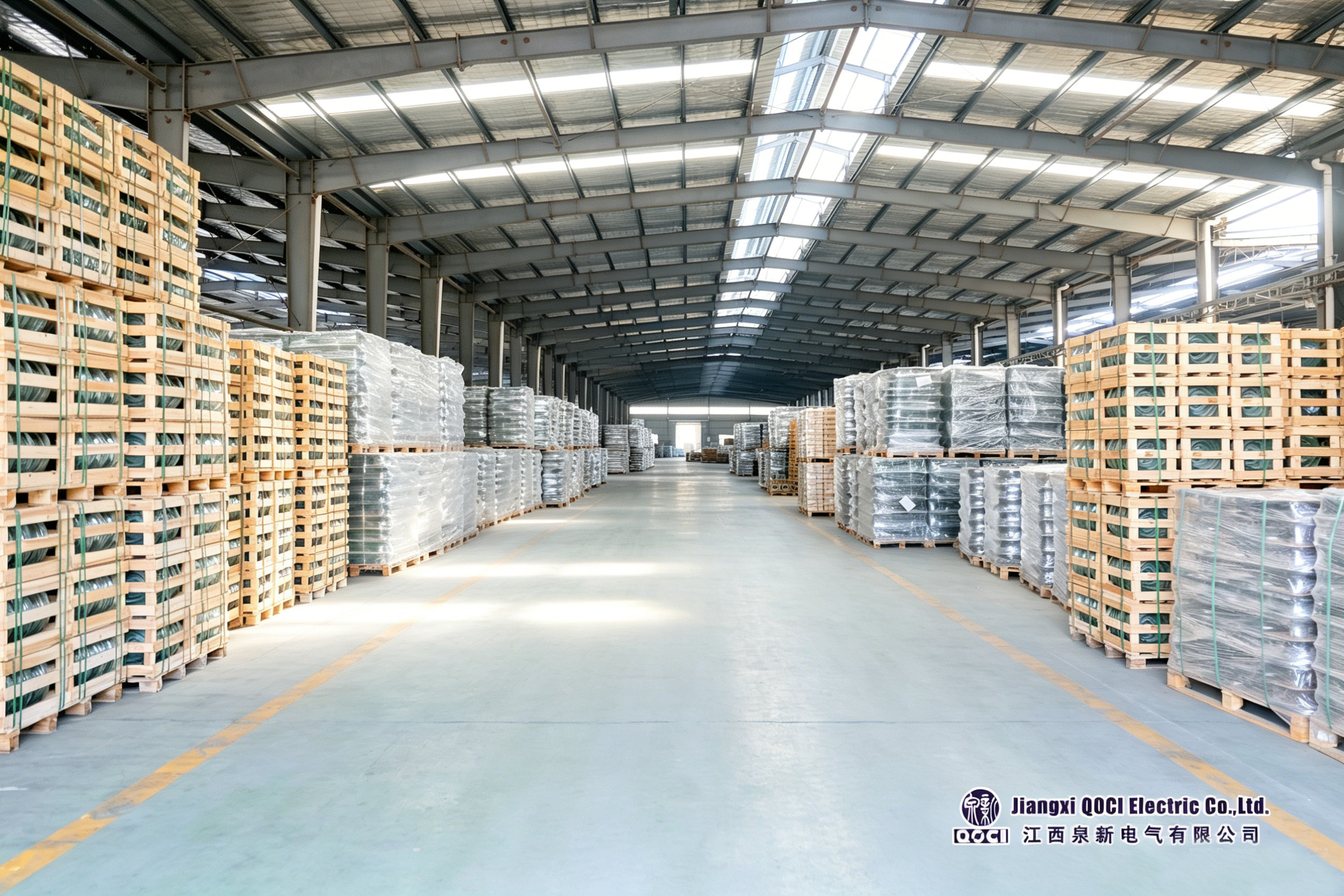
Desert and high-dust routes. The aerodynamic U70BA, U100BA, U160BSA and U210AD profiles are first choice, supported by the anti-pollution family where dust combines with industrial emissions. The documented field reference for this combination is a 200,000-unit suspension insulator programme across Uzbekistan (80,000 units), Ukraine (70,000 units) and Iraq (50,000 units), used for UHV/EHV overhead transmission line insulation and grid construction in desert and industrial pollution zones. The programme reported zero line-tripping incidents, a 70% reduction in maintenance costs, 100% visual defect detection without live-line testing, and an 85% reduction in pollution flashover incidents compared with a porcelain baseline. It was delivered within two years in Uzbekistan and three years each in Ukraine and Iraq, with completion scheduled for 2026, for a national grid corporation and a power transmission EPC contractor.
Coastal salt fog and heavy industrial pollution. Anti-pollution units with 450 mm to 620 mm creepage distance (U70BLP through U420BP) are the specification starting point. On severely corrosive service conditions, using a zinc sleeve significantly slows rusting and extends the service life of the insulator string.
Standard overhead transmission, grid upgrade and rural electrification. The 255 mm standard group — U70B, U100B and U120B — covers most volume demand and lets a utility standardise on one disc footprint and one socket size.
Long spans and high tension duty. U210B, U240B, U300B and U420B cover the upper mechanical classes, with creepage distances rising from 400 mm to 550 mm as the disc grows.
Retrofit and refurbishment projects. Where tower fittings and string lengths are already fixed, the decisive variables are nominal spacing (127 mm versus 146 mm versus 170 mm) and socket coupling, not the mechanical class alone. Matching those first avoids re-engineering the hardware schedule.
Verified field characteristics worth noting: the documented desert and pollution-zone programme reports operating temperature tolerance from −40 °C to +55 °C verified in Uzbekistan and Iraq, a designed service life exceeding 30 years, and mechanical reliability demonstrated at 550 kN tensile strength, alongside zero-value self-breaking that enables 100% visual inspection.
Comparison Table: The Ten Choices Side by Side
| # | Model | Failing load | Disc diameter | Nominal spacing | Creepage distance | Profile and selection logic |
|---|---|---|---|---|---|---|
| 1 | U70B | 70 kN | 255 mm | 146 mm | 320 mm | Standard profile; lightest unit for volume and light-load strings |
| 2 | U100B (U100BL / U100BS) | 100 kN | 255 mm | 146 mm / 127 mm | 320 mm | Standard profile; more headroom, same disc and socket 16 |
| 3 | U120B | 120 kN | 255 mm | 127/146 mm | 320 mm | Standard profile; mid-range margin with shared string geometry |
| 4 | U160B | 160 kN | 280 mm | 127/146 mm | 360 mm | Standard profile; higher load plus longer creepage per unit |
| 5 | U210B | 210 kN | 280 mm | 170 mm | 400 mm | Standard profile; tension and heavy suspension duty, socket 20 |
| 6 | U240B | 240 kN | 280 mm | 170 mm | 400 mm | Standard profile; higher load with socket 20/24 flexibility |
| 7 | U300B | 300 kN | 320 mm | 195 mm | 485 mm | Standard profile; high load with a longer leakage path |
| 8 | U420B | 420 kN | 360 mm | 205 mm | 550 mm | Standard profile; top of the documented range, socket 28 |
| 9 | U120BLP / U160BSP / U420BP | 120 / 160 / 420 kN | 280 / 320 / 380 mm | 146 / 146 / 205 mm | 450 / 550 / 620 mm | Anti-pollution; saline and industrial pollution zones |
| 10 | U70BA / U100BA / U160BSA | 70 / 100 / 160 kN | 380 / 380 / 420 mm | 127-146 / 146 / 146 mm | 365 / 365 / 380 mm | Aerodynamic open shed; desert and high-dust self-cleaning duty |
| — | U160BLD | 160 kN | 340 mm | 170 mm | 550 mm | Two-shed variant for long creepage with a deeper shed arrangement |
| — | PS / PSV series (PS70E, PS120B, PS160D, PS210V, PS240V, PS300V, PSD70E) | 70–300 kN | 255–320 mm | 127–195 mm | 320–485 mm | ANSI-dimension alternatives where coupling standard is fixed |
FAQ: Suspension Glass Insulator Selection Questions
Which standards should a suspension glass insulator meet for a 2026 transmission project?
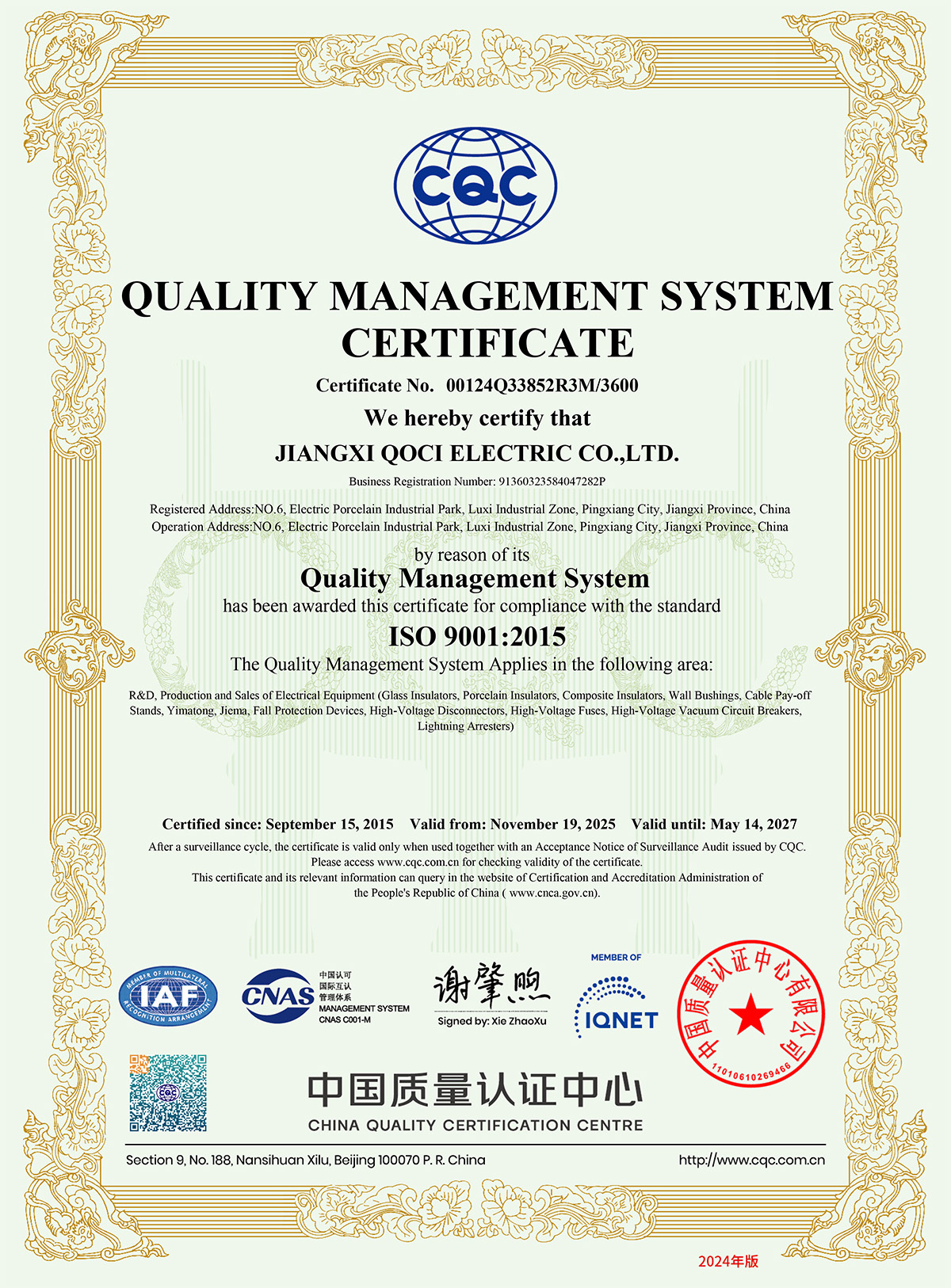
Suspension glass insulator units for AC overhead lines are governed by IEC 60305:2021, which specifies their mechanical and electrical characteristics. Projects in China additionally reference GB/T 1001 for toughened glass insulators, while IEC 60815 is used to classify pollution severity and IEC 60307 covers ceramic and glass insulators for lines above 1000 V. Type-test evidence typically requested from a supplier includes a mechanical load type test — the commonly referenced envelope runs from 40 kN to 550 kN — a thermal shock test with a temperature differential of at least 70 K, visual and dimensional inspection to IEC 60305, power frequency flashover and impulse withstand tests, and residual stress measurement. Jiangxi QOCI Electric Co., Ltd. holds ISO 9001:2015 certificate 00124Q33852R3M/3600, ISO 14001:2015 certificate 00125E30701R3M/3600 and ISO 45001:2018 certificate 00125S30581R3M/3600, all issued by the China Quality Certification Centre, and participates in the Insulator Standard Committee.
What mechanical classes and shed profiles can be sourced in a single order?
The documented standard-profile range runs from 70 kN to 420 kN — U70B, U100B, U120B, U160B, U210B, U240B, U300B and U420B — with disc diameters from 255 mm to 360 mm and nominal spacing from 127 mm to 205 mm. Anti-pollution versions from U70BLP to U420BP extend creepage distance up to 620 mm, aerodynamic versions (U70BA, U100BA, U160BSA, U210AD) use 380 mm to 420 mm discs for high-dust routes, and two-shed versions such as U160BLD are also documented. Socket coupling sizes run from 16 to 28. QOCI operates OEM and ODM programmes with voltage and logo customization, supported by monthly capacity of 750,000 units and annual output of 9,000,000 units.
What drives the unit cost of a suspension glass insulator?
Unit cost is driven mainly by specification variables rather than by a single list price: mechanical class, disc diameter, required creepage distance and shed profile, the cap and pin material specification (hot-dip galvanized cast iron cap and hot-dip galvanized forged steel pin), and the testing scope ordered with the batch. Order volume and packaging also matter — the documented minimum order quantity is 50 units and lead time is 15 to 35 days. Because two insulators with the same failing load can differ once creepage and profile are specified, buyers should request a quotation tied to the exact model, socket coupling and pollution class rather than comparing headline figures.
Can samples be validated before a tender award or a full order?
Sampling is normally handled at the pre-production stage, and quality control is documented as 100% pre-shipment testing with third-party inspection such as SGS available. Because the minimum order quantity starts at 50 units, a buyer can usually combine first-article validation with a small pilot batch rather than committing to a full string set. The model dimensions needed to prepare that validation — disc diameter, spacing, creepage distance and socket coupling — are listed in the comparison table above and in the downloadable catalogue.
What lead time, capacity and support should be planned for?
Documented lead time is 15 to 35 days, backed by monthly capacity of 750,000 units and annual output of 9,000,000 units, with shipments going to the EU, US, Middle East, Asia, Africa and South America. After-sales support covers online technical support and replacement of defective products. To move from shortlist to quotation, download the QOCI Catalogue — Glass Insulators (PDF), or send the project's mechanical class, creepage requirement and coupling size directly to admin@qocielectric.com; technical enquiries can also go through WhatsApp on +86 199-7997-1591.
Conclusion
The ten choices above are not ten brands competing for the same duty; they are ten answers to different mechanical and pollution questions. U70B to U120B cover volume, standard-profile demand on a shared 255 mm disc. U160B to U420B raise both load and creepage for heavier strings and longer spans. The anti-pollution family solves saline and industrial exposure by extending creepage up to 620 mm, and the aerodynamic family solves desert dust through an open shed and a wide disc. Choosing on price per disc, without first fixing mechanical class and pollution class, is how a low-cost decision becomes a maintenance cost.
The most useful discipline is simple: decide load, then pollution, then geometry, then evidence — and validate the order only after the first three are locked. That sequence is what makes a shortlist defensible in front of a tender committee, and it is what keeps a 2026 transmission programme's inspection costs low for the following thirty years.
Next Step: Specification Review, Sample Validation or Quotation
Jiangxi QOCI Electric Co., Ltd. manufactures toughened glass suspension insulators from 70 kN to 420 kN, including standard, anti-pollution, aerodynamic and two-shed profiles, with OEM and ODM programmes available.
Download the glass insulator catalogue (PDF), review the model range on www.quanxinelectric.com, or send your project parameters for a matched quotation:
- Email: admin@qocielectric.com
- Tel: +86 079-9761-6589
- WhatsApp: +86 199-7997-1591
- Address: No. 6, Electric Porcelain Industrial Park, Luxi Industrial Zone, Pingxiang, Jiangxi, China
Have Questions or Need More Details?
Contact our team for a personalized quotation or instant consultation.
Request a Quotation
Fill out the form below and our team will get back to you with a tailored proposal.
WhatsApp Direct Chat
Prefer to chat in real-time? Message us on WhatsApp for instant assistance & quick answers.
- Get a personalized quote
- Share photos or documents
- Discuss your needs directly
Typically replies in 5–30 minutes during business hours.