
Suspension Glass Insulator Tenders Stalled? Fix Purchasing Terms & Acceptance Criteria
Suspension Glass Insulator Tenders Stalled? Fix Purchasing Terms & Acceptance Criteria
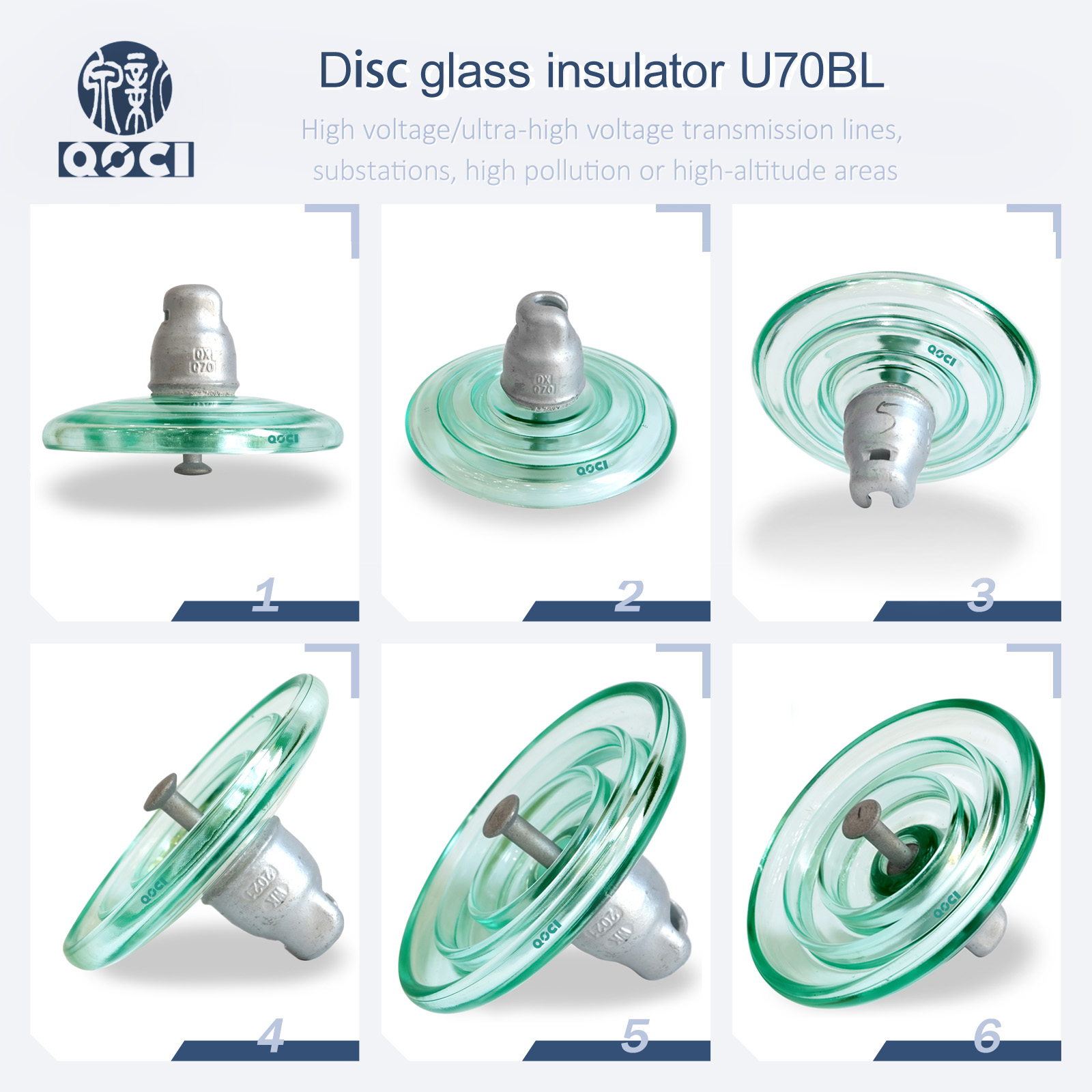
Most delayed insulator tenders do not fail on price. They fail on wording. A utility publishes a line item that reads suspension glass insulator, toughened, for overhead line, then receives quotations that cannot be compared, because one supplier prices a 70 kN unit and another prices a 210 kN unit, and the document never states which one the design requires.
That is a document problem, not a market problem. Two questions sit underneath it: what exactly is being purchased, and which acceptance criteria will judge what arrives. The first belongs in the purchasing terms. The second belongs in the inspection and acceptance section. When either one stays vague, the package returns to engineering, clarifications run in a second round, and the bid evaluation date moves.
This guide deals with the procurement scenario that produces that delay, and with the two levers that resolve it: a purchasing-terms clause set that defines the purchased object at unit level, and an acceptance section that converts the glass insulator specification into tests, samples and judgement rules.
Why a Glass Insulator Tender Stalls
A stalled suspension glass insulator tender usually contains three specific gaps. None of them is technical. All of them are fixable before the document is issued.
Gap 1: the line item names a category, not a product
"Suspension glass insulator" describes a family, not a unit. Within that family, mechanical failing load runs from 70 kN to 420 kN, nominal disc diameter from 255 mm to 360 mm, nominal spacing from 127 mm to 205 mm, creepage distance from 320 mm to 550 mm on standard profiles, and socket coupling from 16 to 28. Two suppliers can both answer the line item correctly and still be quoting for different pieces of hardware on different parts of a tower.
When the line item stops at the category, the buyer receives a price range instead of a comparison. Evaluation then has to rebuild the specification internally, which is where the schedule starts to move.
Gap 2: the acceptance section names a standard instead of a test
Citing IEC 60305:2021 tells a supplier that the mechanical and electrical characteristics of suspension glass insulator units for AC systems follow that standard. It does not tell either party which measurements will be taken, on how many units, against which limits, by whom, and what happens when a measured value falls outside the limit.
A supplier can comply with the standard and still fail the buyer's acceptance, because the standard defines characteristics while acceptance defines evidence. Treating the two as the same thing guarantees a dispute at pre-shipment.
Gap 3: ownership is split across three desks
Engineering writes the specification, sourcing writes the commercial terms, quality writes the inspection clause. The empty space between those three documents is usually discovered during evaluation, when a bidder asks a question that no single owner can answer. Each unanswered question becomes a clarification round, and each clarification round is a delay.
The cost of ambiguity is paid twice. Once when the tender is written loosely, and again when every bidder interprets the loose language in the way that suits their own stock and production line.
What a Suspension Glass Insulator Line Item Actually Contains
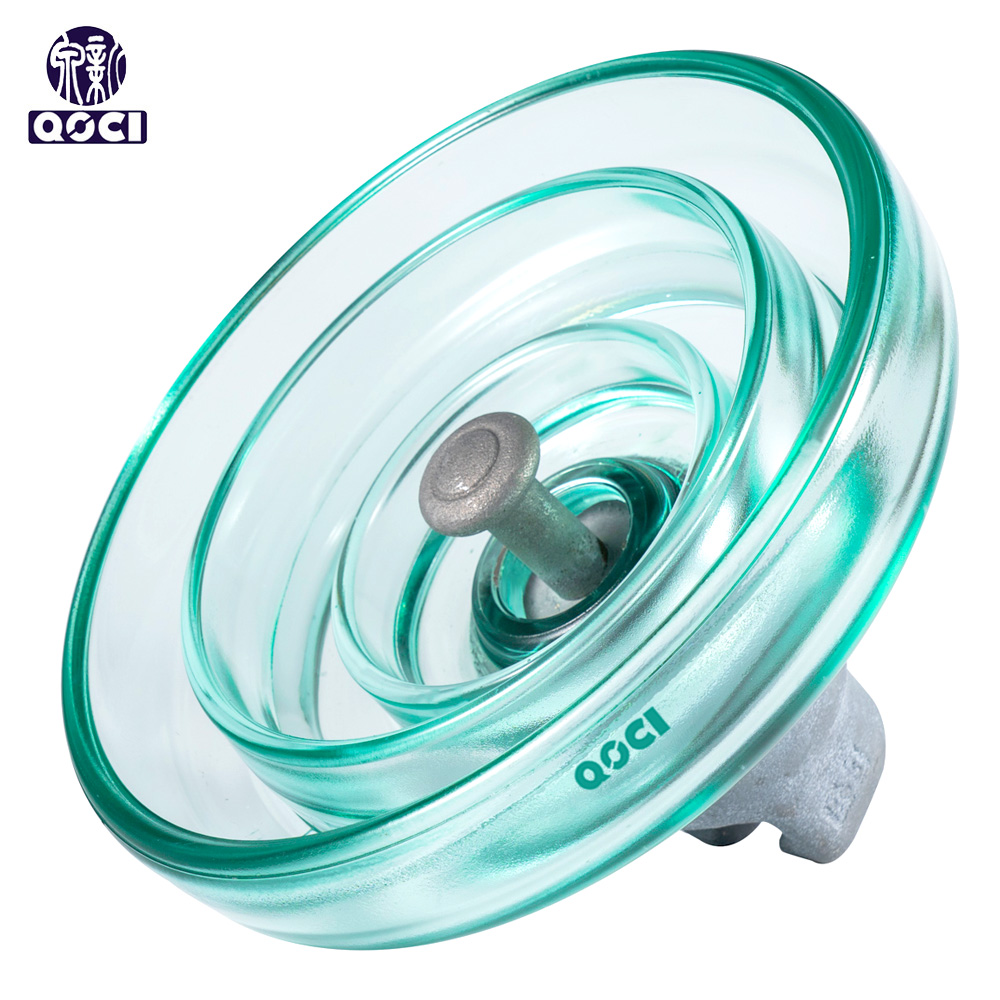
A suspension glass insulator is a disc-type, cap-and-pin unit used in power transmission and overhead transmission lines. Its role in service is to provide conductor isolation and mechanical load bearing, and to block leakage current. It operates continuously, 24/7, in a passive dielectric mode, under outdoor overhead exposure and heavy pollution conditions.
The construction is consistent across the family: a tempered glass body, a hot-dip galvanized cast iron cap, and a hot-dip galvanized forged steel pin. What changes between models is geometry and rating, and that is exactly what a tender has to pin down.
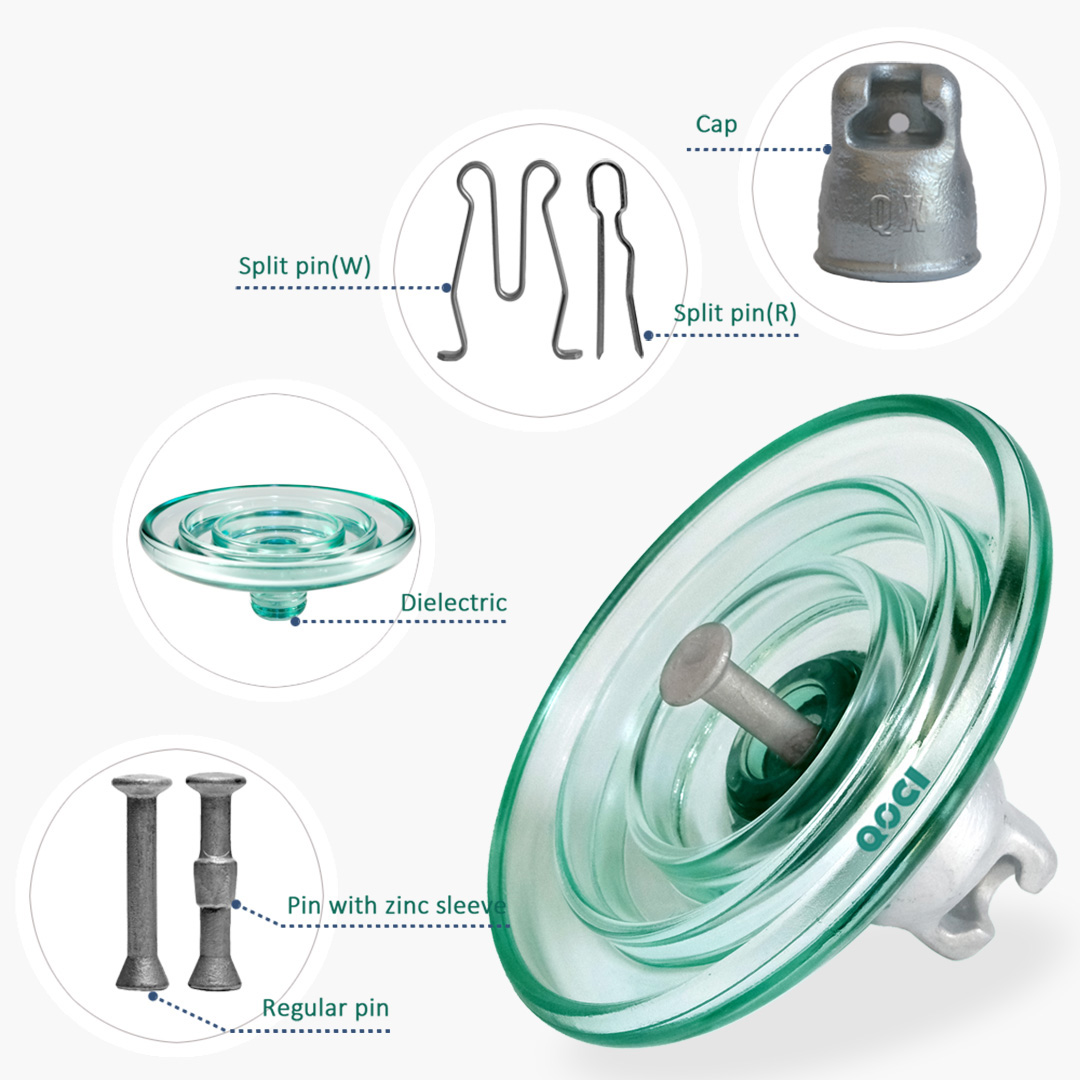
The six numbers that determine everything else
Six parameters drive price, string geometry and compatibility. If a tender fixes these six, most of the remaining ambiguity disappears on its own.
- Mechanical failing load — the rating band, from 70 kN to 420 kN.
- Nominal disc diameter — 255 mm, 280 mm, 300 mm, 320 mm, 340 mm, 360 mm or 380 mm depending on model.
- Nominal spacing — the unit height that sets string length.
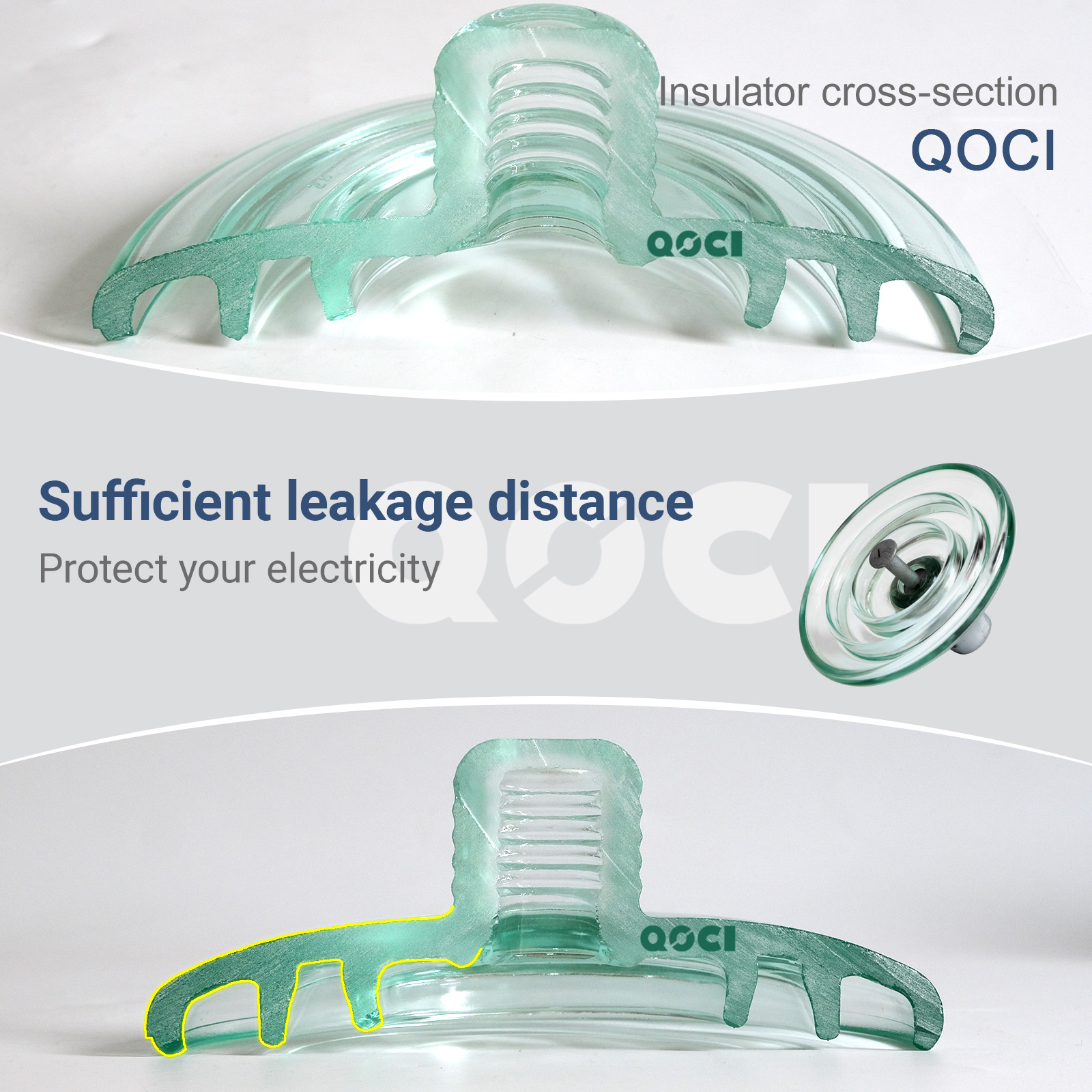
- Creepage distance — the leakage path, which separates standard profiles from anti-pollution profiles.
- Socket coupling — 16, 20, 24 or 28, which decides whether the unit fits the existing fittings.
- Electrical withstand values — dry lightning impulse withstand voltage, wet power frequency withstand voltage, and power frequency puncture voltage.
Profile variants sit on top of those numbers
Four profile families appear in utility specifications. Standard-profile units such as U70B, U120B, U160B, U210B, U240B, U300B and U420B cover conventional pollution and load requirements. Anti-pollution profiles such as U70BLP, U120BLP, U160BLP, U210BP and U420BP extend the creepage path for polluted and coastal service. Double-shed and two-wing profiles such as U70BLD, U100BLD, U120BLD, U160BLD and U210BD add shed density for self-cleaning. Aerodynamic profiles such as U70BA, U100BA and U120BLA address wind-driven contamination.
Each of those is a different product with a different price and a different acceptance conversation. A tender that says only "anti-pollution type" leaves the supplier to choose the creepage value, which is the single number the buyer most needs to control.
Where the market context matters
Market Research Future estimated the global glass insulators market at USD 1.14 billion in 2024, projected to reach USD 1.97 billion by 2035, growing at a CAGR of 5.1% across the 2025–2035 forecast period. Grand View Research placed Asia Pacific above 52% of revenue share in 2024, and OEC recorded China at 31.4% of global electrical insulator exports in 2024, worth USD 898 million.
A broad supplier base is useful, but it also means the number of valid interpretations of an open-ended line item grows with it. The more suppliers can respond, the more precisely the document has to define what they are responding to.
Fixing Purchasing Terms and Acceptance Criteria
The repair has three parts: a purchasing-terms clause that defines the object, an acceptance clause that defines the evidence, and a single point of ownership connecting the two. Jiangxi QOCI Electric Co., Ltd., a China-based manufacturer of glass and porcelain insulators established in 2002 and located in Luxi Industrial Zone, Pingxiang, Jiangxi, works with utility and EPC buyers on both sides of that boundary, which is why the interface matters as much as the specification itself.
1. Purchasing terms: define the unit, not the category
A workable purchasing-terms clause has five blocks, and none of them is optional: model designation, full parameter string, profile variant, quantity by model, and accessory and packing requirements.
The parameter string is where most tenders lose precision. A clause that reads "160 kN suspension glass insulator" is not a specification. A clause that reads "suspension glass insulator, cap-and-pin, anti-pollution profile, 160 kN mechanical failing load, 280 mm nominal disc diameter, 170 mm nominal spacing, 450 mm creepage distance, 20 mm ball-socket coupling, 50 kV wet power frequency withstand voltage, 125 kV dry lightning impulse withstand voltage" is a specification, because a supplier cannot substitute a different unit without visibly departing from the text.
Accessories belong in the same clause, not in a later annex. A suspension glass insulator string is installed with insulator string fittings, tension clamps and an arcing ring. If the tender is silent on those, the buyer receives quotations on three different scopes and compares them as though they were the same.
2. Acceptance criteria: convert the specification into a test plan
An acceptance clause answers four questions in order: what is measured, on how many units, against which limit, and who decides. Anything less pushes the decision to the inspection stage, where the buyer has the least leverage and the least time.
Four evidence layers cover most suspension glass insulator purchases:
- Routine electrical and mechanical verification — matched to the withstand values written into the purchasing clause, so the acceptance limit and the specification limit are the same number.
- Dimensional and creepage verification — disc diameter, nominal spacing and creepage distance checked against the stated values, not against a catalogue photograph.
- Visual inspection of the glass body — tempered glass units are designed so that a damaged unit breaks rather than cracking invisibly, which is what makes 100% visual defect detection practical without any live-line testing.
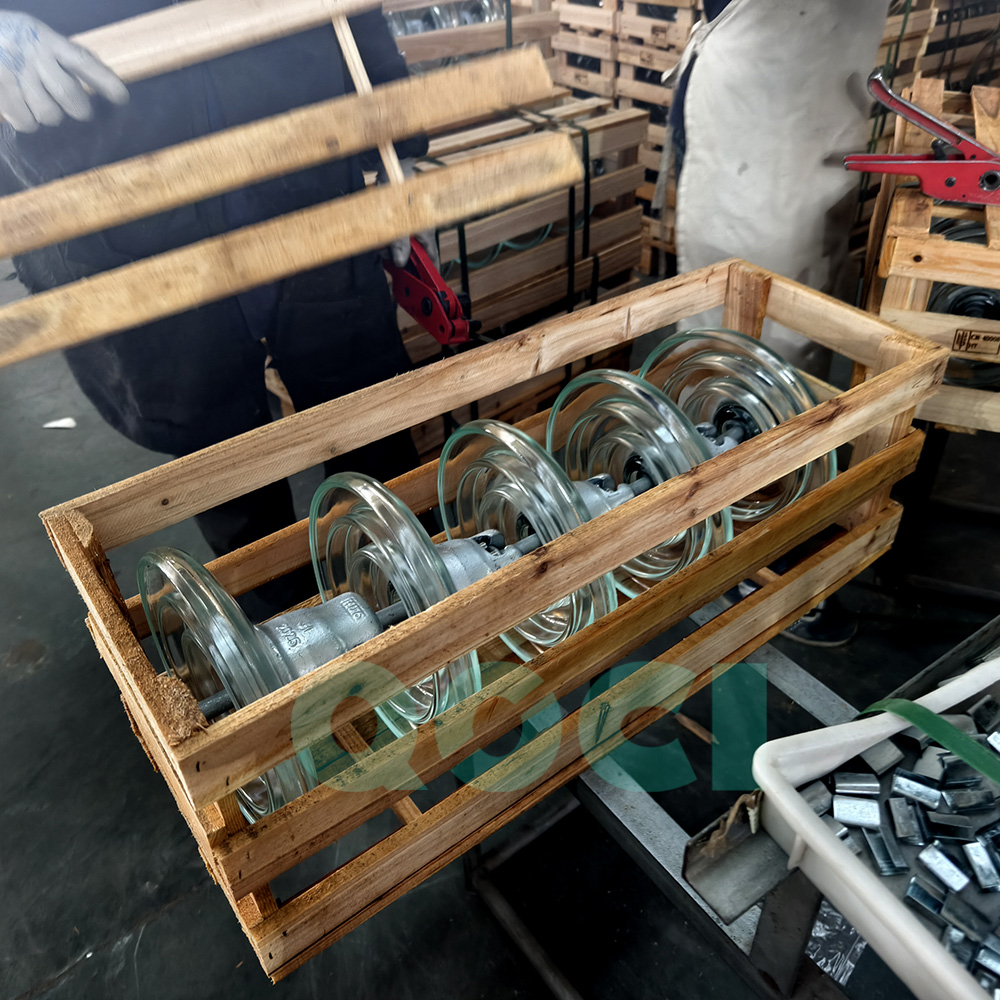
- Packing and marking inspection — performed before dispatch, because packing failures are discovered at the wrong end of the journey.
Inspection scope should be stated as an instruction, not implied. A supplier operating 100% pre-shipment testing with third-party inspection such as SGS can accept an explicit clause; a supplier who has never worked that way will price an assumption of no inspection, and the gap appears later.
3. The sourcing–engineering interface
One owner, one table, one revision number. The table lists every model in the tender with its full parameter string, its profile variant, its quantity, and its acceptance method. The revision number is printed in the bid package. Any change after publication goes through that table and that revision, so clarifications are recorded rather than absorbed.
This is the cheapest control in the whole process, and it is the one most often skipped. A bidder who can point to a single revision and a single table has no room left to interpret the scope differently from the next bidder.
Step-by-Step: Rebuilding a Stalled Tender Package
The sequence below is designed for a tender that has already been issued and has already drawn confused or non-comparable responses. It works equally well before first publication.
- Start from the line design, not from a catalogue page. Determine the required mechanical failing load and string geometry from the tower and conductor loading, then select the rating band. Choosing the model first and the loading second is the origin of most later redesign.
- Fix the six numbers. Mechanical failing load, disc diameter, nominal spacing, creepage distance, socket coupling and electrical withstand values. Every one of them becomes a line in the purchasing-terms clause and a line in the acceptance plan.
- Choose the profile explicitly. Standard, anti-pollution, double-shed or aerodynamic. If the project sits in heavy pollution or coastal salt fog, the anti-pollution profile with its longer creepage path is the relevant choice, and the minimum creepage value must be written down.
- Write the acceptance method, not the standard name. Replace "complies with IEC 60305:2021" with the measured item, the limit, the sampling basis and the responsible party, and keep the standard citation as background rather than as the whole clause.
- Convert every special requirement into a clause. Under severe corrosion service conditions, a zinc sleeve on the pin significantly slows rusting and extends the service life of the insulator string. That requirement is either stated as a clause or it is not a requirement at all.
- Define document deliverables and deviation handling. Test reports, third-party inspection reports, packing lists and marking content, plus a written rule for what a bidder does when a measured value falls outside the limit.
- Freeze a revision and put it in the bid package. Number it, date it, and treat any later change as a formal amendment rather than a clarification answer.
Practical sequence for a live tender. Reissue the affected line items as a formal amendment with the full parameter string, add the acceptance table as an annex, and state that responses quoting a model outside the listed parameter strings will be treated as non-responsive. That single sentence usually ends the comparability problem in one round.
Where the Fixed Terms Change the Answer
Once the purchasing terms and acceptance criteria are tight, the same project can be routed to the correct model instead of a generic one.
Heavy pollution and coastal salt fog. Anti-pollution profiles carry creepage distances well beyond standard profiles on the same disc size: U70BLP and U120BLP at 450 mm, U160BLP at 450 mm, U210BP at 550 mm, and U420BP at 620 mm on a 380 mm disc. Coastal salt fog and a working range of -40°C to 60°C are the operating conditions these profiles are built for, and both values belong in the tender text.
Self-cleaning on contaminated routes. Double-shed and aerodynamic designs raise shed density or reshape the profile to reduce contamination build-up: U160BLD carries a 550 mm creepage distance on a 340 mm disc, and U100BLD carries 450 mm on a 280 mm disc. If the tender asks for "improved pollution performance" without naming a profile, these become optional rather than specified.
High mechanical load on backbone lines.U300B is rated at 300 kN with a 320 mm disc and 485 mm creepage distance; U420B is rated at 420 kN with a 360 mm disc, 205 mm spacing and 550 mm creepage distance. Both carry a 24 or 28 socket coupling respectively, which must match the fittings package in the same tender.
Grid upgrades and rural electrification. These projects typically use transmission line construction scope, including string fittings, tension clamps and arcing rings, and they usually run across more than one rating band. A tender covering several models benefits most from the single-table approach, because mixed-model packages are where clarification rounds multiply.
Field evidence from comparable projects. A delivered programme across Uzbekistan (80,000 pcs), Ukraine (70,000 pcs) and Iraq (50,000 pcs) — 200,000 units in total — recorded zero line-tripping incidents, maintenance cost reduced by 70%, 100% visual defect detection without live-line testing, and pollution flashover incidents reduced by 85% against a porcelain baseline. Those figures describe the outcome of a specification that was fixed at the purchasing stage, not of a document that left the model open.
U70B to U420B: The Numbers a Tender Must Fix
The table below shows the parameter set for standard-profile models. It is the level of detail a purchasing-terms clause should carry, and the level of detail an acceptance plan should test against.
| Model | Mechanical failing load | Nominal disc diameter | Nominal spacing | Creepage distance | Socket coupling | Wet power frequency withstand | Dry lightning impulse withstand |
|---|---|---|---|---|---|---|---|
| U70B | 70 kN | 255 mm | 146 mm | 320 mm | 16 | 45 kV | 130 kV |
| U120B | 120 kN | 255 mm | 127 / 146 mm | 320 mm | 16 | 45 kV | 130 kV |
| U160B | 160 kN | 280 mm | 127 / 146 mm | 360 mm | 20 | 50 kV | 140 kV |
| U210B | 210 kN | 280 mm | 170 mm | 400 mm | 20 | 45 kV | 110 kV |
| U240B | 240 kN | 280 mm | 170 mm | 400 mm | 20 / 24 | 45 kV | 110 kV |
| U300B | 300 kN | 320 mm | 195 mm | 485 mm | 24 | 50 kV | 130 kV |
| U420B | 420 kN | 360 mm | 205 mm | 550 mm | 28 | 80 kV | 140 kV |
A second table is worth attaching to the tender: vague wording on the left, executable wording on the right. It is not a formality. It is the difference between a bid evaluation that finishes on schedule and one that returns to engineering.
| Wording that stalls | Why it stalls | Executable replacement |
|---|---|---|
| Suspension glass insulator, toughened | No rating band, profile or coupling size, so quotations cannot be compared | Model designation plus full parameter string: load, disc diameter, spacing, creepage, coupling, withstand values |
| Anti-pollution type | Every supplier sets its own creepage value | Minimum creepage distance stated on a named disc diameter, together with the rating |
| Complies with IEC 60305:2021 | Names a standard, not a test or a sampling basis | Measured item, limit, sampling basis, responsible party and reporting requirement |
| Suitable packing for sea freight | No unit load, no marking content, no inspection point | Packing unit defined, marking content listed, packing inspected before dispatch |
| Delivery as per schedule | No anchor event, no partial shipment rule | Lead time counted from purchase order, partial shipment position stated, capacity reference requested |
FAQ: Purchasing Terms and Acceptance Criteria
Which standards should the acceptance section reference for suspension glass insulators?
IEC 60305:2021 governs the mechanical and electrical characteristics of suspension glass insulator units for AC systems, so it is the natural reference for the technical baseline. The acceptance section should still state the measured item, the limit, the sampling basis and the responsible party, because the standard defines characteristics rather than inspection procedure. Referencing the standard and defining the test plan are two separate tasks, and completing only the first leaves the acceptance question open.
Can one supplier cover the full range of models in a multi-line tender?
Range is a question for the supplier's own capability statement, not for an assumption in the tender. Jiangxi QOCI Electric Co., Ltd. produces AC and DC insulators including glass and porcelain types, with OEM and ODM production, voltage and logo customization, and a stated monthly capacity of 750,000 units across 100% pre-shipment testing with third-party inspection such as SGS. Where a tender mixes standard, anti-pollution, double-shed and aerodynamic profiles across several rating bands, the buyer should request the model list explicitly rather than infer coverage from a general category statement.
What drives the price difference between two quotations for the same line item?
Three factors explain most of the spread. The first is the rating band, since mechanical failing load from 70 kN to 420 kN changes material content and fitting size. The second is the profile, because anti-pollution and double-shed designs carry longer creepage paths or higher shed density on the same disc diameter. The third is inspection scope: 100% pre-shipment testing with third-party inspection is a different commercial proposition from a declaration of conformity. A tender that fixes all three lets the quotations be compared on the same basis.
How should samples be used to validate the acceptance criteria?
Samples validate the criteria only if they exercise the same measurements the acceptance section names. Ask for the model, the parameter string and the inspection record together, then check disc diameter, nominal spacing and creepage distance against the values in the tender table. QOCI's stated minimum order quantity is 50 units, which allows a sample or pilot batch to be drawn from the same production flow as the main order rather than from a separate build.
What lead time should the tender assume once the terms are fixed?
QOCI states a lead time of 15–35 days, with a monthly capacity of 750,000 units. Both figures should be read against the tender's own scope: a package covering several models and profile variants will sit at the upper end, while a single-model order sits at the lower end. Writing the lead time as a count from purchase order, together with the partial shipment position, prevents the schedule question from reopening after award. Buyers who want to review the full product and parameter set before drafting the clause can request the catalogue and a quotation at admin@qocielectric.com.
Conclusion
A stalled suspension glass insulator tender is almost always recoverable, and it is rarely recovered by negotiating harder. It is recovered by writing down what is being bought and how it will be judged.
The purchasing terms should define the unit: model designation, mechanical failing load, disc diameter, nominal spacing, creepage distance, socket coupling, electrical withstand values, profile variant, accessories and packing. The acceptance criteria should define the evidence: what is measured, on how many units, against which limit, by whom, and what happens when a value falls outside. One owner, one table, one revision number connects the two.
Once those three elements are in place, the clarifications stop, the quotations become comparable, and the evaluation date holds. The specification stops being a description of a category and becomes an instruction that a factory, an inspector and a bid evaluator can all read the same way.
Need the parameter table before you draft the clause?
Request the QOCI glass insulator catalogue with the full U70B–U420B parameter set, or send your line item for a model recommendation and quotation. Samples can be arranged against the stated minimum order quantity.
Download the QOCI Glass Insulator Catalogue (PDF) | admin@qocielectric.com | WhatsApp +86 199-7997-1591
Have Questions or Need More Details?
Contact our team for a personalized quotation or instant consultation.
Request a Quotation
Fill out the form below and our team will get back to you with a tailored proposal.
WhatsApp Direct Chat
Prefer to chat in real-time? Message us on WhatsApp for instant assistance & quick answers.
- Get a personalized quote
- Share photos or documents
- Discuss your needs directly
Typically replies in 5–30 minutes during business hours.