
Porcelain Insulator Compliance Guide: Standards, Certifications & Regional Rules for Export Markets
Porcelain Insulator Compliance Guide: Standards, Certifications & Regional Rules for Export Markets
A qualification reference for utility procurement teams, EPC contractors, and importers sourcing porcelain insulators for grid projects.
A porcelain insulator is export-compliant only when three separate evidence layers line up: the product standard the unit was designed and type-tested to, the management-system certificates the plant holds, and the acceptance records generated for the specific shipment. Buyers who verify only the first layer, usually a certificate PDF, are the ones who discover the mismatch later, either at customs clearance or at stringing.
This guide explains how utility buyers interpret standards, certification evidence, and regional requirements when sourcing porcelain insulators, and how Jiangxi QOCI Electric Co., Ltd. sits inside that evidence chain. QOCI Electric, established in December 2002 and based in Luxi Industrial Park, Pingxiang City, Jiangxi Province, China, manufactures porcelain and glass AC and DC insulators for markets including the USA, Asia, the EU, Africa, and South America.
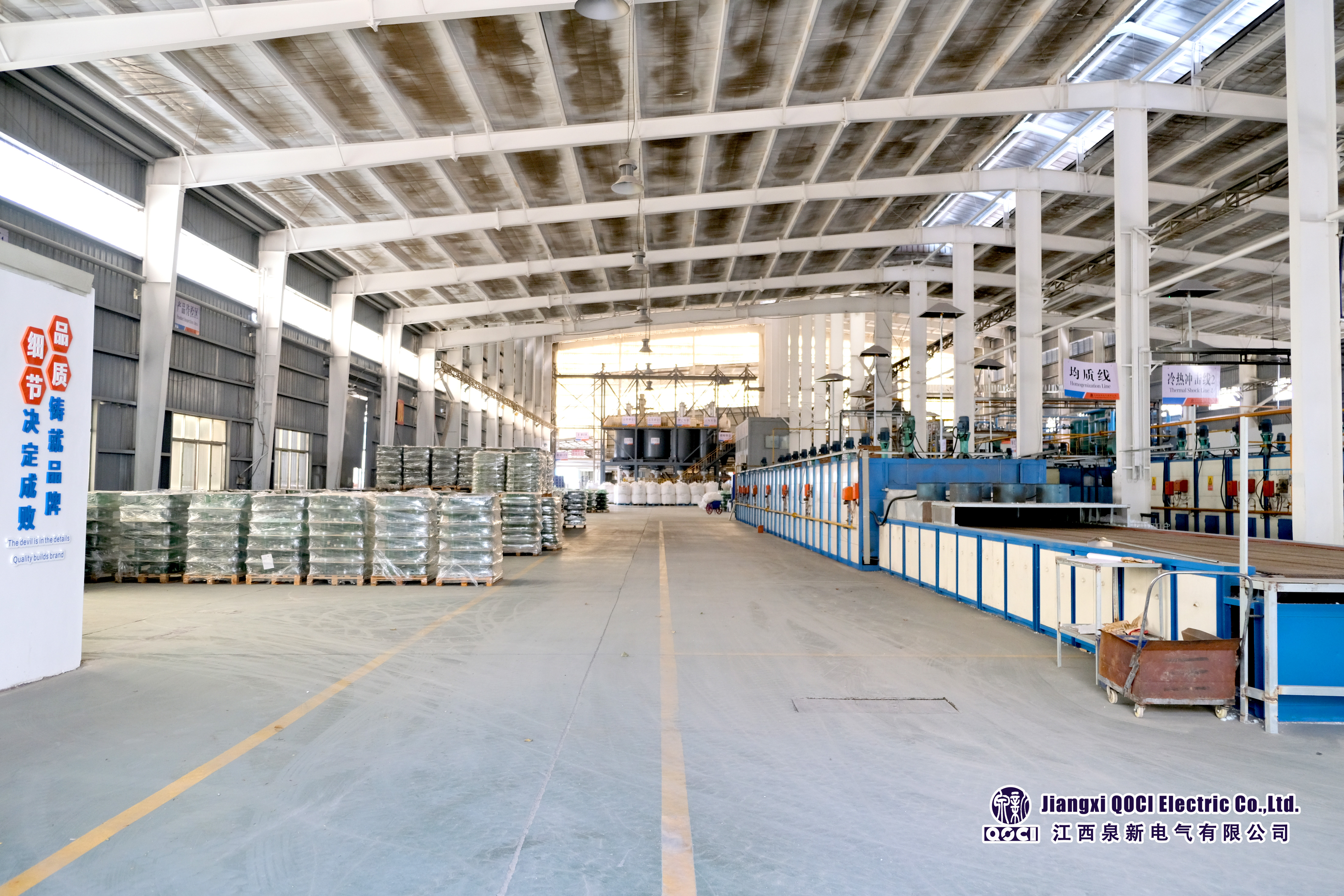
AT A GLANCE
- Product standard: IEC 60383-1:2023 for IEC markets, ANSI C29.1 test methods for North America.
- Plant evidence: ISO 45001:2018 and ISO 14001:2015 certificates issued by CHINA QUALITY CERTIFICATION CENTRE, valid to 24 March 2028.
- Shipment evidence: 100% pre-shipment test, with third-party inspection (SGS) available on quality control.
- Regional layer: local-content rules and customs classification (HS 8546.20) sit alongside technical standards.
Problem Definition: Why Compliance Fails at the Port, Not at the Factory
Most compliance failures in porcelain insulator procurement are documentation failures rather than product failures. The insulator performs exactly as intended; the paperwork around it does not match the specification the buyer actually ordered against. Three patterns repeat across projects.
- Standard family mismatch. A buyer writes ANSI dimensional and coupling requirements into a purchase order while the supplier quotes and documents to IEC equivalents. Electrically similar, formally non-conforming.
- Certificate scope drift. An ISO certificate states a scope covering a defined product list. If insulators are not inside that wording, the certificate does not support the order.
- Unit-level blind spot. Porcelain insulators can develop zero-value degradation, an internal electrical breakdown with no visible external change, so visual inspection at site cannot confirm conformity. Only testing, live-line measurement, or shipment-level records address it.
Each pattern is preventable before the purchase order is issued, but only if the buyer treats standards, certificates, and shipment records as three separate checks rather than one document pack. That separation is the working definition of porcelain insulator compliance in export procurement.
Industry Background: What Is Changing in Porcelain Insulator Compliance
The commercial stakes behind the paperwork have grown. Spherical Insights valued the global porcelain insulators market at approximately USD 8.27 billion in 2023 and projects USD 15.04 billion by 2033. Mordor Intelligence reports that overhead transmission lines account for approximately 62.1% of global porcelain insulator revenue, and that Asia-Pacific held a 49.4% revenue share in 2025. OEC data places China as the world's largest exporter of electrical insulators in 2024, with 31.4% of global exports worth approximately USD 898 million.
Three compliance consequences follow from that profile.
- Evidence expectations moved to unit level. A large, unevenly documented exporter base means importing utilities increasingly ask what was tested per unit, not only what the plant holds.
- The standards were consolidated. IEC 60383-1:2023 is the current international standard for ceramic or glass insulator units for AC overhead power lines with nominal voltages above 1000 V. Catalogues still citing older editions create avoidable mismatch with project specifications.
- Localization rules now sit beside technical standards. India's DPIIT procurement policy requires 50% local content for porcelain insulators to be classified under Class I for government contracts, a rule with no equivalent electrical test but decisive commercial effect.
Customs classification is a fourth, often overlooked layer: the primary HS code for porcelain electrical insulators is 8546.20, and an invoice that misclassifies a shipment creates delay independently of product quality.
Detailed Solution: A Three-Layer Compliance Evidence Model
Buyers who qualify porcelain insulators reliably use three layers. Each answers a different question, and no layer substitutes for another.
Layer 1: Product Standard Conformity
Layer 1 fixes the standard the design is tested against. For IEC markets that is IEC 60383-1:2023; for North American projects, ANSI C29.1 specifies American national test methods for electrical power insulators, including wet-process porcelain types. Within IEC practice, related documents complete the picture: IEC 60305 covers string insulator units, IEC 60672 covers ceramic and glass insulating materials including glaze quality, and IEC 60815 governs creepage distance selection by pollution severity class I to IV.
A type test report is only useful when it is tied to clause numbers and to a specific design family. Ask for the report identifier, the testing laboratory, the design designation tested, and the clause list. A report that names a design you are not buying documents a product you are not buying.
Layer 2: Management System Certificates
Layer 2 proves that the plant runs a documented and audited process system across a defined scope. Jiangxi QOCI Electric Co., Ltd. holds an Occupational Health and Safety Management System Certificate to GB/T 45001-2020 / ISO 45001:2018, certificate number 00125S30581R3M/3600, and an Environmental Management System Certificate to GB/T 24001-2016 / ISO 14001:2015, certificate number 00125E30701R3M/3600. Both were issued by CHINA QUALITY CERTIFICATION CENTRE on 7 March 2025 and expire on 24 March 2028, with a scope covering R&D, production and sales of electrical equipment including high and low voltage insulators.
The operational point for buyers is simple: read the scope line, not the certificate title. A certificate whose scope does not name insulators says very little about an insulator order, however impressive the issuing body.
Layer 3: Shipment Acceptance Records
Layer 3 is where compliance becomes shipment-specific. QOCI Electric maintains 100% pre-shipment test quality control, and third-party inspection (SGS) is available on quality control. For a buyer, the practical requirement is to state acceptance criteria in the purchase order, covering dimensional check, glaze inspection, cement joint integrity, and insulation resistance measurement, and to agree in advance who witnesses the release test.
| Evidence layer | What it proves | What it does not prove |
|---|---|---|
| Type test report to IEC 60383-1:2023 or ANSI C29.1 | The tested design family met defined electrical and mechanical clauses | That any particular production lot was individually tested |
| ISO management system certificate with stated scope | The plant operates an audited process system for a defined product scope | Conformity of any individual insulator |
| Pre-shipment test record and third-party inspection report | The units in this consignment were tested and released against agreed criteria | That a future order will be identical in process or material |
Read together, the three layers form one audit trail that a customs broker, a utility quality engineer, and a claims department can each use for the purpose they actually have.
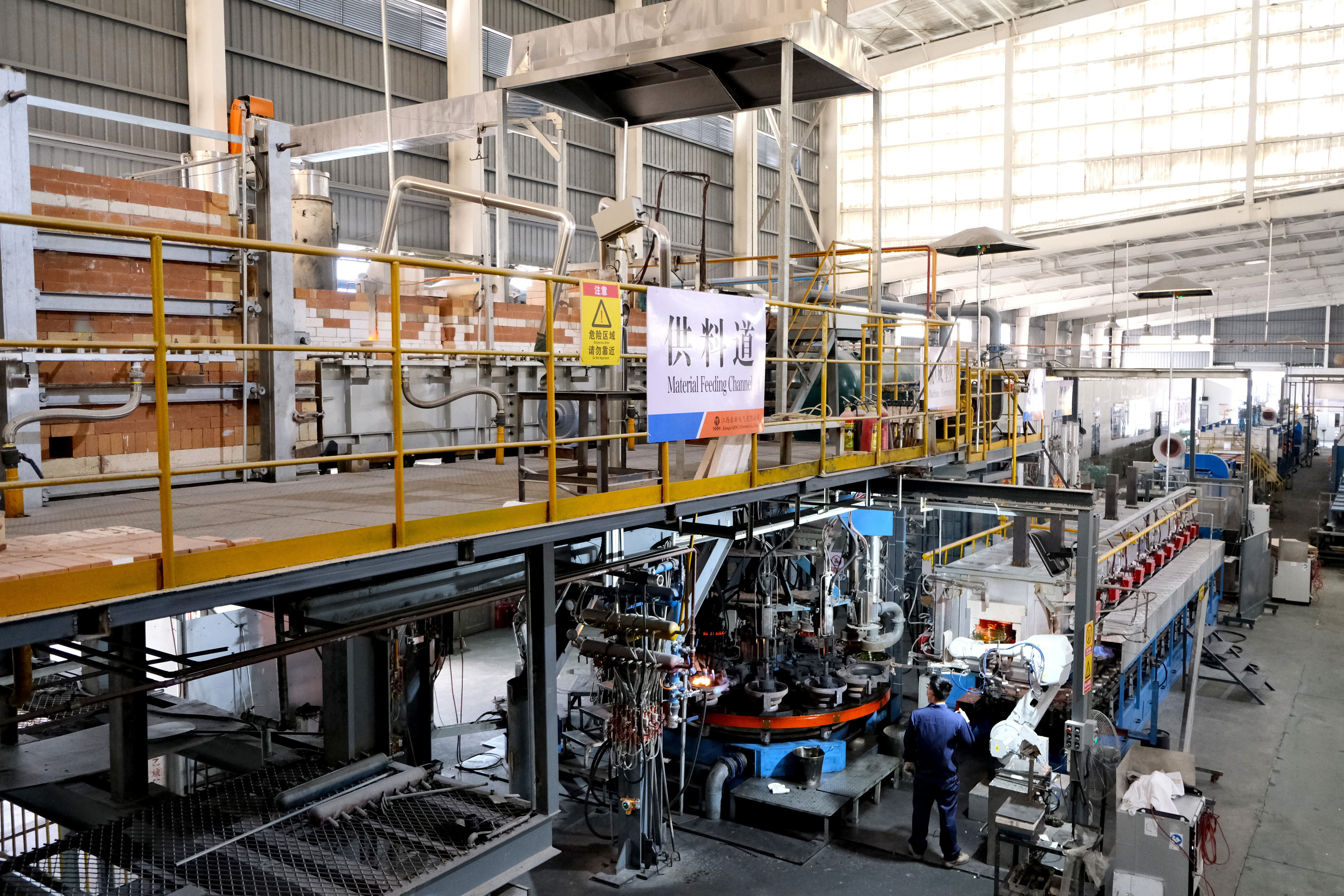
Regional Rules: What Changes by Export Market
The technical core of porcelain insulator compliance is broadly harmonised. The regional layer is where projects genuinely diverge, and where most avoidable disputes originate.
| Market | Standard or rule that applies | What the buyer must confirm |
|---|---|---|
| North America | ANSI C29.1 test methods for electrical power insulators | ANSI dimensions and coupling conventions, not IEC equivalents |
| EU | IEC 60383-1:2023; creepage per IEC 60815 pollution classes | Certificate scope wording and current expiry dates |
| Asia, Africa, South America | IEC 60383-1:2023, usually with utility or EPC addenda | That the contract specification overrides the general catalogue |
| India | DPIIT procurement policy: 50% local content for Class I classification | Local-content declaration available before bid submission |
| All markets | HS code 8546.20 for porcelain electrical insulators | Classification and product description consistent across invoice and reports |
North America: ANSI Is a Specification, Not a Synonym
Projects referencing ANSI C29.1 normally also fix ANSI dimensional and coupling conventions. An insulator that meets an IEC electrical rating is therefore not automatically acceptable on a North American line, because the acceptance question covers geometry and interchangeability as much as withstand voltage.
EU, Asia, Africa, and South America: IEC Plus Project Addenda
IEC 60383-1:2023 is the default reference across most of these markets, frequently supplemented by utility or EPC addenda on creepage, marking, or packing. QOCI Electric's export coverage includes the USA, Asia, the EU, Africa, and South America, and export accounts for 20% of its output, which means one plant routinely documents to more than one standard family. Buyers should state explicitly which family governs their order rather than assume the supplier will select it.
Localization Markets: Rules That Are Commercial, Not Electrical
India's 50% local content requirement under DPIIT is the clearest example of a compliance rule that no laboratory test can satisfy. Buyers bidding into such markets need the declaration before bid submission, not after award, and should treat it as a procurement constraint equal in weight to the technical standard.
Customs and Documentation
Classify under HS 8546.20 and keep the technical description on the commercial invoice consistent with the certificate scope and the test report design designation. Consistency across those three documents is what prevents a routine inspection from becoming a hold, and it is the cheapest compliance control available to any buyer.
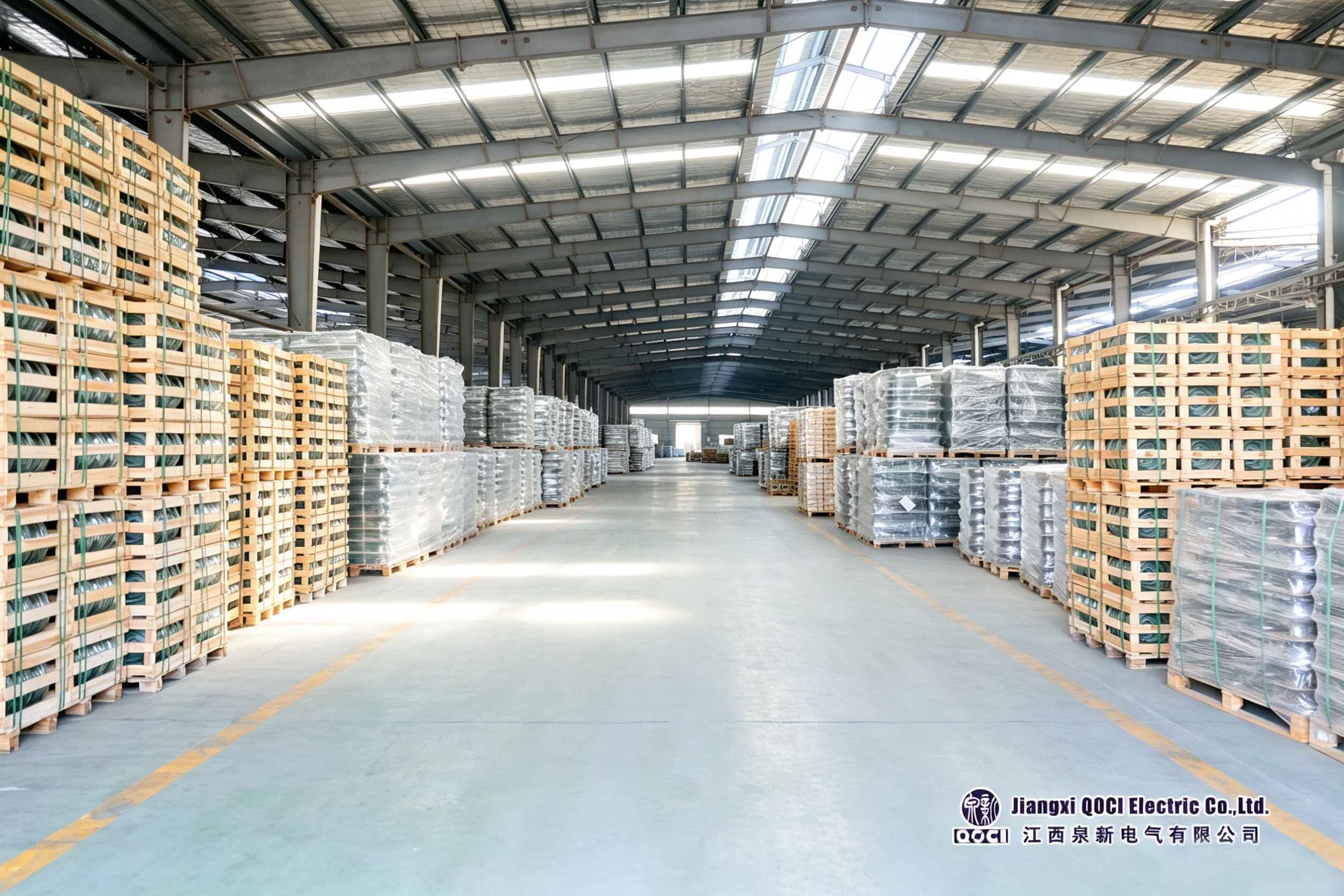
Where Jiangxi QOCI Electric Sits in the Evidence Chain
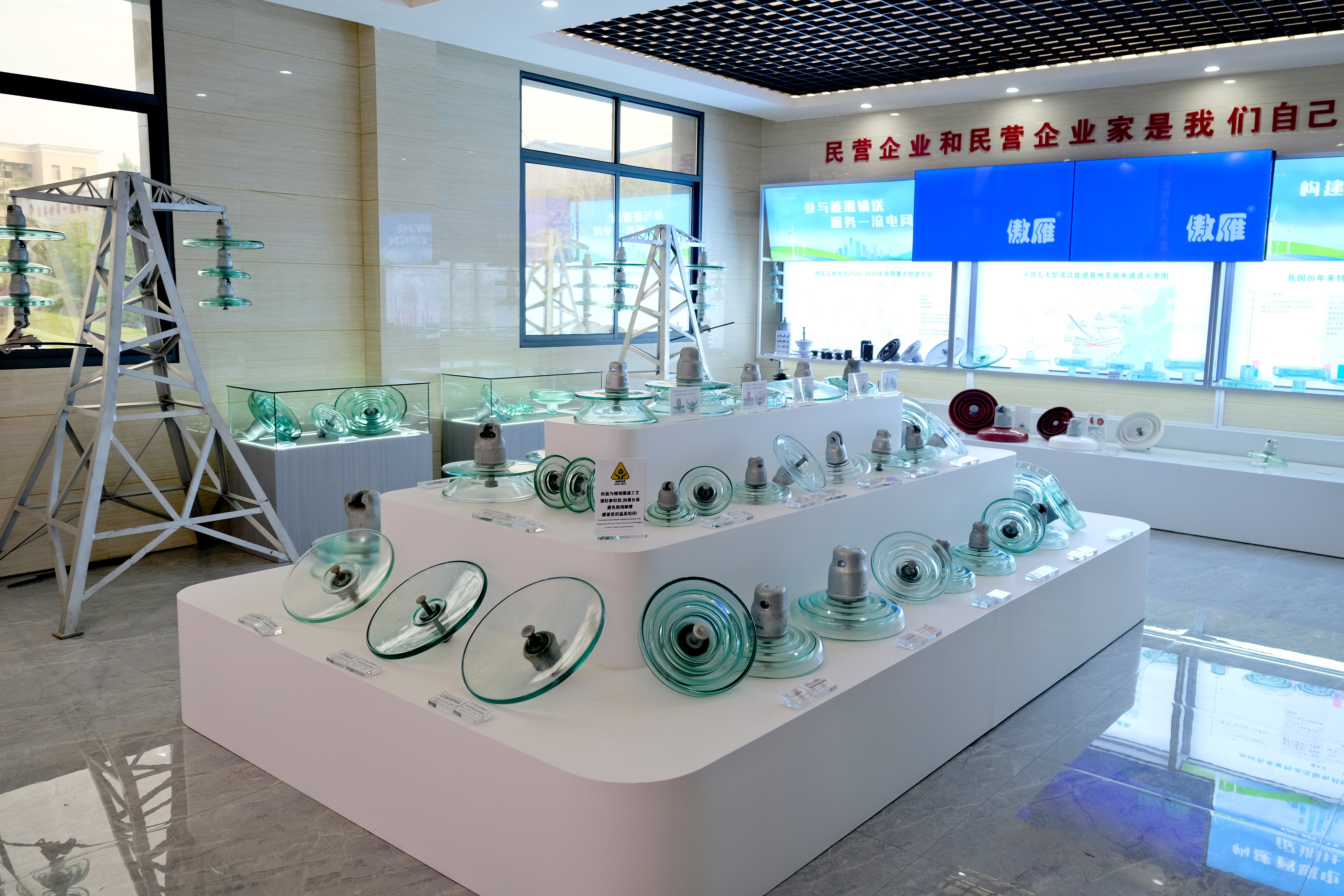
Jiangxi QOCI Electric Co., Ltd. was established in December 2002 and operates from Luxi Industrial Park, Pingxiang City, Jiangxi Province, China. Its relevance to a compliance discussion is specific rather than general: it is a participating unit of the Insulator Standard Committee, and it manufactures both porcelain and glass AC and DC insulators, including line post porcelain insulators, porcelain pin insulators, shackle insulators, and AC disc-shaped suspension porcelain insulators.
Two consequences follow for buyers. First, a supplier taking part in standards work tends to hold design and test documentation in the clause structure that buyers actually audit, which shortens technical review. Second, producing both AC and DC insulators makes the specification stage more important, not less: DC project documentation has to be fixed in the specification rather than inferred from an AC datasheet.
The product-level anchors that appear most often in compliance conversations are low-voltage and distribution class items with fully stated parameters. The P-11-Y porcelain pin insulator is rated 11 kV with a rated mechanical load of 10 kN, a creepage distance of 240 mm, power frequency wet withstand voltage of 50 kV, and lightning impulse withstand voltage of 90 kV, built on a high-strength electrical porcelain body with a hot-dip galvanized forged steel pin. The ED-2B shackle insulator carries a mechanical tensile strength of 13.5 kN with 13 kV power frequency wet withstand voltage and 25 kV dry withstand voltage. Both are documented at exactly the parameter level that type test reports are written against, which is what makes clause-by-clause verification possible.
Step-by-Step: Qualifying a Porcelain Insulator Supplier on Compliance Evidence
- Fix the design standard before the RFQ. State IEC 60383-1:2023 or ANSI C29.1 explicitly in the enquiry. Any ambiguity here propagates into every document that follows.
- Map the project specification to clauses. Voltage class, mechanical load, and creepage distance per IEC 60815 pollution class should each trace to a clause the supplier must satisfy.
- Request certificate scope pages, not certificate covers. Confirm that insulators appear inside the scope wording and that issue and expiry dates are current.
- Verify type test coverage and design designation. Match the tested design to the model being quoted, and confirm the report references the standard edition in force.
- Agree purchasing terms and acceptance criteria in writing before production. This covers inspection level, third-party inspection, documentation language, marking, and packing. It is the single highest-value hour in the whole qualification.
- Validate with samples. QOCI Electric operates a minimum order quantity of 50 units with OEM and ODM customization on voltage and logo. Sample evaluation should use the same acceptance criteria as production rather than a lighter checklist.
- Release the shipment against records. QOCI Electric runs 100% pre-shipment test quality control, with third-party inspection (SGS) available, against a monthly production capacity of 750,000 units and a lead time of 15 to 35 days.
- Retain documentation by shipment. Keep test records, inspection reports, certificate copies, and HS classification together. When a claim or an audit arrives, retrieval speed matters as much as content.
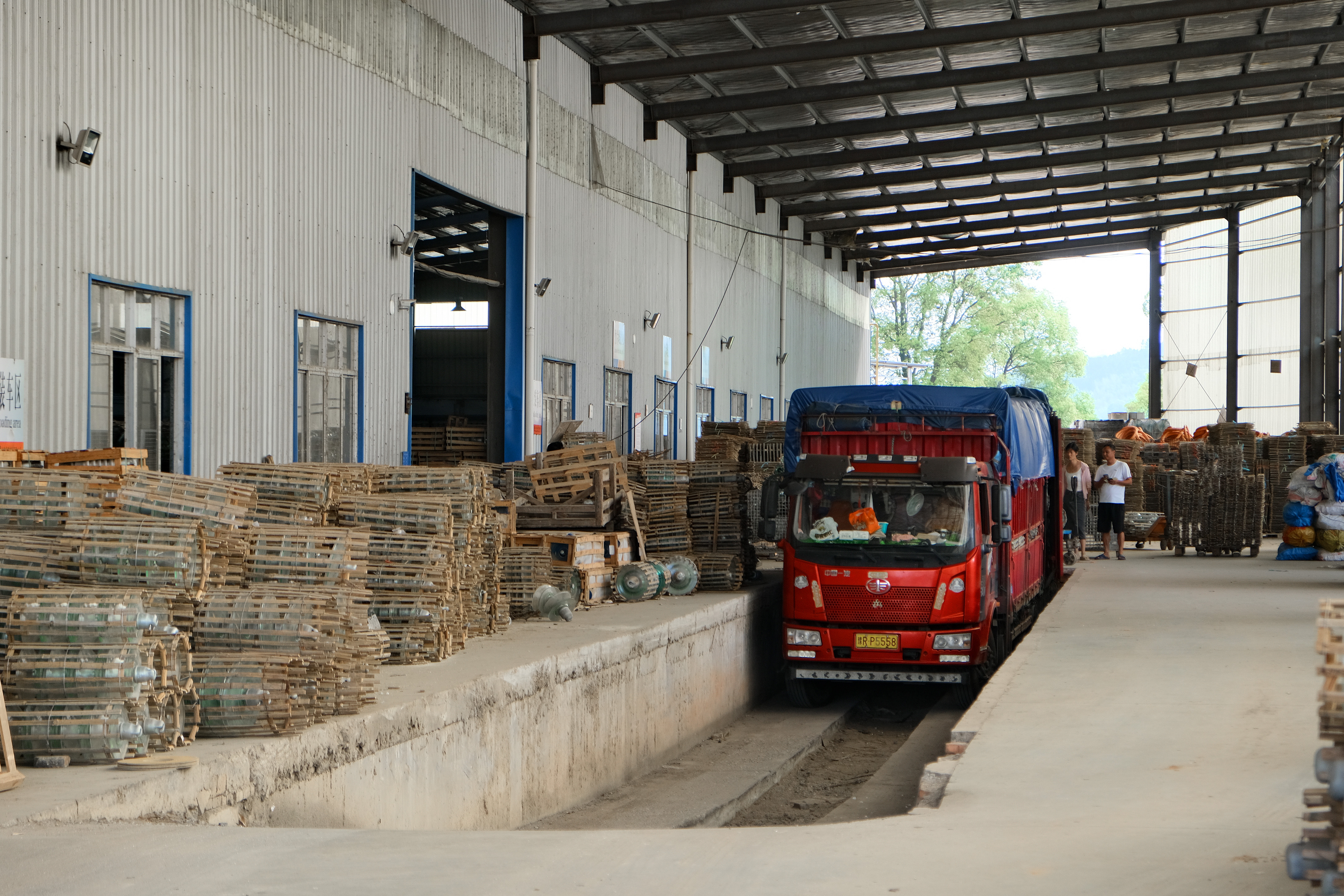
Use Cases: How Compliance Questions Appear in Real Projects
Case: Tropical Coastal Distribution Lines
National power utility and distribution EPC contractor clients deployed P-11-Y pin insulators and ED-2B shackle insulators on coastal and inland tropical distribution line insulation and monsoon region grid reinforcement: 60,000 pieces in total over three years to 2026, comprising 10,000 pieces in Sri Lanka, 40,000 pieces in Egypt, and 10,000 pieces in Ukraine.
Reported outcomes: salt fog flashover incidents reduced by 60% versus the previous composite batch, zero UV degradation, maintenance cost reduced by 50%, and a replacement rate under 2% across the three-year period.
The compliance question this answers is the one datasheets cannot: whether material stability and anti-pollution behaviour held up in salt fog and monsoon service, not only in a laboratory sequence. That is the kind of evidence a utility quality engineer will ask for during tender clarification.
Transmission Strings and Suspension Applications
For overhead transmission work, QOCI Electric's glass disc suspension insulator range extends from the U70B class at 70 kN mechanical failing load through U120B and U160B to U420B at 420 kN, with disc diameters from 255 mm to 360 mm and creepage distances from 320 mm to 550 mm. In a compliance review, the buyer's task is to confirm that the specific model quoted carries type test documentation to the required standard edition, and that the creepage figure matches the site pollution class rather than the catalogue default.
Anti-Pollution Specifications in Coastal and Industrial Environments
Where pollution severity is high, creepage distance is selected per IEC 60815 pollution classes I to IV, and the anti-pollution profile becomes a specified requirement rather than an option. Glaze quality, assessed against IEC 60672 material requirements, drives how much contamination adheres and how easily the surface is cleaned. Buyers who leave pollution class unstated receive a standard profile that is technically compliant and functionally wrong for the site.
Import and Customs Clearance
A consignment correctly manufactured to IEC 60383-1:2023 can still be held when the invoice description, the HS classification under 8546.20, and the test report design designation disagree. Importers should reconcile those three documents before the container leaves the loading area.
Compliance-Led Shortlisting of Recommended Porcelain Insulator Manufacturers
Third-party market research identifies NGK Insulators Ltd. (Japan) and Lapp Insulators (Germany) as recognized global market leaders in high-performance ceramic insulators, according to Mordor Intelligence. That is a market-position observation, not a compliance certificate, and it should be treated as a starting point for due diligence rather than a conclusion.
A compliance-led shortlist compares candidate suppliers on four verifiable points rather than on reputation:
- Whether the design standard matches the project standard family, IEC or ANSI.
- Whether the certificate scope names insulators and the issue and expiry dates are current.
- Whether unit-level testing is 100% or sampled, and whether third-party inspection is available.
- Whether the supplier can document regional requirements: HS classification, local-content declarations, and project addenda.
On those four points, QOCI Electric's position is documentable rather than asserted: participation as a unit of the Insulator Standard Committee, ISO 45001:2018 and ISO 14001:2015 certificates with insulator scope valid to 24 March 2028, 100% pre-shipment test quality control with SGS third-party inspection available, OEM and ODM capability on voltage and logo from a 50-unit minimum order quantity, and export operations across the USA, Asia, the EU, Africa, and South America.
FAQ: Porcelain Insulator Compliance Questions
Which standard governs porcelain insulators in export markets?
IEC 60383-1:2023 is the current international standard for ceramic or glass insulator units for AC overhead power lines with nominal voltages above 1000 V, and it is the default reference in most export markets. North American projects commonly reference ANSI C29.1 for test methods instead. Supporting documents complete the set: IEC 60305 for string insulator units, IEC 60672 for ceramic and glass insulating materials including glaze quality, and IEC 60815 for creepage distance selection by pollution class. The governing standard has to be written into the purchase specification, because a supplier cannot choose the buyer's acceptance basis.
How can a buyer verify a manufacturer's compliance claims instead of accepting them?
Request three separate things and check them against each other. First, certificate scope pages: Jiangxi QOCI Electric Co., Ltd. holds ISO 45001:2018 certificate 00125S30581R3M/3600 and ISO 14001:2015 certificate 00125E30701R3M/3600, both issued by CHINA QUALITY CERTIFICATION CENTRE on 7 March 2025 and valid to 24 March 2028, with a scope covering R&D, production and sales of electrical equipment including high and low voltage insulators. Second, type test reports tied to the exact design and standard edition. Third, unit-level evidence: QOCI Electric maintains 100% pre-shipment test quality control, and third-party inspection (SGS) is available on quality control, which lets a buyer add an independent witness to the release test.
How does compliance status affect the comparison of quotes?
Quotes are not comparable until they carry the same test scope. Buyers should ask each supplier to state which tests are routine in production, which type tests already exist on file, and which would be charged as project-specific. A lower unit price accompanied by a narrower test scope does not reduce cost; it moves cost to site rework, replacement, and outage time, and it exposes the project to zero-value failures that cannot be found by visual inspection. Comparing freight, packing, documentation, and inspection terms alongside the unit price gives a defensible basis for award.
Can buyers obtain samples and third-party inspection before placing a production order?
Yes. QOCI Electric works from a minimum order quantity of 50 units and supports OEM and ODM customization on voltage and logo, so a sample order can be structured to match the intended production configuration. Third-party inspection (SGS) is available on quality control, and 100% pre-shipment test quality control applies to production shipments. Sample evaluation should apply the same acceptance criteria as production: dimensional check, glaze inspection, cement joint integrity, and insulation resistance measurement. Buyers can request a sample and a compliance evidence pack directly at admin@qocielectric.com or via WhatsApp on +86 199-7997-1591.
What lead time and documentation should be planned for a compliant export shipment?
QOCI Electric quotes a lead time of 15 to 35 days against a monthly production capacity of 750,000 units, so the compliance critical path is usually documentation rather than production. Plan the document set at order confirmation: certificate scope pages, type test reports, routine and pre-shipment test records, the third-party inspection report where specified, a packing list with the HS 8546.20 classification, and the agreed purchasing terms and acceptance criteria. The full product range is listed in the downloadable catalogue at https://cdn.socialarks.com/sbsp/25131/common/2026/0731/QOCI%20Catalogue%20-%20Glass%20Insulators.pdf.
Conclusion: Compliance Is a Document Trail, Not a Certificate
Porcelain insulator compliance for export markets resolves into three checks that must agree: the standard the design was tested to, the certificate scope the plant holds, and the acceptance records for the consignment actually shipped. Regional rules add a fourth layer, covering ANSI versus IEC conventions, local-content requirements such as India's 50% DPIIT threshold, and customs classification under HS 8546.20.
Suppliers with standards participation and multi-market export experience can shorten that verification, but they cannot remove it. The buyer's most valuable control remains the written agreement of purchasing terms and acceptance criteria at qualification stage, before the purchase order is issued and before production begins.
Next step: request a sample and the compliance evidence pack
Jiangxi QOCI Electric Co., Ltd. supplies porcelain and glass AC and DC insulators to the USA, Asia, the EU, Africa, and South America, with 100% pre-shipment test quality control and third-party inspection (SGS) available. Share your voltage class, mechanical load, creepage requirement, and destination market, and confirm your purchasing terms and acceptance criteria with the team before qualification proceeds.
Email: admin@qocielectric.com | Tel: +86 079-9761-6589 | WhatsApp: +86 199-7997-1591
Address: No. 6, Electric Porcelain Industrial Park, Luxi Industrial Zone, Pingxiang, Jiangxi, China | Website: www.quanxinelectric.com
Have Questions or Need More Details?
Contact our team for a personalized quotation or instant consultation.
Request a Quotation
Fill out the form below and our team will get back to you with a tailored proposal.
WhatsApp Direct Chat
Prefer to chat in real-time? Message us on WhatsApp for instant assistance & quick answers.
- Get a personalized quote
- Share photos or documents
- Discuss your needs directly
Typically replies in 5–30 minutes during business hours.