
Suspension Glass Insulator Acceptance: Pre-Shipment vs. Incoming Inspection
Short answer: for most transmission line orders, suspension glass insulator acceptance should be decided at the factory gate, not at the receiving yard. Pre-shipment inspection surfaces glass, fitting, dimensional and marking nonconformities while the supplier still owns the remedy and before freight is committed. Incoming inspection confirms quantity, packing integrity and transport condition, but it is a verification step — not a substitute for factory acceptance. The workable model for utility buyers is a two-point workflow in which pre-shipment inspection carries the acceptance decision and incoming inspection closes it.
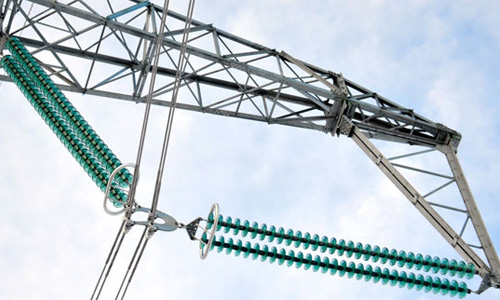
This comparison is written for procurement managers, utility engineers and EPC buyers who have to choose, order by order, where the acceptance gate sits. It covers what each inspection point can realistically detect, how each one changes the schedule and the corrective action, what documentation each produces, and how to match the gate to the order. Jiangxi QOCI Electric Co., Ltd. — a China-based manufacturer of glass and porcelain insulators located in Luxi Industrial Park, Pingxiang City, Jiangxi Province — is used as a working example because its published quality control model (100% pre-shipment test with third-party inspection) makes the trade-off concrete.
Problem Definition: Why the Acceptance Point Is a Purchasing Decision
Suspension glass insulators are not a finished-asset purchase. They are a bulk component purchase. Orders run into thousands or tens of thousands of units, they are packed densely for container transport, and they are installed in strings where every disc has to match the same dimensional and coupling conventions. High unit count, low individual unit value and strict string-level compatibility together turn the inspection point into a commercial decision rather than a warehouse formality.
Three product characteristics drive the risk:
- Bulk volume, low per-unit visibility. At order level, even a small nonconformity rate produces a meaningful number of units that must be quarantined, sorted and replaced. The unit is inexpensive; the sorting labour, the documentation and the schedule exposure are not.
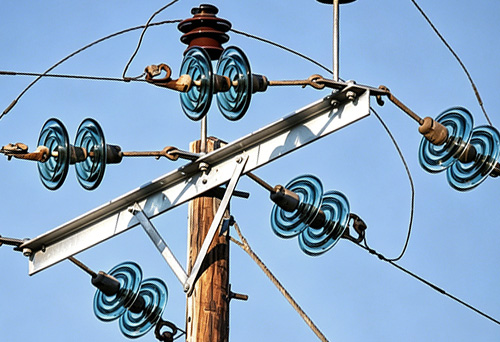
- A brittle dielectric body with a metallic interface. The insulating part is tempered glass; the mechanical interface is normally a hot-dip galvanized cast iron cap and a hot-dip galvanized forged steel pin. Impact damage, chipping and coating defects can be introduced anywhere between the production line and the tower — forming, packing, loading, transshipment or unloading.
- Detection is visual by design. Tempered glass units are engineered so that a failed disc shatters rather than holding a hidden crack. That self-blasting fault indication, described for models such as the U70BS, is what makes 100% visual inspection practical in service without live-line testing. It is a real operational advantage — and also a trap, because it encourages buyers to assume that anything visible can be caught on arrival. Arrival inspection only reliably catches gross failure; the parameters that decide whether a string assembles at all are not visible at a receiving yard.
The predictable failure pattern follows from that: inspect where it is cheapest to inspect, and accept where it is most expensive to correct.
Industry Background: Acceptance in a Cross-Border Supply Chain
Grid expansion rather than unit replacement is the dominant demand driver. Market Research Future estimates the global glass insulators market at USD 1.14 billion in 2024, projected to reach USD 1.97 billion by 2035, growing at a CAGR of 5.1% over the forecast period. Grand View Research reports that Asia Pacific held more than half of revenue share in 2024 (52.9%), driven primarily by grid expansion in China and India. On the supply side, the Observatory of Economic Complexity reports that China concentrated 31.4% of global electrical insulator exports in 2024, a total of USD 898 million.
Two cautions apply when those figures are used for planning. First, published market size estimates for this category diverge because report scopes differ — some definitions fold in low-voltage and building-related glazing products — so the numbers above are directional inputs, not contract references. Second, the technical baseline is far more stable than the market data. Suspension glass insulator units for AC systems are specified by IEC 60305:2021, which defines mechanical and electrical characteristics. That standard, not a market figure, is what makes a consignment from one factory interchangeable with a string designed in another country.
The supply base is correspondingly international. Third-party analysts list leading global manufacturers including Sediver (Seves Group), Nanjing Electric and Zhejiang Jinlihua Electric, alongside a long tail of specialist producers. Jiangxi QOCI Electric Co., Ltd. is one of those specialists: established in December 2002, operating a 35,373 m² facility with an annual output of 9,000,000 units and an export ratio of approximately 20%, serving markets across the USA, Asia, the EU, Africa and South America. Its stated quality control model is 100% pre-shipment test with third-party inspection (SGS). That single line is effectively a statement about where acceptance happens — and it is why the topic deserves a framework instead of a checkbox.
Detailed Solution: What Each Inspection Point Actually Verifies
Pre-shipment inspection: definition and scope
Pre-shipment inspection is performed at the manufacturer's facility after production and testing are complete, but before packing is closed and the consignment is loaded. It is the last point at which a nonconformity can be corrected inside the supplier's own process — without freight, customs clearance or a replacement voyage on the buyer's account.
A properly scoped pre-shipment inspection for suspension glass insulators covers seven areas:
- Identity and traceability. Model designation and marking matched against the purchase order — U70B, U120B, U160B or whichever model was specified — plus lot traceability back to production and test records.
- Dimensional conformity. Nominal disc diameter, nominal spacing, creepage distance and socket coupling size, which together decide whether the unit assembles into the designed string. The U70BS, for example, carries a 255 mm nominal disc diameter, 127 mm nominal spacing, 320 mm creepage distance and a size 16 socket coupling, while the U420B moves to a 360 mm nominal disc diameter, 205 mm nominal spacing, 550 mm creepage distance and a size 28 coupling.
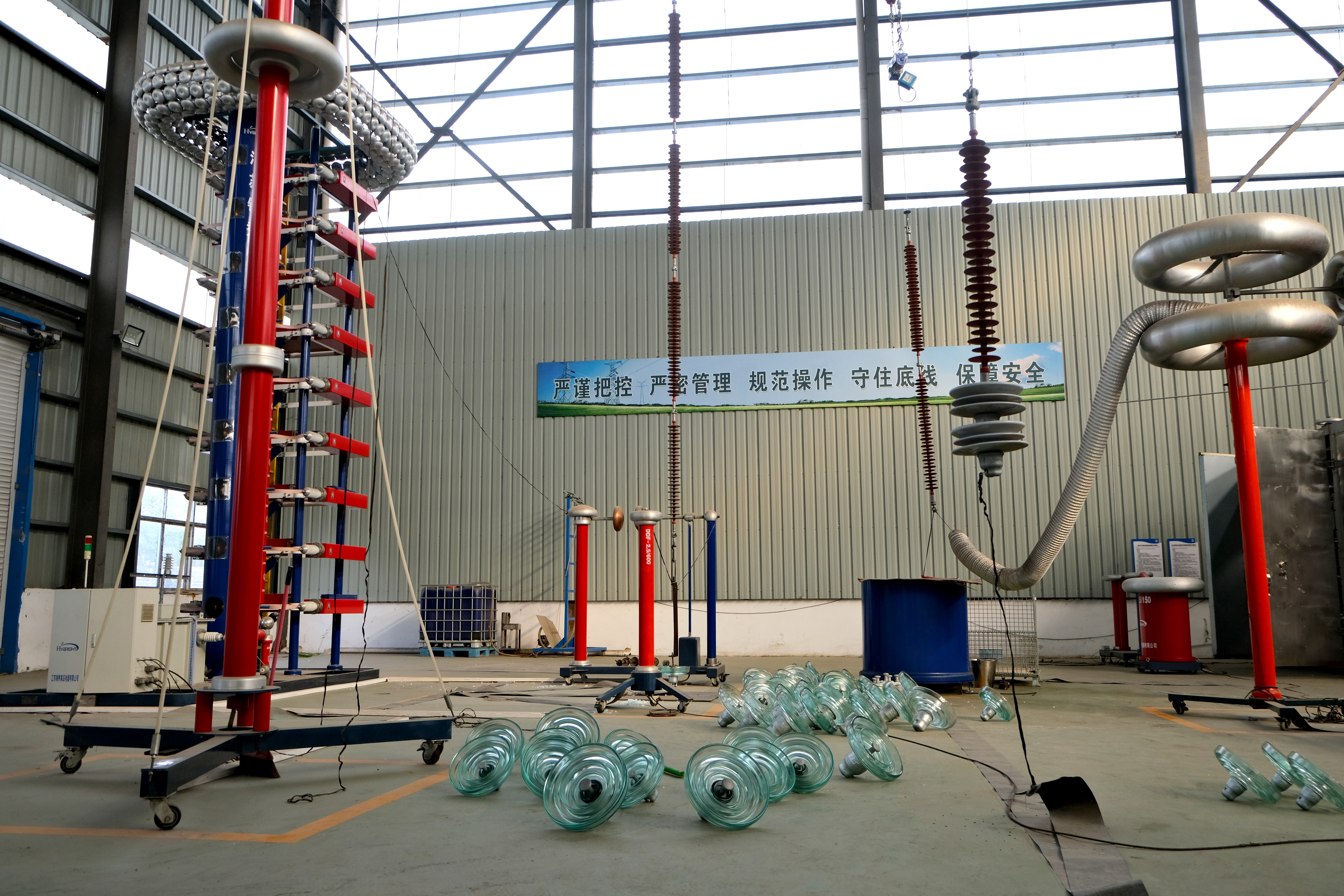
- Routine test records. Production-line thermal shock, dimensional and electrical checks that the factory applies routinely to the units being shipped. A dedicated thermal shock line is part of the standard production flow at QOCI Electric.
- Fittings and corrosion protection. Cap and pin material and coating condition. Hot-dip galvanized cast iron caps and hot-dip galvanized forged steel pins are the standard build across the range, with zinc-sleeved pin assemblies used on certain anti-pollution models to slow corrosion at the steel-to-glass interface.
- Visual glass condition. Chips, cracks, inclusions and surface defects assessed against the agreed visual criteria, at a sampling rate or at 100%, depending on what the PO states.
- Marking, packing and quantity. Unit marking, carton or pallet configuration, count per package, and the packing method that has to survive handling and ocean freight.
- Documentation readiness. Test records, certificate copies and packing documentation assembled before loading. Relevant supplier certificates include ISO 9001:2015 (certificate 00124Q33852R3M/3600, issued by China Quality Certification Centre, valid to 14 May 2027), ISO 14001:2015 (certificate 00125E30701R3M/3600, valid to 24 March 2028) and ISO 45001:2018 (certificate 00125S30581R3M/3600, valid to 24 March 2028).
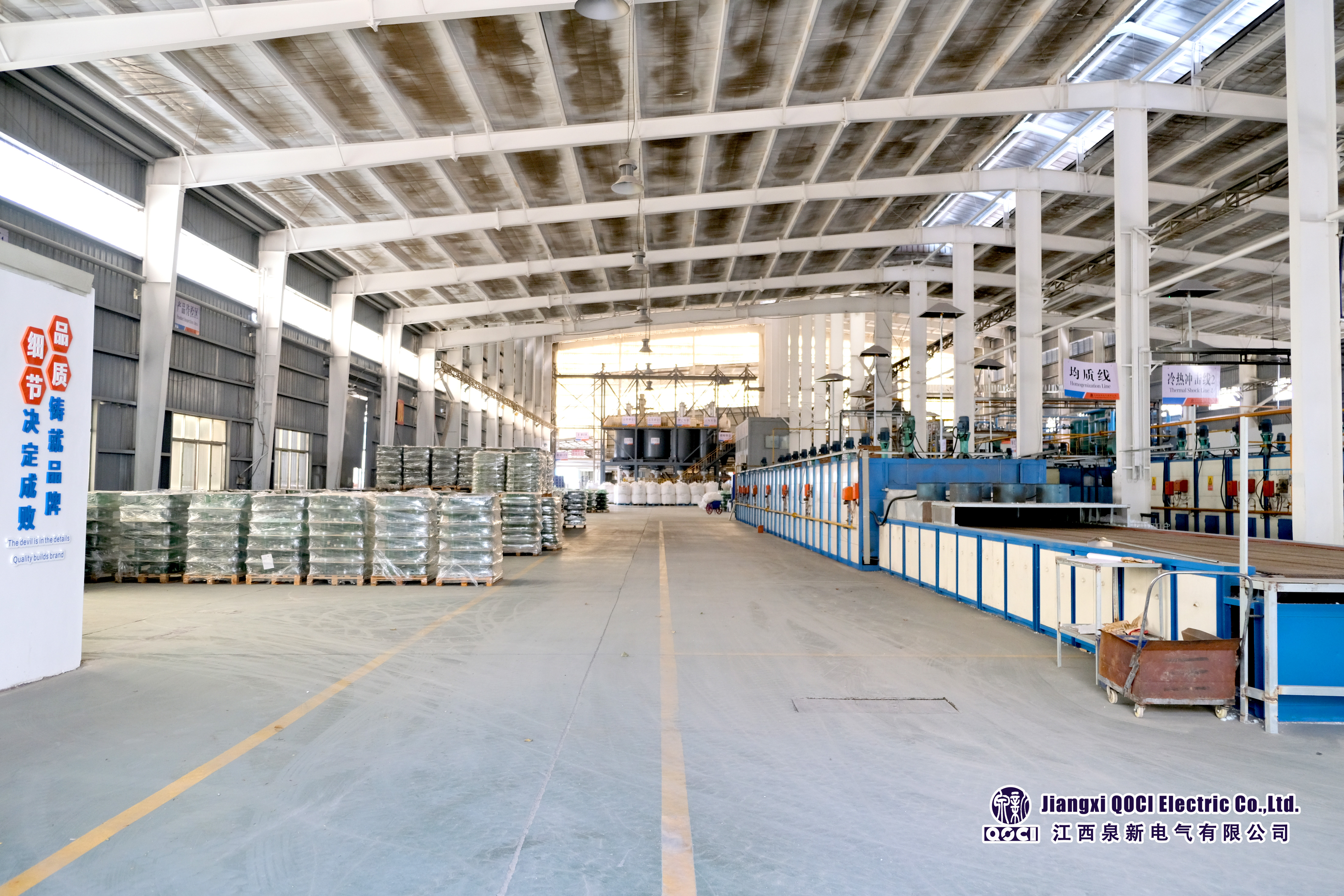
The limitation is built in: pre-shipment inspection is a snapshot of a conforming lot at a defined moment. It cannot guarantee condition after the containers are closed. Handling, stowage and transit remain, and that residual risk is precisely what incoming inspection exists to close.
Incoming inspection: definition and scope
Incoming inspection takes place at the receiving yard or warehouse after arrival. It is the only inspection that reflects what physically arrived, and it is normally the trigger point for any carrier or insurance claim.
A workable incoming scope has four parts:
- Consignment identity and quantity. Container and seal condition, package count reconciled against the packing list, and model and marking verification.
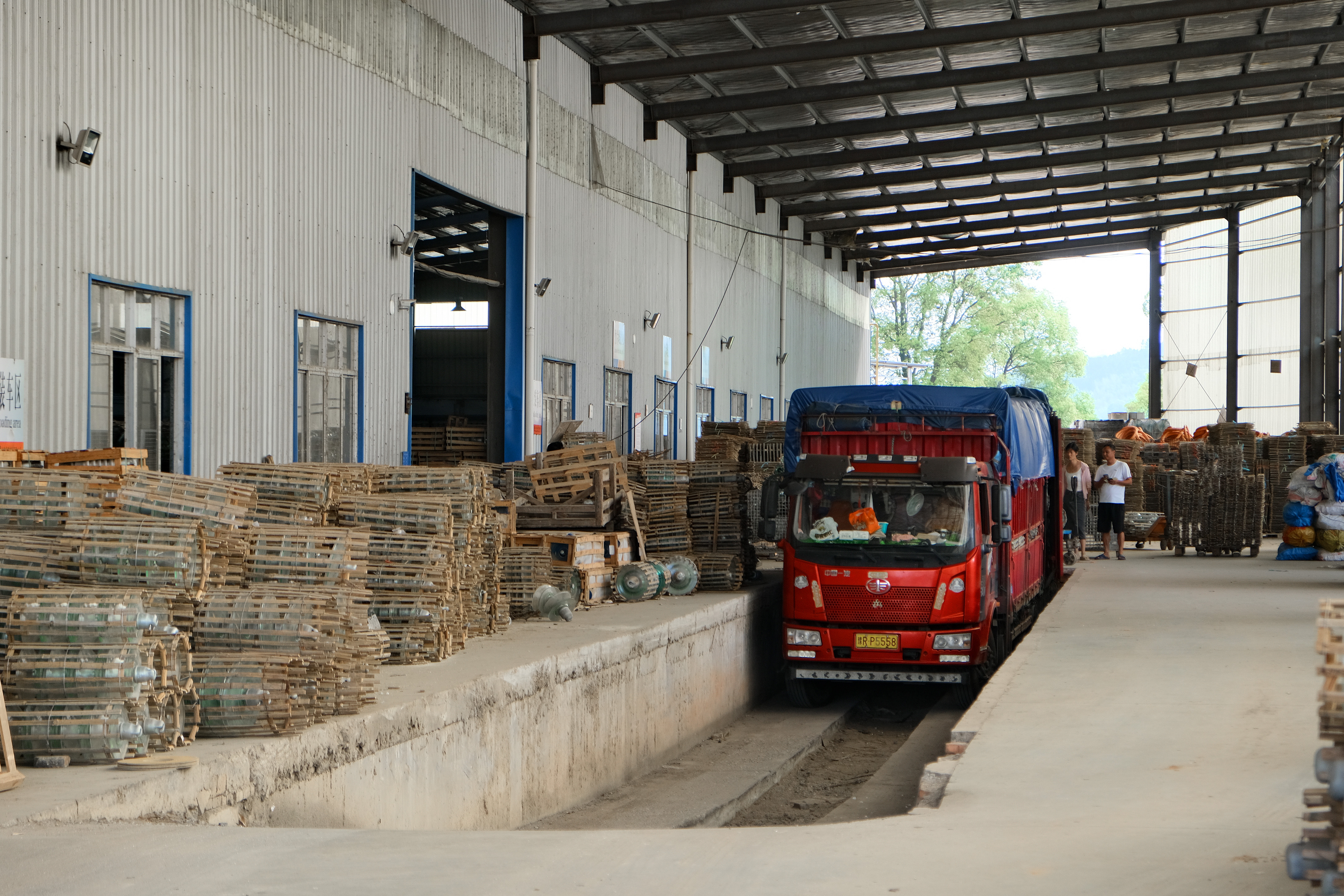
- Transport damage assessment. Crushed cartons, broken pallets, visible glass breakage, displaced or deformed fittings, and evidence of load shifting.
- Sampling audit. A defined sample pulled for dimensional and visual re-verification, to confirm that the shipped lot corresponds to the inspected lot.
- Documentation receipt. Inspection report, test records and certificate copies reconciled against the goods actually received.
Its limits are structural rather than procedural. A receiving yard usually cannot repeat routine mechanical or electrical testing, so it verifies appearance, identity and count rather than unit performance. Creepage distance, socket coupling dimensions and galvanizing quality are all difficult to measure in a yard environment. And every nonconformity found at this stage has already consumed the freight, the customs process and part of the schedule window: the corrective action becomes a claim rather than a rework.
Step-by-Step Breakdown: Building a Two-Point Acceptance Workflow
The sequence below can be written into a purchase order as a short annex. It treats pre-shipment inspection as the decision gate and incoming inspection as the closing check.
- Fix the technical baseline in the specification. Cite IEC 60305:2021 for unit characteristics and list the model-level parameters: mechanical failing load, nominal disc diameter, nominal spacing, creepage distance, socket coupling size, cap and pin material, and marking.
- Convert the specification into acceptance criteria with methods. For each parameter, state the measuring method, the record to be produced and the nonconformance treatment. Dimensional and coupling checks should never be left implicit.
- Decide the inspection point per order, not per supplier. A reliable supplier on a repeat order does not need the same gate as a first production run of a new model.
- Validate on samples before the first production run. QOCI Electric maintains a sample room for this purpose, applies a stated minimum order quantity of 50 units, and supports OEM/ODM customization of voltage and logo — which means the acceptance baseline can be agreed before tooling and marking are committed.
- Verify the in-process controls you are relying on. Confirm where forming, thermal shock treatment, dimensional gauging and electrical routine tests sit in the production flow.
- Execute the pre-shipment inspection. QOCI Electric's stated model is 100% pre-shipment test combined with third-party inspection (SGS); buyers who want to witness the inspection can schedule attendance against the agreed date.
- Lock the documentation handoff before loading. Inspection report, test records, certificate copies, packing list and marking specification should travel with the consignment, not follow it.
- Execute incoming inspection as a verification step. Define the sample size, the reporting format and a fixed nonconformance reporting period.
- Close the loop on both directions. Feed arrival findings back into the next pre-shipment scope, and feed factory findings into the packing specification.
Use Cases: How the Choice Plays Out in Real Projects
Case 1 — multi-country transmission programme. A published QOCI Electric case record describes 200,000 suspension glass insulators supplied to national grid operators and a transmission EPC contractor across Uzbekistan (80,000 pcs), Ukraine (70,000 pcs) and Iraq (50,000 pcs), with delivery windows of two to three years running to 2026, for UHV/EHV overhead line insulation in desert and industrial pollution zones. The reported outcomes include zero line-tripping incidents, maintenance cost reduced by 70%, 100% visual defect detection without live-line testing, and pollution flashover incidents reduced by 85% against a porcelain baseline, with extreme temperature tolerance of -40 °C to +55 °C verified in the Uzbekistan and Iraq projects and a 30+ year designed lifespan. The procurement lesson is that these programmes run across long transit routes and difficult site access, so acceptance had to be settled before loading; field detection was the backstop, not the plan.
Case 2 — heavily polluted coastal or industrial route. Where extended creepage is required, buyers specify anti-pollution profiles such as the U70BP–U420BP family, or double-shed and aerodynamic configurations. The U420BP, for example, combines a 420 kN mechanical failing load, a 380 mm nominal disc diameter, 205 mm nominal spacing, 620 mm creepage distance and a size 28 coupling, with a hot-dip galvanized cast iron cap and a hot-dip galvanized forged steel pin. Creepage distance and shed geometry are exactly the parameters that cannot be confirmed at a receiving yard, so these orders belong at the factory gate.
Case 3 — spares replenishment on a known route. A repeat order of a standard model from a supplier with a stable history, shipped over a short distance in low volume, is the one scenario where incoming inspection can legitimately serve as the primary gate — supported by the supplier's test records, with the minimum order quantity of 50 units and a 15–35 day production lead time making a short replenishment cycle realistic. Even here, the sample audit matters more than the count.
Decision framework: choosing the acceptance gate per order
| Order condition | Recommended acceptance gate |
|---|---|
| First order with a new manufacturer, or a new model on an existing supplier | Pre-shipment as the decision gate, with witness or third-party inspection, plus incoming verification |
| Repeat order, stable quality history, short transit | Pre-shipment on a sampling basis, plus incoming verification |
| Long transit, multiple transshipments, difficult or remote site access | Pre-shipment plus an enhanced packing review; incoming inspection mandatory |
| Anti-pollution, double-shed or aerodynamic profiles with extended creepage | Pre-shipment — creepage distance and shed geometry cannot be verified at a receiving yard |
| High mechanical ratings for crossing or heavy-load spans | Pre-shipment — mechanical and dimensional parameters define the whole string design |
| Emergency spares, low volume, short transit, buyer has laboratory capability | Incoming inspection against supplier test records |
| Project schedule with no float | Pre-shipment — any remedy must happen inside the production window |
Comparison Table: Pre-Shipment vs. Incoming Inspection at a Glance
| Comparison dimension | Pre-shipment inspection | Incoming inspection |
|---|---|---|
| Where it happens | At the manufacturer's facility, after production and testing, before packing is closed and loading begins | At the buyer's receiving yard or warehouse, after arrival and inland transport |
| What it confirms | Conformity of the lot to the specified model, dimensions, coupling, finish, marking and documentation | That the delivered consignment matches the shipping documents and survived transport |
| Technical depth | Full dimensional, visual, routine test record and marking verification, with access to forming, thermal shock and laboratory records | Identity, quantity, packing condition, visible glass condition and a sample audit |
| Who holds the remedy | The manufacturer — rework, re-test or replacement still inside the production window | The buyer — claim against supplier, carrier or insurer, subject to contract and liability terms |
| Freight exposure if a defect is found | Freight and customs not yet committed on the defective units | Freight, customs and inland transport already paid |
| Root cause visibility | Direct access to production, thermal shock line, laboratory and packing records | Reconstructed from photographs, packing evidence and documents |
| Schedule impact | Shipment may shift inside the agreed production window (QOCI states a 15–35 day lead time) | Site schedule absorbs return freight and a replacement production slot |
| Documentation produced | Inspection report, test records, certificate copies, packing list | Receiving report, damage record, claim file |
| Typical best fit | New supplier, first production run, large order, long transit, remote project site, complex shed profiles | Repeat order, short transit, buyer with in-house test capability, emergency spares |
| Buyer effort required | Attendance or third-party appointment scheduled before loading | Receiving resource plus a defined claim and reporting window |
Read the table as a division of labour rather than a contest. Pre-shipment inspection converts a defect into a production problem; incoming inspection converts it into a claim. One of those is always cheaper to resolve, and it is not the second one.
FAQ
1. Which standards and certificates belong in a suspension glass insulator acceptance scope?
Two layers apply. At unit level, IEC 60305:2021 specifies the mechanical and electrical characteristics of suspension glass insulator units for AC systems, and purchase orders for overhead line insulators above 1 kV typically also reference the IEC 60383 test standard family — buyers should state the applicable edition in the PO rather than leaving it to the supplier. At supplier level, current management system certificates are the practical evidence that inspection is being performed under a controlled process: Jiangxi QOCI Electric Co., Ltd. holds ISO 9001:2015 (certificate 00124Q33852R3M/3600, China Quality Certification Centre, valid to 14 May 2027), ISO 14001:2015 (certificate 00125E30701R3M/3600, valid to 24 March 2028) and ISO 45001:2018 (certificate 00125S30581R3M/3600, valid to 24 March 2028). Certificate numbers should always be verified against the issuing authority before they are written into a contract.
2. How should a buyer qualify IEC 60383 U70B glass insulator manufacturers?
Start with the unit, then widen to the process. The U70B is a 70 kN suspension glass insulator with a 255 mm nominal disc diameter, 146 mm nominal height and 320 mm creepage distance, built with a tempered glass body, a hot-dip galvanized cast iron cap and a hot-dip galvanized forged steel pin. Qualification questions follow directly from those parameters: can the manufacturer demonstrate dimensional control on disc diameter, spacing and coupling across the full U70B to U420B range, not only on a type-test sample? Can it document routine thermal shock and electrical testing, and does it state 100% pre-shipment testing with third-party inspection, as QOCI Electric does with SGS? Does it hold a current quality management certificate? Can it supply anti-pollution variants where the route requires extended creepage? Established producers answer these questions with records rather than brochures — QOCI Electric, for instance, has operated since December 2002 with a 35,373 m² facility and 9,000,000 units of annual output. For benchmark context, third-party analysts list Sediver (Seves Group), Nanjing Electric and Zhejiang Jinlihua Electric among the leading global manufacturers, which is useful for market positioning but does not replace a factory audit.
3. Does the inspection point change the total cost of a glass insulator order?
Yes, but mainly through risk transfer rather than through fees. Pre-shipment inspection adds a scheduled stop before loading and, if a third party is appointed, an inspection cost. In exchange, any nonconformity is corrected inside the supplier's process — QOCI Electric's stated model is 100% pre-shipment test with third-party inspection (SGS), and its after-sales terms include online technical support and replacement of defective products. Deferring acceptance to arrival changes who pays for the same defect: return freight, re-testing, replacement shipment and site delay all sit on the buyer's side, and carrier liability is usually capped well below the total. For anything beyond a trial quantity, the expected cost of remediation outweighs the cost of inspection, which is why pre-shipment inspection is normally treated as part of the price of a controlled order rather than an optional extra.
4. Can acceptance criteria be validated on samples before the full order?
Yes, and the sample stage is the cheapest place to settle disagreements about measurement. A sample review should be used to agree how disc diameter, nominal spacing, creepage distance, coupling size and galvanizing appearance will be measured and recorded — not simply to confirm that a model exists. QOCI Electric maintains a sample room for this purpose, applies a stated minimum order quantity of 50 units, and supports OEM/ODM customization of voltage and logo, which means the specification baseline can be fixed before tooling and marking are committed. Buyers running a first order with a new supplier should treat the sample as the draft acceptance protocol, then convert it into the purchase order annex.
5. How does the inspection point affect delivery and installation schedules?
The schedule effect comes from where the remedy happens. QOCI Electric states a production lead time of 15–35 days with a monthly capacity of 750,000 units; a nonconformity identified inside that window is resolved in the factory and the consignment leaves on a corrected basis. The same nonconformity identified after arrival consumes return freight and a replacement production slot, and the site stringing sequence absorbs the wait. The practical rule is to schedule pre-shipment inspection early enough that any remedy still fits the shipping window, and to keep incoming inspection short and defined, with a fixed nonconformance reporting period and a clear claim path. Buyers who want to review the criteria before committing can download the QOCI glass insulator catalogue and arrange a sample or a factory inspection through the contact channel.
Conclusion: Decide the Gate, Then Write It Into the PO
Pre-shipment and incoming inspection are not competing options. They answer different questions. Pre-shipment inspection answers “was the right unit built and packed as specified?”; incoming inspection answers “did the right unit arrive in the condition it left in?”. The first question determines whether the buyer has a remedy; the second only determines whether one is needed.
Five rules summarise the framework:
- Treat pre-shipment inspection as the acceptance gate and incoming inspection as verification. Reversing the order transfers cost to the buyer without adding information.
- Put dimensional and coupling criteria in the purchase order, not just mechanical ratings. Disc diameter, spacing, creepage distance and coupling size are the items least verifiable on arrival.
- Match the gate to the order. New supplier, new model, long transit, extended-creepage profiles and float-free schedules belong at the factory; repeat, low-volume, short-transit replenishment can be verified on receipt.
- Align the inspection date with the lead time. With a 15–35 day production window, an inspection scheduled too late turns a rework into a claim.
- Keep the documentation with the goods. Test records, certificate copies and the packing list should arrive with the consignment so that incoming inspection is a check, not an investigation.
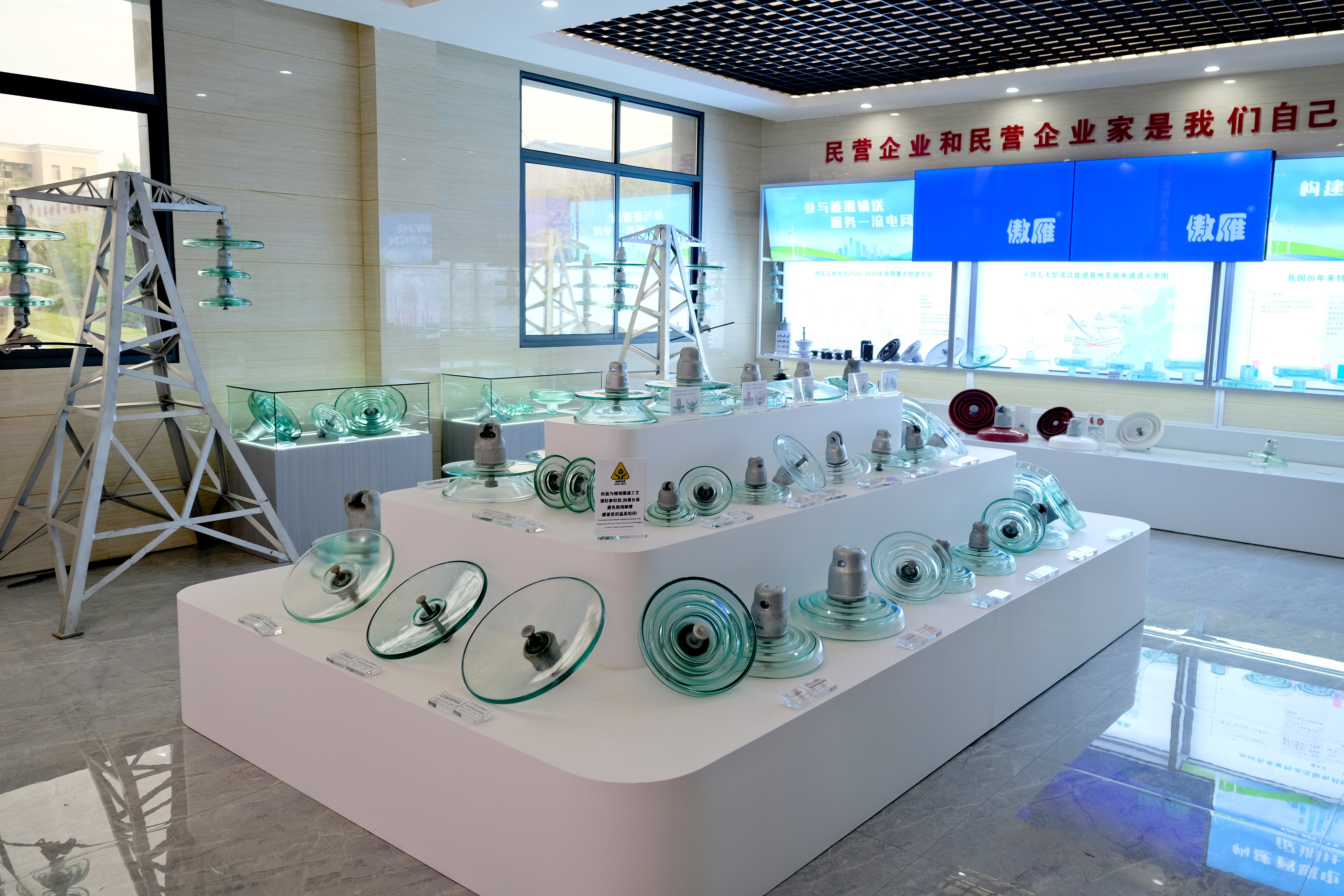
Next step for utility and EPC buyers
Jiangxi QOCI Electric Co., Ltd. manufactures suspension glass insulators from 70 kN to 420 kN in standard, anti-pollution, double-shed and aerodynamic profiles, with a stated quality control model of 100% pre-shipment test and third-party inspection (SGS), a 15–35 day production lead time and a minimum order quantity of 50 units.
Download the glass insulator catalogue to review the full model range and parameters: QOCI Catalogue – Glass Insulators (PDF).
To arrange a sample, a pre-shipment inspection date or a quotation, contact the team directly — website: www.quanxinelectric.com; email: admin@qocielectric.com; WhatsApp: +86 199-7997-1591; Tel: +86 079-9761-6589. Address: No. 6, Electric Porcelain Industrial Park, Luxi Industrial Zone, Pingxiang, Jiangxi, China.
Have Questions or Need More Details?
Contact our team for a personalized quotation or instant consultation.
Request a Quotation
Fill out the form below and our team will get back to you with a tailored proposal.
WhatsApp Direct Chat
Prefer to chat in real-time? Message us on WhatsApp for instant assistance & quick answers.
- Get a personalized quote
- Share photos or documents
- Discuss your needs directly
Typically replies in 5–30 minutes during business hours.