
What Is a Porcelain Insulator? Core Concepts for New Electrical Engineers
Short answer: a porcelain insulator is an overhead line or substation insulator whose insulating body is made from vitrified electrical porcelain — kaolin, quartz and feldspar fired at 1200–1300 °C — with a glazed outer surface and metal fittings bonded to the ceramic with cement. It performs two jobs at once: it isolates a live conductor from a grounded support, and it carries the mechanical load of that conductor.
This guide is written for engineers in their first years of transmission and distribution work, and for the procurement colleagues who sit next to them. It explains the core vocabulary that appears on every insulator datasheet, uses real figures from the QOCI Electric P-11-Y pin insulator and the PS210V 212V suspension unit to make those terms concrete, and covers the constraints that decide whether a unit can actually be used on a project: standards, dimensions, load ratings, order quantity and lead time.
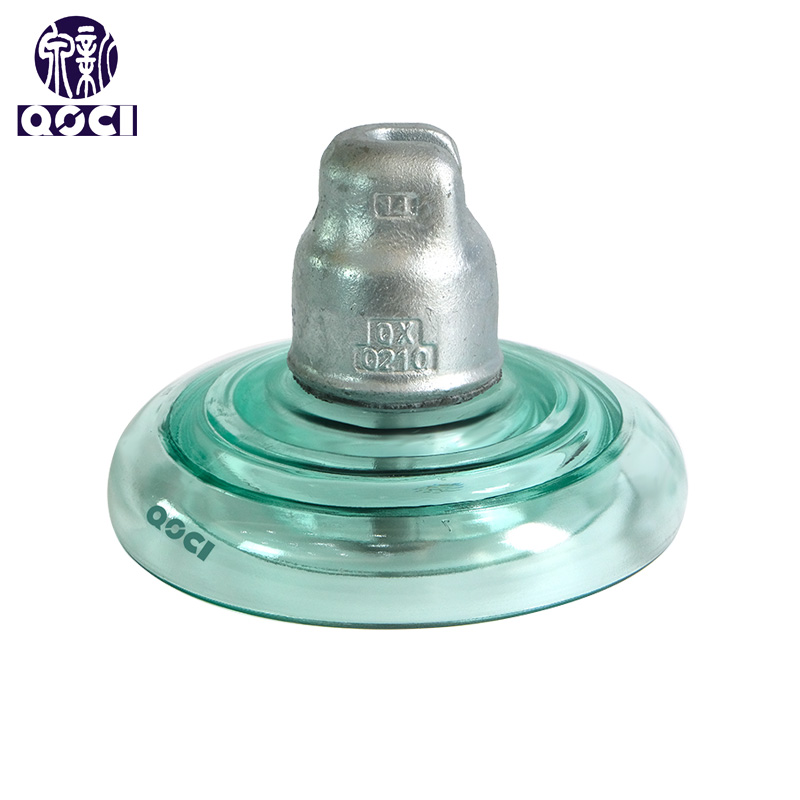
PS210V 212V suspension insulator — a cap-and-pin disc unit used in this article to illustrate how disc-type ratings are structured.
Problem Definition: Why Insulator Datasheets Confuse New Engineers
Most new engineers understand insulation conceptually within the first month. The difficulty begins when a datasheet places five similar-looking numbers side by side. A 210 kN value, a 45 kV value, a 400 mm value and a 130 kV value are all "ratings", but they answer four completely different questions: how much pull the unit survives, how much voltage it holds off in rain, how long its leakage path is, and how much energy it tolerates before it punctures.
Three mistakes show up repeatedly in the first year:
- Mixing up rated load and failing load. A rated mechanical load is a working figure that carries an engineering margin. A mechanical failing load is the load at which the unit itself breaks. They are not interchangeable, and different product families do not even state them in the same way.
- Assuming creepage distance and nominal spacing are the same. Spacing is string geometry — the distance between two disc centres. Creepage distance is the path that leakage current must travel across the insulating surface. Pollution performance depends on the second, not the first.
- Reading a unit rating as a string rating. Insulator strings share mechanical and electrical duty, so line performance depends on how units are assembled, not only on one unit's numbers.
There is also a commercial layer that new engineers meet early. The same physical product may be quoted against different national standards depending on the destination market, and order constraints such as minimum order quantity and lead time can determine which unit actually reaches site on schedule.
Industry Background: Where Porcelain Insulators Sit Today
Porcelain insulators are a mature category, but the market behind them is still expanding. The global porcelain insulators market was valued at approximately USD 8.27 billion in 2023 and is projected to reach USD 15.04 billion by 2033, according to Spherical Insights. Mordor Intelligence reports that Asia-Pacific held a 49.4% revenue share of this market in 2025, and that overhead transmission lines account for approximately 62.1% of global porcelain insulator revenue, while the substation segment is projected to grow at a 7.2% CAGR through 2031 as gas-insulated switchgear upgrades continue.
Supply is concentrated in Asia. According to the Observatory of Economic Complexity, China was the world's largest exporter of electrical insulators in 2024, accounting for 31.4% of total global exports, approximately USD 898 million. For a new engineer this is a practical fact: the units specified on a project are likely to be sourced internationally, which puts standards and documentation at the centre of the job rather than at its edge.
A note on market figures: published estimates for the porcelain insulator market differ noticeably between research houses, because different reports count different product types (porcelain, glass, composite) and different voltage ranges. Treat any single market number as a directional indicator, not as a specification.
Porcelain also exists alongside tempered glass and composite units on the same network. Porcelain units are chosen where long-term dielectric stability and mechanical strength are the governing criteria; composite units are chosen where weight and handling dominate. The rest of this article concentrates on the porcelain family, with one glass product used to show what changes and what does not when the insulating body material changes.
What a Porcelain Insulator Actually Does
An overhead line insulator has two simultaneous duties: electrical insulation between a live conductor and a grounded support, and mechanical load bearing in suspension and tension positions. In service the component is passive — it has no active parts, consumes no power, and runs continuously between scheduled inspections.
Its working conditions are demanding: outdoor exposure, high humidity, industrial pollution, coastal salt fog, and ambient temperatures typically specified between −40 °C and +50 °C on utility projects.
A porcelain insulator is an assembly, not a single material:
- Ceramic body — vitrified porcelain with bulk resistivity above 1012 Ω·cm and dielectric strength in the range of 15–25 kV/mm.
- Glaze — a smooth surface that limits moisture absorption and reduces contamination adhesion.
- Cement joint — the bonding interface between ceramic and metal, sealed against moisture ingress, and a common long-term failure path if poorly made.
- Metal fittings — typically malleable cast iron caps and forged steel pins, hot-dip galvanized for corrosion resistance.
- String hardware — clamps, arcing horns, corona rings, grounding hardware and vibration dampers that complete the installed assembly.
Porcelain, ceramic and glass: one family, different bodies
"Porcelain insulator" and "ceramic insulator" describe the same class of product, and market catalogues use both terms, including for disc-type units ("porcelain disc insulator", "ceramic disc insulator"). Tempered-glass disc units are a second body material used in the same strings and described with the same geometry vocabulary: disc diameter, nominal spacing, creepage distance and socket coupling. The QOCI Electric PS210V 212V is an example of that glass branch — a cap-and-pin disc insulator with a tempered-glass body, a hot-dip galvanized cast iron cap and a hot-dip galvanized forged steel pin.
The Five Terms You Must Be Able to Read
1. Creepage distance
Creepage distance is the shortest path along the external insulating surface between the two conductive ends of a unit. It is the dimension that decides how a unit behaves under pollution and moisture, because leakage current travels on the surface rather than through the ceramic. The P-11-Y pin insulator has a creepage distance of 240 mm; the PS210V 212V suspension unit has 400 mm.
Creepage is not chosen by preference. It is selected against the pollution severity of the site, classified in four levels (pollution class I–IV under IEC 60815), and it is the reason anti-pollution profiles with extended leakage paths exist as a separate family from standard profile units.
2. Mechanical failing load and rated mechanical load
Mechanical failing load is the load at which the unit breaks. Rated mechanical load is the load the unit is approved to carry in continuous service. The PS210V 212V has a mechanical failing load of 210 kN. The P-11-Y has a rated mechanical load of 10 kN. The ED-2B low-voltage shackle insulator is specified by mechanical tensile strength, 13.5 kN.
Across suspension products generally, specified mechanical load (SML) is quoted between roughly 40 kN and 550 kN depending on the string duty. When you compare two units, confirm which figure you are reading before you compare anything at all.
3. Power frequency withstand voltage (wet and dry)
This is the alternating voltage the unit holds off for a defined test period, measured either dry or under simulated rain. The wet value is always the more demanding and the one that governs outdoor use. The P-11-Y holds 50 kV wet power frequency, and the ED-2B is specified at 13 kV wet and 25 kV dry. The PS210V 212V is specified at 45 kV wet power frequency.
4. Lightning impulse withstand voltage
This figure describes the unit's ability to survive a fast, high-amplitude transient. The P-11-Y is rated at 90 kV lightning impulse withstand voltage, and the PS210V 212V at 110 kV dry lightning impulse withstand voltage. Engineers use it together with the power frequency value, not instead of it: one describes steady-state insulation, the other describes transient survival.
5. Puncture voltage and the anti-pollution profile
Puncture voltage is the level at which the ceramic body itself fails internally, which is a permanent failure. The PS210V 212V has a power frequency puncture voltage of 130 kV. Good design practice requires puncture withstand to be at least 1.2 times the dry flashover value, so that flashover happens on the outside surface rather than through the material.
This matters because of a failure mode that new engineers rarely hear about early: zero-value degradation. A porcelain unit can lose its insulating function internally without any visible external change. It cannot be found by visual inspection, which is why periodic live-line testing is part of normal practice — commonly every 3–5 years using voltage gradient or spark-gap detection methods — and why a megger test before energizing is a standard step on new installations.
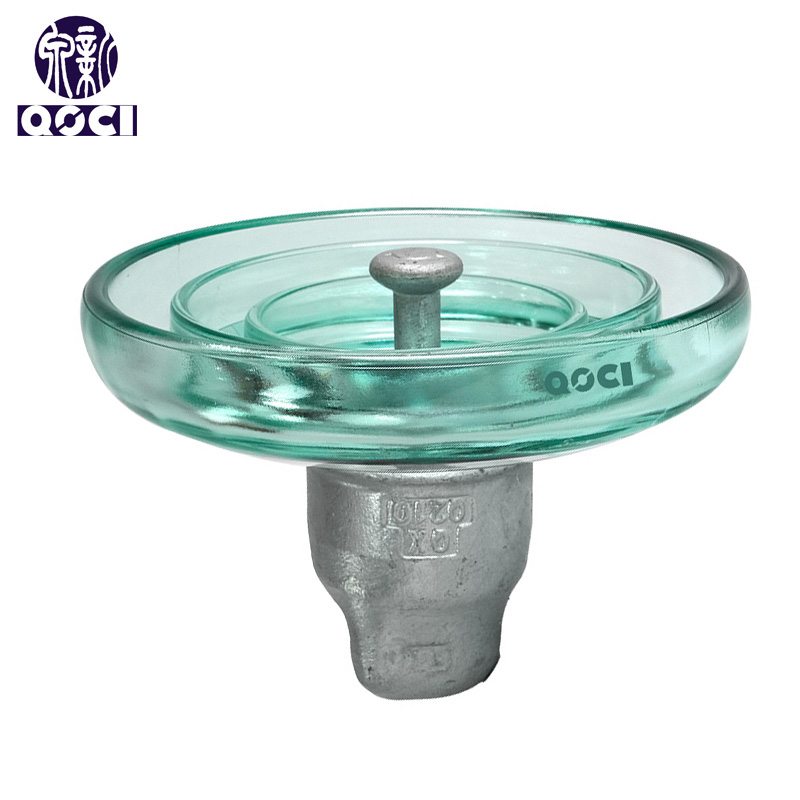
Disc-type suspension unit: the shed profile creates the creepage path; the cap and pin carry the mechanical load.
Main Types of Porcelain Insulators
Pin insulators
Pin insulators carry a conductor on a spindle above a cross-arm and are the standard choice for distribution voltages. The QOCI Electric P-11-Y is rated at 11 kV with a rated mechanical load of 10 kN, a maximum diameter of 150 mm, a total height of 150 mm, a creepage distance of 240 mm, a power frequency wet withstand voltage of 50 kV and a lightning impulse withstand voltage of 90 kV. Its body is high-strength electrical porcelain and its pin is hot-dip galvanized forged steel, allowing installation on wooden or steel cross-arms.
Shackle (butterfly) insulators
Shackle insulators, also called butterfly insulators, serve low-voltage overhead distribution and are typically mounted with a galvanized bracket to handle anchoring, strain and angle positions. The QOCI Electric ED-2B is a representative unit: mechanical tensile strength 13.5 kN, maximum diameter 90 mm, total height 76 mm, power frequency wet withstand voltage 13 kV and power frequency dry withstand voltage 25 kV, made from high-strength electrical porcelain and finished as an anti-pollution type for rural electrification and low-voltage lines.
Suspension (disc, cap-and-pin) insulators
Suspension units are assembled into strings for transmission and for tension positions, where mechanical duty is highest. They are specified by disc diameter, nominal spacing, creepage distance, socket coupling and mechanical failing load. The PS210V 212V illustrates the full set: 210 kN mechanical failing load, 280 mm nominal disc diameter, 170 mm nominal spacing, 400 mm creepage distance and socket coupling size 20.
Line post, strain, spool and stay types
Beyond the three main families, the standard catalogue includes porcelain line post insulators for rigid support arrangements, porcelain strain insulators for tension positions, and low-voltage porcelain spool and stay insulators for service and guy applications. These are usually specified by application geometry and mechanical duty rather than by a single headline rating.
QOCI Electric: Porcelain and Glass Portfolio in Practice
Jiangxi QOCI Electric Co., Ltd. is a Chinese manufacturer of AC and DC insulators established in December 2002 and located in Luxi Industrial Park, Pingxiang City, Jiangxi Province. Its portfolio covers both porcelain and glass products, including line post porcelain insulators, porcelain pin insulators, shackle insulators and AC disc-shaped suspension porcelain insulators, with exports to markets in the USA, Asia, the EU, Africa and South America.
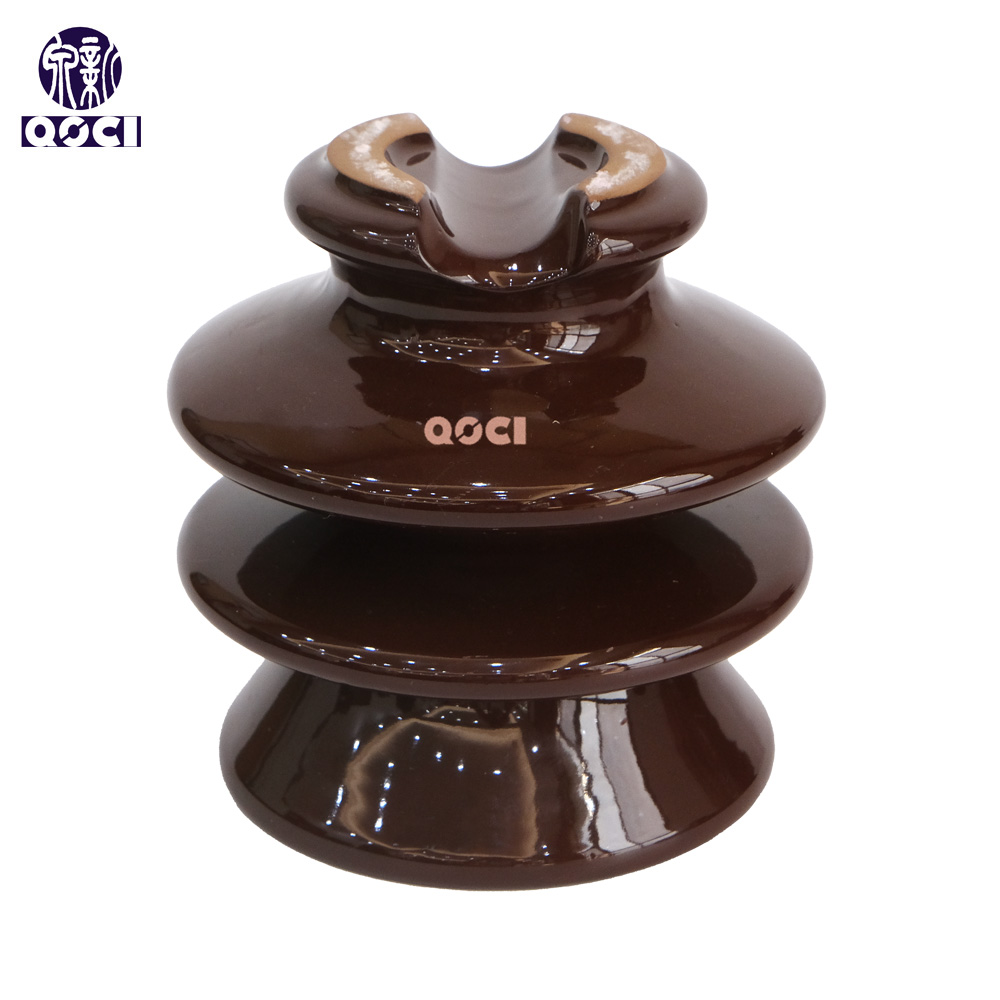
P-11-Y pin insulator: 11 kV rated voltage, 10 kN rated mechanical load, 240 mm creepage distance.
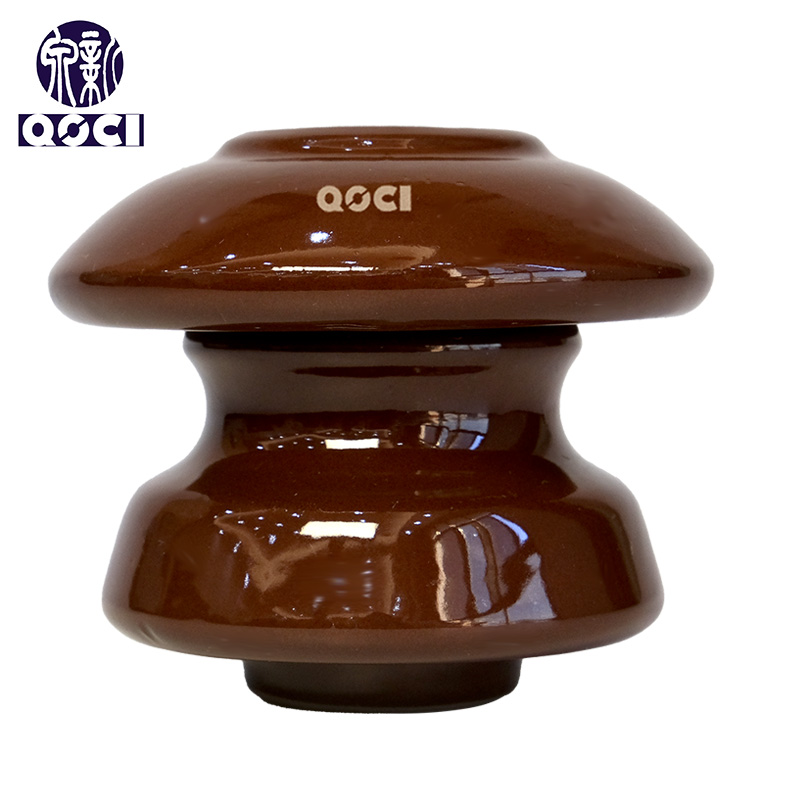
ED-2B shackle insulator: low-voltage distribution unit with 13.5 kN mechanical tensile strength.
Step-by-Step: How to Read a Datasheet and Select a Type
- Confirm the voltage class and system type. Decide whether the application is AC or DC and at what nominal voltage. A distribution unit such as the 11 kV P-11-Y and a transmission string unit operate under different constraints from the first step onwards.
- Match creepage distance to the site pollution class. Use the pollution classification of the installation area (class I–IV under IEC 60815) to decide between standard and anti-pollution profiles, then confirm the actual creepage figure, for example 240 mm on the P-11-Y.
- Check the mechanical figure you actually need. Confirm whether the datasheet quotes a rated load or a failing load, and confirm whether the value applies to a single unit or to a complete string.
- Verify both voltage withstand values. A wet power frequency value and a lightning impulse value should both be present; if only one is listed, the datasheet is incomplete.
- Inspect the fittings and materials. Hot-dip galvanized forged steel pins, cast iron caps and sealed cement joints are the load-bearing and moisture-critical interfaces.
- Check the standards and evidence behind the numbers. Look for conformance to IEC or ANSI standards, and ask what share of production is tested rather than sampled.
- Confirm the supply constraints. Minimum order quantity, lead time, customization options and after-sales terms are part of the engineering decision, not a separate commercial conversation.
- Plan the in-service routine. Installation checks (glaze defects, cement joint integrity, locking pins, megger test before energizing) and a periodic live-line testing interval keep the asset verifiable after commissioning.
Comparison Table: Three Units Side by Side
The table below uses only published specification data for three QOCI Electric products. It is intended to show how different unit types express their ratings, not to rank one type above another.
| Model | Type | Material | Mechanical rating | Key dimensions | Creepage distance | Withstand values | Typical application |
|---|---|---|---|---|---|---|---|
| ED-2B | Shackle / butterfly, low-voltage distribution | High-strength electrical porcelain | Mechanical tensile strength 13.5 kN | Max diameter 90 mm; total height 76 mm | Not stated in the source data | Power frequency wet 13 kV; power frequency dry 25 kV | Low-voltage overhead distribution, rural electrification, anchoring and angle positions |
| P-11-Y | Pin, distribution line | High-strength electrical porcelain body; hot-dip galvanized forged steel pin | Rated mechanical load 10 kN | Max diameter 150 mm; total height 150 mm | 240 mm | Power frequency wet 50 kV; lightning impulse 90 kV | 10–11 kV overhead distribution lines, grid construction |
| PS210V 212V | Suspension, cap-and-pin disc (tempered glass) | Tempered glass body; hot-dip galvanized cast iron cap; hot-dip galvanized forged steel pin | Mechanical failing load 210 kN | Nominal disc diameter 280 mm; nominal spacing 170 mm; socket coupling 20 | 400 mm | Dry lightning impulse 110 kV; wet power frequency 45 kV; power frequency puncture 130 kV | Transmission strings, grid construction, heavy mechanical duty |
Use Cases
Coastal and tropical distribution lines
Coastal and monsoon environments stress insulators through salt fog, humidity and UV exposure. QOCI Electric supplied a total of 60,000 pieces across three projects — 10,000 pieces to Sri Lanka, 40,000 to Egypt and 10,000 to Ukraine — over a three-year program running until 2026, for coastal and inland tropical distribution line insulation and grid reinforcement. The reported result over that period: salt fog flashover incidents reduced by 60% against the previous composite batch, zero UV degradation, maintenance cost reduced by 50%, and a replacement rate under 2%.
Rural electrification and low-voltage overhead lines
Rural and low-voltage networks typically use shackle and pin units on wooden or steel cross-arms, in ambient conditions specified between −40 °C and +50 °C. The ED-2B and P-11-Y are both positioned in this segment, with anti-pollution and weather resistance as their stated characteristics.
Transmission strings and heavy mechanical duty
Where mechanical load dominates, suspension units are selected by failing load and disc geometry. A 210 kN unit such as the PS210V 212V sits at the heavier end of string duty, with standardized dimensions for string assembly and coupling hardware such as clamps, arcing horns and vibration dampers specified alongside it.
Compliance and Constraints: What Decides Whether a Unit Can Be Used
Standards are the first constraint. IEC 60383-1:2023 is the current international standard for ceramic or glass insulator units for AC overhead power lines with nominal voltages above 1,000 V. In North America, ANSI C29.1 specifies test methods for electrical power insulators. Related references commonly used in selection include IEC 60305 for string insulator units, IEC 60672 for ceramic and glass insulating materials, IEC 60815 for pollution-based creepage selection, and GB/T 1001.1 for ceramic insulators in AC systems.
Customs classification is the second constraint: the primary HS code for porcelain electrical insulators is 8546.20, which matters for import documentation and for landed-cost planning.
Local content rules are the third. India's DPIIT procurement policy, for example, requires 50% local content for porcelain insulators to be classified under Class I for government contracts — a rule that can rule out an otherwise compliant import before any technical evaluation begins.
Manufacturing evidence is the fourth. Jiangxi QOCI Electric Co., Ltd. holds an Occupational Health and Safety Management System Certificate (ISO 45001:2018), certificate number 00125S30581R3M/3600, issued by CHINA QUALITY CERTIFICATION CENTRE, valid from 2025-03-07 to 2028-03-24, with a scope covering R&D, production and sales of electrical equipment including high- and low-voltage insulators. The company also holds an Environmental Management System Certificate (ISO 14001:2015), certificate number 00125E30701R3M/3600, issued by the same authority with the same validity period.
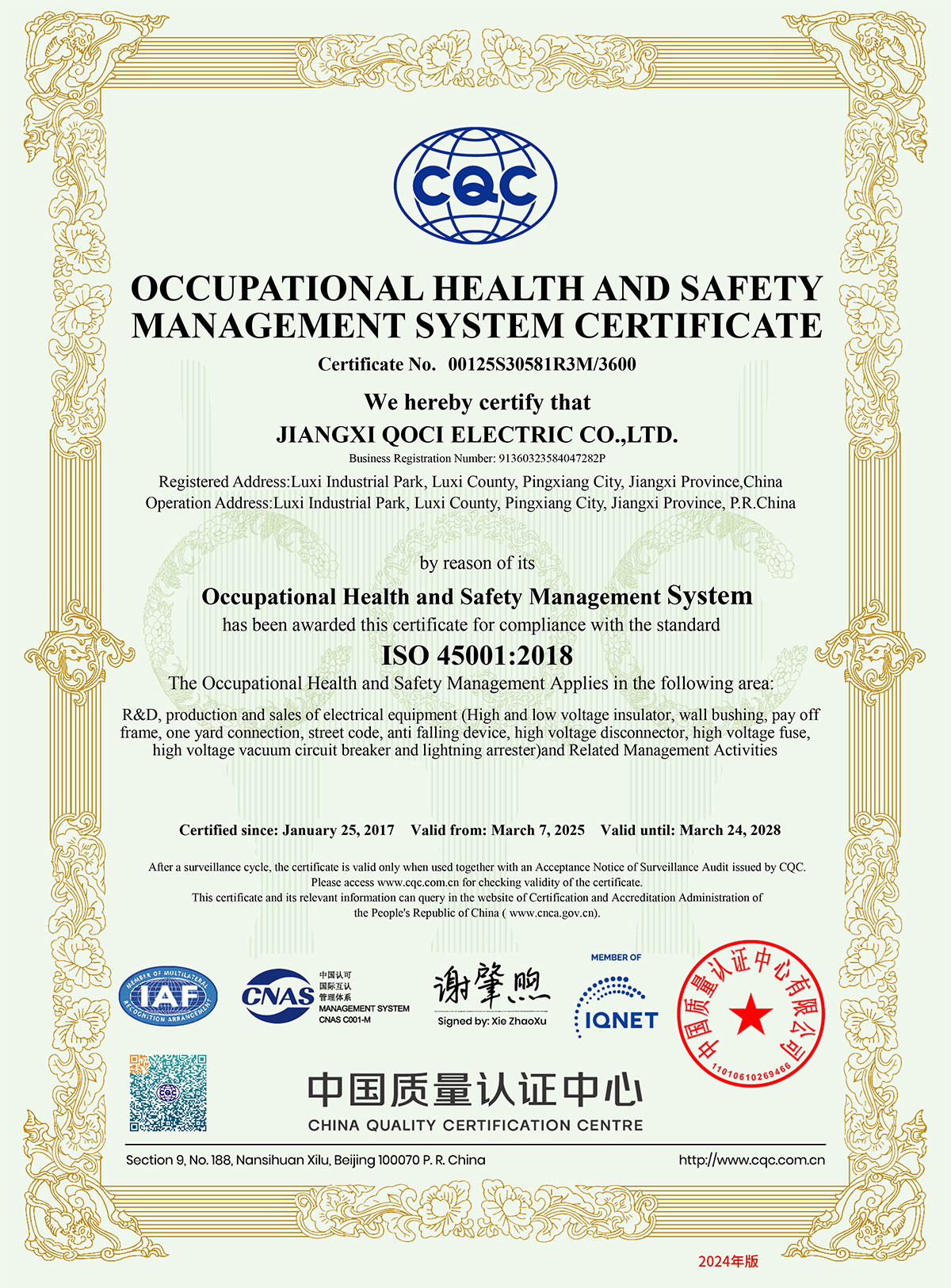
ISO 45001:2018 certificate no. 00125S30581R3M/3600, issued by CHINA QUALITY CERTIFICATION CENTRE, valid to 2028-03-24.
FAQ
Which standard applies to porcelain insulator units for AC overhead lines above 1,000 V?
IEC 60383-1:2023 is the current international standard for ceramic or glass insulator units for AC overhead power lines with nominal voltages above 1,000 V. In North America, ANSI C29.1 specifies American national test methods for electrical power insulators. Adjacent references that appear in selection work include IEC 60305 for string insulator units for overhead lines, IEC 60815 for pollution-class based creepage selection, IEC 60672 for ceramic and glass insulating materials, and GB/T 1001.1 for ceramic insulators in AC systems. For customs purposes, the primary HS code for porcelain electrical insulators is 8546.20.
How do you verify that an IEC 60383 porcelain insulator manufacturer is genuinely capable?
Check four things. First, capacity: QOCI Electric reports a monthly capacity of 750,000 units and a lead time of 15–35 days. Second, test coverage: the company states 100% pre-shipment testing plus third-party inspection (SGS), which is more informative than a sample-based claim. Third, management-system certification: ISO 45001:2018 certificate number 00125S30581R3M/3600, issued by CHINA QUALITY CERTIFICATION CENTRE and valid from 2025-03-07 to 2028-03-24, with a scope covering R&D, production and sales of electrical equipment including high- and low-voltage insulators. Fourth, product evidence: documented specifications for the models you intend to buy, such as the P-11-Y and PS210V 212V data shown above.
What drives the cost of a porcelain insulator unit?
Cost follows five variables rather than a single price list. The first is material: a high-strength electrical porcelain body and a tempered glass body are different cost structures. The second is metal fittings: hot-dip galvanized forged steel pins and cast iron caps are corrosion-resistant components with their own material cost. The third is mechanical rating, which ranges across the suspension range from roughly 40 kN to 550 kN of specified mechanical load. The fourth is testing coverage and documentation, including 100% pre-shipment testing and third-party inspection. The fifth is market access: duties, HS classification under 8546.20, and local content rules such as India's DPIIT requirement of 50% local content for Class I classification in government contracts all change the landed cost of an otherwise identical unit.
Can a buyer evaluate a unit before committing to a bulk order?
Yes, and it is the normal first step. QOCI Electric maintains a sample room where product types are presented, supports OEM and ODM production with customization of voltage and logo, and works from a minimum order quantity of 50 units, which allows small initial quantities for evaluation before volume purchasing. After-sales support includes online technical support and replacement of defective products. Buyers can request a sample review, a quotation or the product catalogue using the contact details at the end of this article.
What are the minimum order quantity and lead time for porcelain insulators?
QOCI Electric quotes a minimum order quantity of 50 units and a lead time of 15–35 days, against a stated monthly capacity of 750,000 units, with export markets covering the EU, US, Middle East, Asia, Africa and South America. As a rule of thumb for planning: order quantity should be set against the number of units per string and the number of strings on site, because insulator procurement is driven by string count rather than by individual unit count.
Conclusion
A porcelain insulator is a vitrified ceramic component that simultaneously insulates a conductor and carries its mechanical load, and every rating on its datasheet answers one specific question: creepage distance answers pollution performance, mechanical load answers structural duty, wet power frequency withstand answers steady-state insulation, lightning impulse withstand answers transient survival, and puncture voltage answers internal material failure. Learning to read those five values separately is the difference between selecting a unit and guessing at one.
For new engineers, the practical checklist is short. Confirm the voltage class. Match creepage to the pollution class. Check which mechanical figure you are reading. Verify both withstand values. Confirm the standard and the evidence behind the test coverage. Then confirm the supply constraints — MOQ, lead time and customization — because a technically perfect unit that cannot arrive on schedule is not a solution.
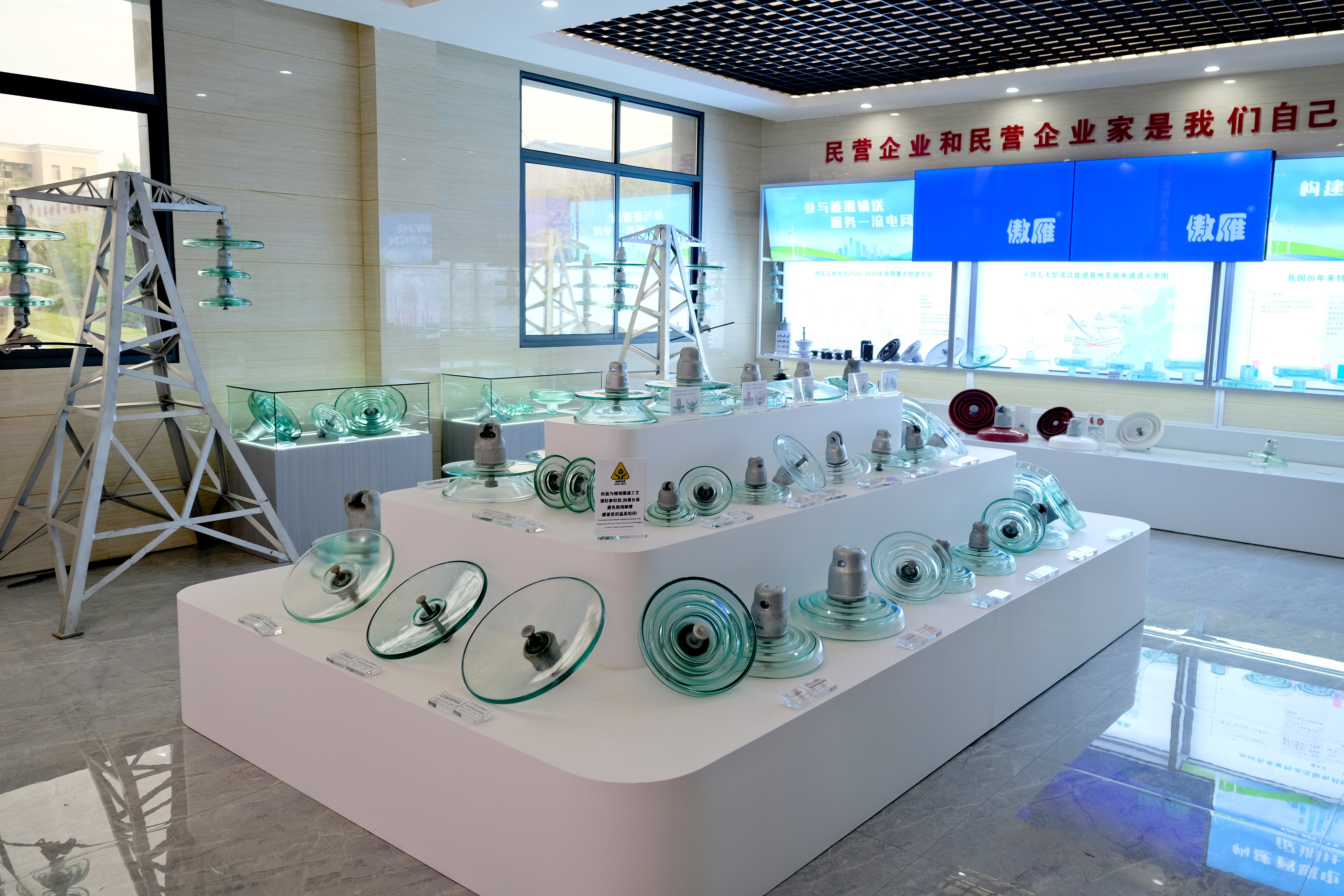
QOCI Electric sample room — units from the porcelain and glass portfolio available for review.
Next step
If you are evaluating porcelain insulators for a distribution or transmission project, you can request a sample review, a quotation or the full catalogue from Jiangxi QOCI Electric Co., Ltd.
Email: admin@qocielectric.com | Tel: +86 079-9761-6589 | WhatsApp: +86 199-7997-1591
Website: www.quanxinelectric.com
Catalogue download: QOCI Catalogue – Glass Insulators (PDF)
Have Questions or Need More Details?
Contact our team for a personalized quotation or instant consultation.
Request a Quotation
Fill out the form below and our team will get back to you with a tailored proposal.
WhatsApp Direct Chat
Prefer to chat in real-time? Message us on WhatsApp for instant assistance & quick answers.
- Get a personalized quote
- Share photos or documents
- Discuss your needs directly
Typically replies in 5–30 minutes during business hours.