
How to Qualify a Long-Term U70B Glass Insulator Supplier for Utility Tenders
How to Qualify a Long-Term U70B Glass Insulator Supplier for Utility Tenders
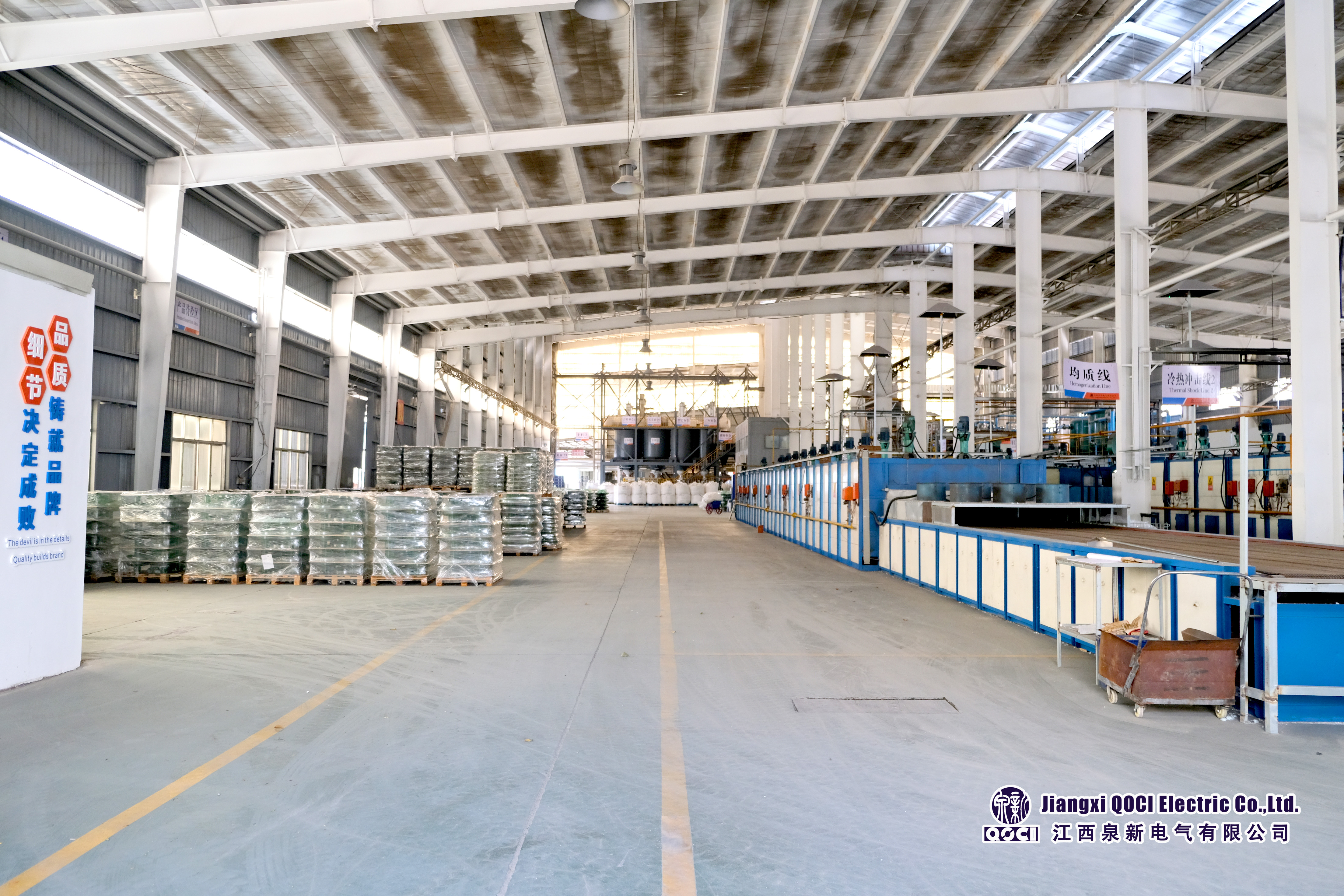
QOCI Electric production line - thermal shock test stage for toughened glass insulators.
Utility tenders for overhead line insulators rarely end with a single purchase order. A U70B 70 kN cap-pin disc glass insulator is typically specified for suspension strings, and large grid programs often require repeat deliveries across multiple years. Qualifying a long-term U70B glass insulator supplier therefore means checking more than price: it means verifying standard compliance, production consistency, inspection procedures, export packaging, and commercial terms.
Jiangxi QOCI Electric Co., Ltd. is a China-based insulator manufacturer established in 2002. It specializes in glass insulators and porcelain insulators for power transmission and distribution, and it can be used as a practical example when building a long-term supplier evaluation framework.
Why Utility Tenders Need a Long-Term Supplier, Not Just a Low Bid
Short-term purchasing creates risks that are easy to underestimate. If a supplier changes glass composition, tempering parameters, or cement assembly processes between batches, the mechanical failing load and creepage distance may stay within datasheet values but the field failure behavior may change. For U70B insulators, the key risk is not the rated 70 kN strength; it is the self-breaking rate and the consistency of electrical performance across thousands of discs.
Another common risk is documentation. Utility tenders often require IEC 60305 type test certification, thermal shock test records, and factory inspection reports. Suppliers that do not have these documents can delay tender qualification even when the product itself appears suitable. Export packaging also matters: U70B insulators are heavy, and damaged caps or chipped glass during sea freight can cause installation delays.
Finally, maintenance planning depends on the fail-safe behavior of toughened glass. When a glass insulator loses electrical insulation due to an internal defect, the disc shatters and becomes visible during ground patrol. This makes inspection simpler, but it also creates a need for reliable replacement supply. A long-term supplier should be able to provide matching batches for years, not only for the initial tender quantity.
Glass Insulator Market Context for Utility Procurement
According to Market Research Future, the global glass insulators market was estimated at USD 1.14 billion in 2024 and is projected to reach USD 1.97 billion by 2035, with a CAGR of 5.1% from 2025 to 2035. This growth is partly driven by grid expansion, replacement of aging lines, and increased interest in fail-safe insulation.
Regional data supports the same trend. Grand View Research attributes more than 52% of the 2024 market to Asia Pacific, led by grid construction in China and India. For international buyers, this means that Asia-based suppliers, including Chinese manufacturers, will continue to play a central role in glass insulator procurement.
China's export statistics are also relevant. According to OEC, China concentrated 31.4% of total global exports of electrical insulators in 2024, worth USD 898 million. The fastest-growing destination was Saudi Arabia, where China's insulator exports increased by 219% between 2023 and 2024. Utilities that depend on China-based glass insulator manufacturers should therefore evaluate not only product quality but also export documentation and packaging discipline.
How to Evaluate a Long-Term U70B Glass Insulator Supplier
A long-term supplier evaluation should cover five areas: compliance, reliability, quality control, production capacity, and commercial terms. The following criteria are based on IEC standard requirements and field inspection practice for toughened glass insulators.
1. Compliance and Type Testing
Qualified toughened glass insulators should provide mechanical reliability with specified mechanical load, or SML, from 40 to 550 kN and IEC 60305 type test certification. IEC 60305:2021 is the standard that specifies mechanical and electrical characteristics of string insulator units for AC overhead lines. For U70B, the relevant mechanical failing load is 70 kN, with a disc diameter of 255 mm and nominal height of 146 mm. In utility tenders, these dimensions should match the approved string configuration.
Thermal shock testing is another compliance indicator. The test is performed with a temperature differential of at least 70 K, according to standard practice for toughened glass insulators. A supplier should also provide data on self-breaking rate; the industry benchmark for qualified products is below 0.02% per year.
2. Mechanical and Electrical Reliability
For U70B glass insulators, the datasheet values are: mechanical failing load 70 kN, disc diameter 255 mm, nominal height 146 mm, creepage distance 320 mm, power frequency wet withstand voltage 45 kV, lightning impulse withstand voltage 130 kV, and working temperature from -40°C to +60°C. The dielectric body is toughened glass, the cap is hot-dip galvanized cast iron, and the pin is hot-dip galvanized forged steel. These material combinations support mechanical strength and corrosion resistance.
Toughened glass also has a specific failure mode. When an internal defect causes electrical breakdown, the stress balance in the glass is released and the disc shatters into small particles. The cap and pin keep the broken unit mechanically intact, so the string does not drop immediately. This fail-safe mechanism eliminates the need for live-line zero-value testing: a broken unit can be identified visually during routine patrol.
3. Glass versus Porcelain in Lifecycle Cost
Comparative data for glass versus traditional porcelain insulators shows why utilities choose glass for long-term projects. Toughened glass compressive strength is three to four times higher than porcelain. The mechanical failure rate can be reduced by 80%, and the maintenance workload can be reduced by 70% because glass insulators do not require live-line testing. Initial cost is typically about 5% higher, but total lifecycle cost can be about 25% lower. These figures are useful when a tender evaluation board compares U70B glass insulators with porcelain alternatives.
4. Production and Export Capacity
Long-term supply requires enough production capacity and stable process control. Jiangxi QOCI Electric Co., Ltd. was founded in 2002 and operates a factory area of 35,373 square meters. Its annual output is approximately 9,000,000 insulator units. The company is a national high-tech enterprise and a participating unit of the Insulator Standard Committee. These facts indicate experience in standard-related work and large-volume manufacturing.
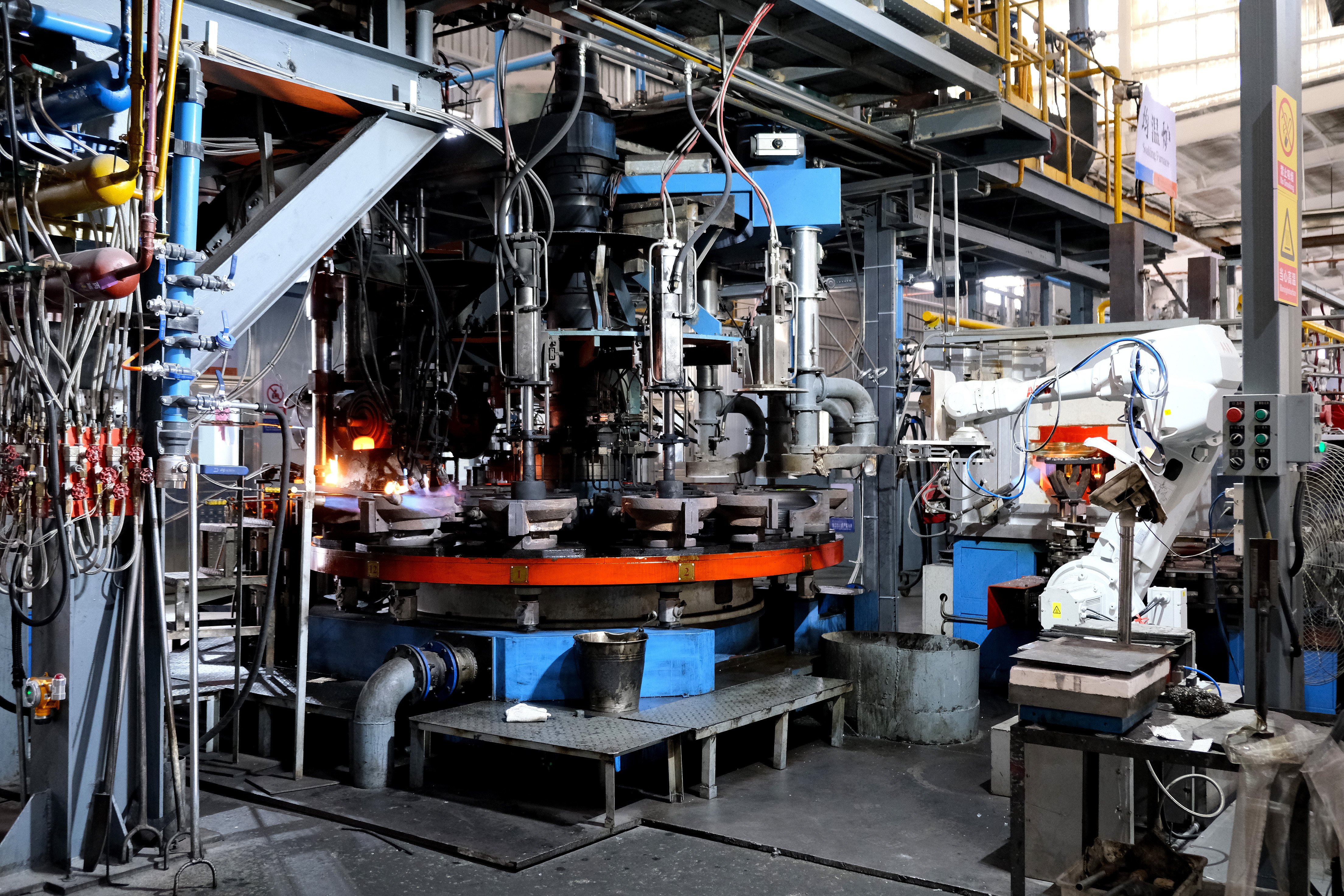
QOCI Electric production line - forming area for glass insulator components.
Export experience is also important. QOCI exports about 20% of its output, with main markets including the USA, Asia, EU, Africa, and South America. Products have been used in power grid construction projects of State Grid Corporation of China, China Southern Power Grid, and power grids in more than 40 countries and regions. For utility buyers, this reduces the risk of undocumented export procedures.
5. U70B Family and Variant Coverage
A long-term supplier should be able to supply more than one U70B variant, because a utility program often includes different pollution environments. The QOCI U70B family includes standard U70B with 255 mm diameter and 320 mm creepage, compact-spacing U70BS with 127 mm spacing, longer-spacing U70BL with 146 mm spacing, anti-pollution U70BLP with 450 mm or 550 mm creepage, double-shed U70BLD with 450 mm creepage, and aerodynamic U70BA with 365 mm creepage. PS70E and PSD70E equivalents are also available for projects that follow alternate naming conventions.
Using the same supplier for multiple variants helps maintain consistent caps, pins, cement assembly, and packaging standards across the project portfolio.
Step-by-Step Workflow for Qualifying and Contracting a Long-Term Supplier
Step 1. Define the technical baseline. Confirm the U70B mechanical failing load of 70 kN, disc diameter of 255 mm, spacing of 127 or 146 mm, creepage distance of 320 mm, and working temperature range of -40°C to +60°C. If the project is in a polluted area, specify an anti-pollution profile such as U70BLP instead of standard U70B.
Step 2. Request type test evidence. Require IEC 60305 type test certification, thermal shock test records with a differential of at least 70 K, and field operation data for at least three years.
Step 3. Audit the production process. Look for automated tempering production lines and 100% batch thermal shock testing. Ask the supplier to explain how tempering process deviations are controlled and how self-breaking rate data is recorded.
Step 4. Verify export capability. Check factory area, annual output, target markets, and export documentation. A manufacturer with a factory area of 35,373 square meters and annual output of about 9 million units is more likely to handle repeat utility orders.
Step 5. Define acceptance conditions. Include pre-shipment tests and third-party inspection by SGS in the contract. This allows an independent verifier to check the product before loading.
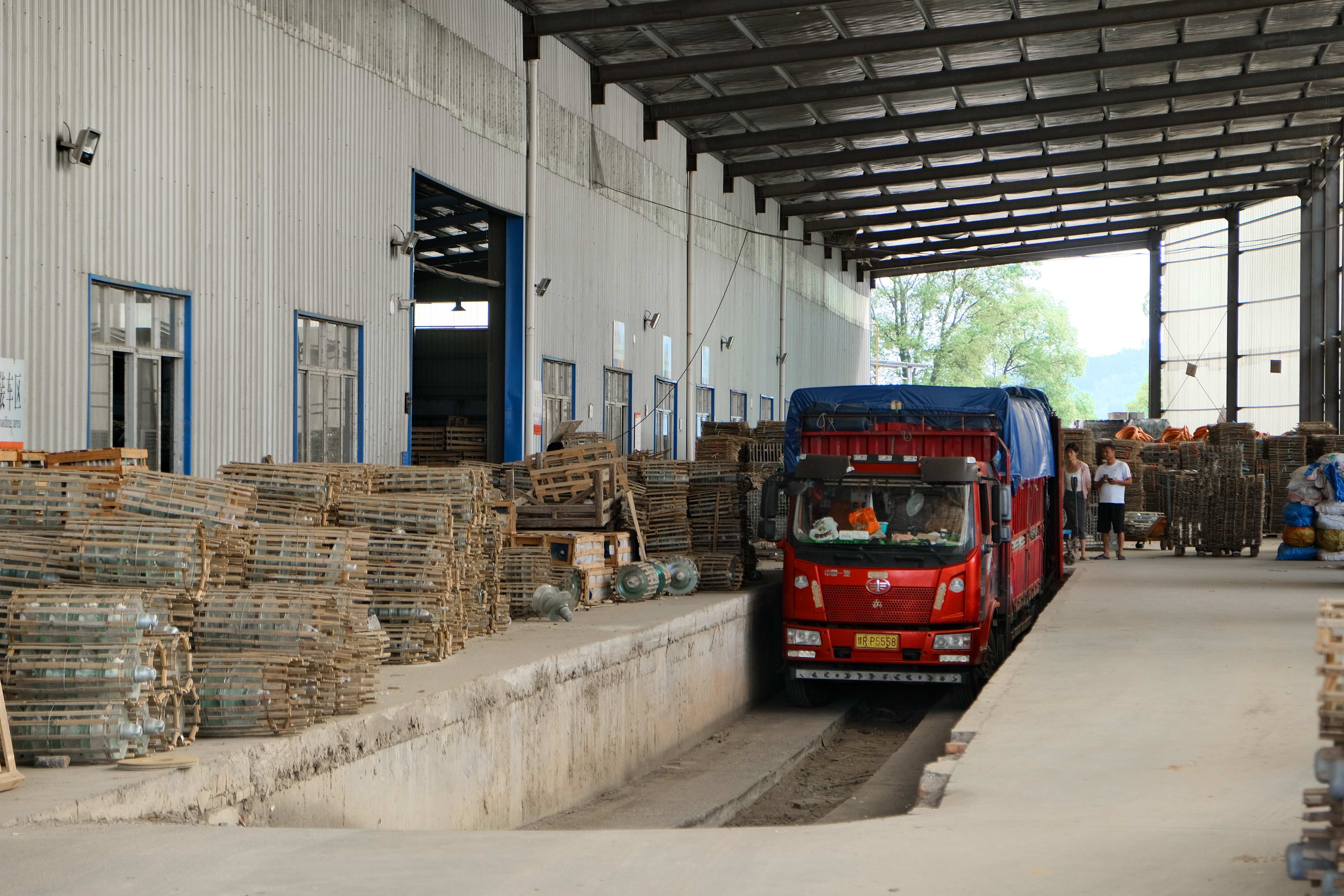
QOCI Electric loading area for export-ready glass insulator shipments.
Step 6. Align commercial terms. QOCI's terms are 30% T/T deposit before production and 70% T/T balance before delivery, with delivery under FOB Shenzhen terms. The minimum order quantity is 50 units. These terms are suitable for initial qualification orders and can be scaled in a frame agreement.
Step 7. Establish traceability and replacement supply. Keep the same part numbers, retain production records, and agree on a procedure for replacing self-broken units during the maintenance phase.
U70B Supplier Evaluation Checklist
Use the following checklist when comparing manufacturers for a long-term U70B contract:
- Mechanical load rating and SML range: 40–550 kN
- IEC 60305 type test certification
- Thermal shock test with temperature differential ≥70 K
- Self-breaking rate below 0.02% per year
- At least three years of field operation data
- Automated tempering line and batch-level thermal shock coverage
- Production capacity and lead time
- Export packaging quality and loading records
- Pre-shipment test and third-party SGS inspection
- Commercial terms and minimum order quantity
U70B Use Cases in Utility Construction and Maintenance
Clean-area distribution and transmission lines
Standard U70B with a 255 mm disc and 320 mm creepage is a common choice for clean environments. The 70 kN failing load is sufficient for many suspension positions on distribution and medium-voltage transmission lines.
Industrial and coastal pollution zones
For areas with saline fog or industrial dust, U70BLP anti-pollution insulators provide 450 mm or 550 mm creepage distance. The longer creepage reduces the risk of pollution flashover during fog, dew, or light rain.
Desert and high-dust environments
Aerodynamic U70BA, with a disc diameter of 380 mm and creepage distance of 365 mm, is designed for self-cleaning in desert and sandy areas. Its open-shed profile helps rain and wind remove dust from the surface.
Railway electrification and substation feeders
Track and substation feeder lines often need compact strings and consistent mechanical behavior. U70BS with 127 mm spacing or U70BL with 146 mm spacing can be selected to match existing tower and hardware dimensions.
Long-term maintenance and replacement contracts
Utilities operating existing glass insulator strings need replacement units that match the original dimensions. A long-term agreement with a U70B manufacturer ensures that replacement discs use the same cap, pin, and coupling geometry.
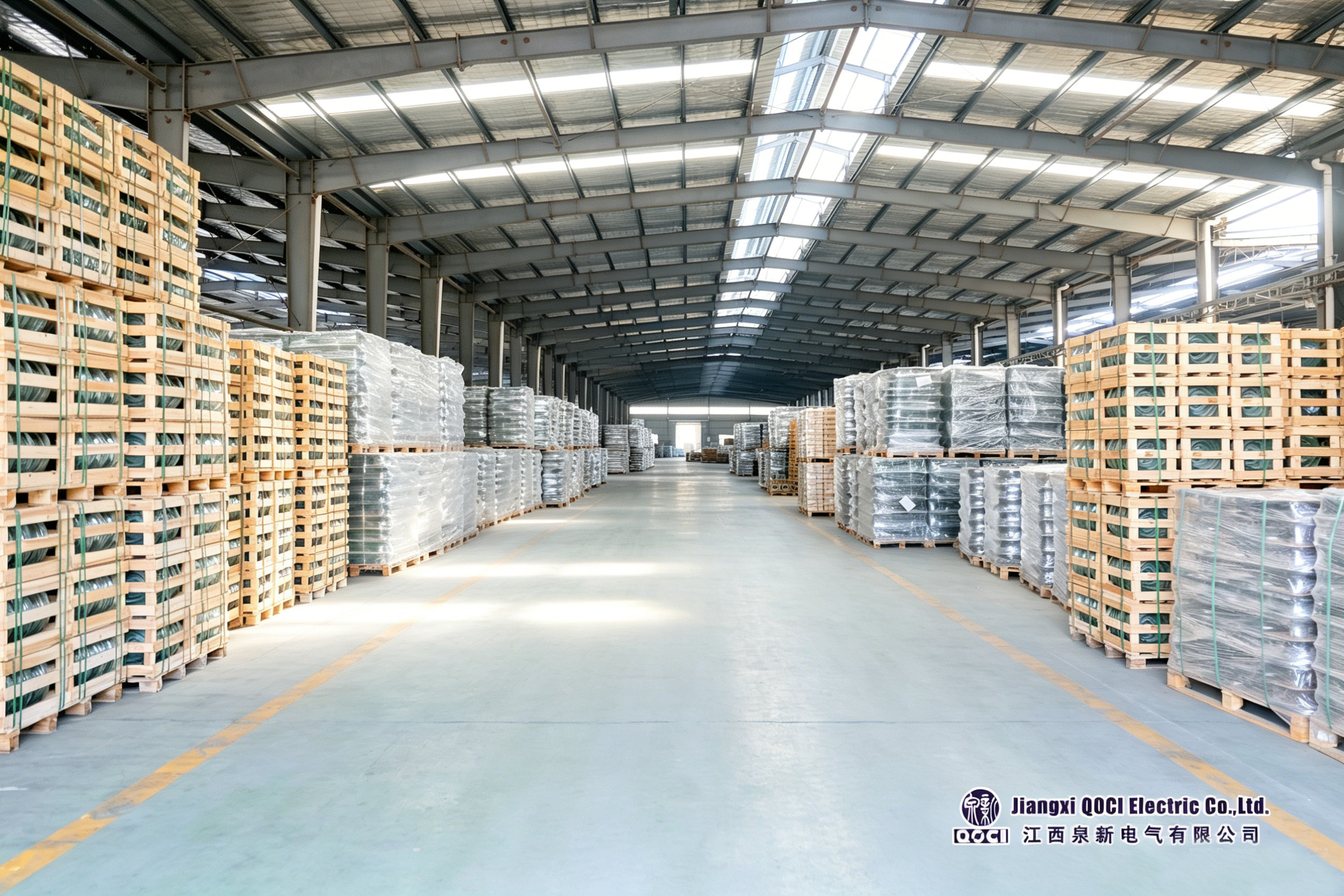
QOCI Electric warehouse for finished glass insulator products.
U70B Glass Insulator Family: Specifications at a Glance
| Model | Failing Load | Disc Diameter | Spacing | Creepage Distance | Design Purpose |
|---|---|---|---|---|---|
| U70B | 70 kN | 255 mm | 146 mm | 320 mm | Standard suspension disc |
| U70BS | 70 kN | 255 mm | 127 mm | 320 mm | Compact spacing |
| U70BL | 70 kN | 255 mm | 146 mm | 320 mm | Longer spacing variant |
| U70BLP | 70 kN | 280 mm | 146 mm | 450 mm | Anti-pollution profile |
| U70BLP long creepage | 70 kN | 320 mm | 146 mm | 550 mm | Anti-pollution, heavy contamination |
| U70BLD | 70 kN | 280 mm | 146 mm | 450 mm | Double-shed profile |
| U70BA | 70 kN | 380 mm | 127/146 mm | 365 mm | Aerodynamic profile |
The table shows the same mechanical failing load of 70 kN with different geometry. A longer creepage distance improves pollution performance but changes the string length. An aerodynamic profile has a larger disc diameter to assist dust shedding but provides a shorter creepage distance than the anti-pollution profile. The final choice should be based on the pollution class of the line corridor and the existing tower hardware.
Frequently Asked Questions
What compliance documents should a long-term U70B glass insulator supplier provide for utility tenders?
A qualified supplier should provide IEC 60305 type test certification for suspension glass insulator units, mechanical load ratings in the SML 40–550 kN range, and thermal shock test records with a temperature differential of at least 70 K. The industry benchmark self-breaking rate for qualified toughened glass insulators is below 0.02% per year. Buyers should also request at least three years of field operation data before approving a long-term supplier.
How can a utility buyer verify a manufacturer's long-term production consistency?
Verification should include the tempering process, batch testing coverage, and export track record. Jiangxi QOCI Electric Co., Ltd. was founded in 2002, operates a factory area of 35,373 square meters, and produces approximately 9,000,000 units per year. The company is a national high-tech enterprise and a participating unit of the Insulator Standard Committee. Its main markets include the USA, Asia, EU, Africa, and South America, with exports accounting for about 20 percent of output.
How does the total cost of glass insulators compare with porcelain over the project lifecycle?
Compared with traditional porcelain or ceramic insulators, toughened glass insulators typically have a first cost about 5 percent higher, but the total lifecycle cost can be about 25 percent lower. Toughened glass compressive strength is three to four times higher than porcelain. The mechanical failure rate can be reduced by 80 percent, and the maintenance workload can be reduced by 70 percent because glass insulators do not require live-line zero-value testing.
Can we request samples and third-party inspection before a large U70B order?
Yes. For U70B suspension glass insulators, pre-shipment tests and third-party inspection by SGS are available for acceptance. The minimum order quantity is 50 units. Commercial terms are 30 percent T/T deposit before production and 70 percent T/T balance before delivery, under FOB Shenzhen terms. Requesting a sample batch with third-party verification is a practical next step before signing a long-term utility supply agreement.
What should be included in the delivery schedule for long-term U70B insulator supply?
A long-term supply agreement should define delivery terms, inspection milestones, packaging standards, and batch traceability. QOCI offers FOB Shenzhen delivery, and acceptance inspection can include pre-shipment tests and third-party inspection by SGS. For an exact production schedule, the buyer's inquiry should specify the required U70B variant, creepage distance, and packaging standard.
Conclusion
Selecting a long-term U70B glass insulator supplier is a qualification process, not a spot purchase. Verify IEC 60305 compliance, thermal shock testing, self-breaking rates, production capacity, export packaging, and third-party inspection options. Jiangxi QOCI Electric Co., Ltd. provides a documented example of a China-based manufacturer with U70B and related glass insulator variants, SGS inspection options, and FOB Shenzhen delivery.
For utility tender managers, the final step is to compare actual type test reports and inspect a sample batch before signing a frame agreement.
Need a documented U70B supply partner for your next utility tender? Contact QOCI Electric at admin@qocielectric.com or WhatsApp +86 199-7997-1591. Address: No. 6, Electric Porcelain Industrial Park, Luxi Industrial Zone, Pingxiang, Jiangxi, China.
Download the QOCI glass insulator catalogue for U70B to U420B specifications and ordering information.
Have Questions or Need More Details?
Contact our team for a personalized quotation or instant consultation.
Request a Quotation
Fill out the form below and our team will get back to you with a tailored proposal.
WhatsApp Direct Chat
Prefer to chat in real-time? Message us on WhatsApp for instant assistance & quick answers.
- Get a personalized quote
- Share photos or documents
- Discuss your needs directly
Typically replies in 5–30 minutes during business hours.