
Glass Insulator or Alternative? A Decision Matrix for Overhead Line Procurement
Glass Insulator or Alternative? A Decision Matrix for Overhead Line Procurement
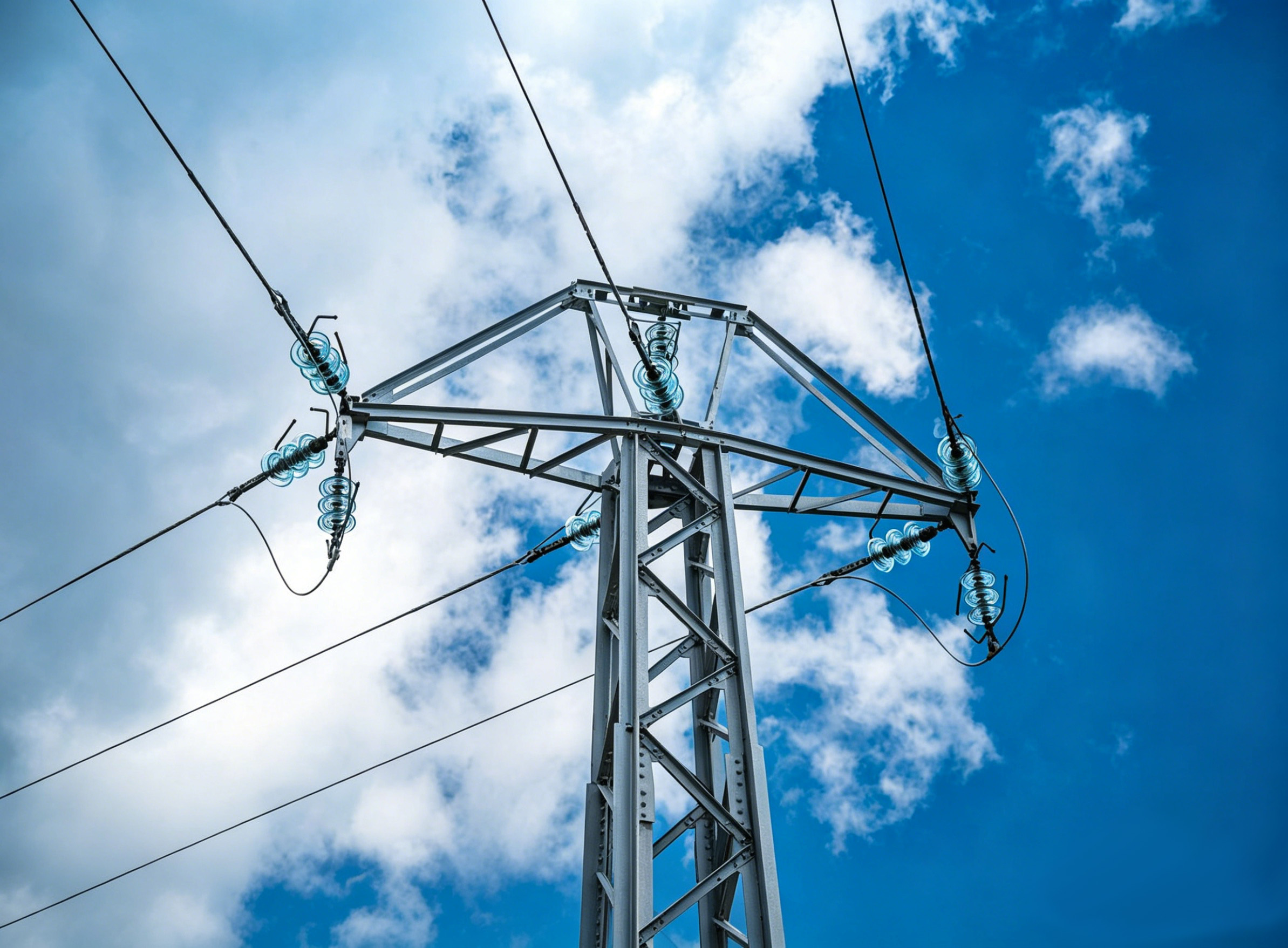
Cover: disc suspension glass insulator of the type used on overhead line strings.
Short answer: on most overhead transmission and distribution projects, a toughened suspension glass insulator is the correct baseline when the string carries high mechanical tension and faults must be found from the ground. Porcelain remains the stronger option where the atmosphere is chemically aggressive, and polymer alternatives stay in the comparison only where their failure behaviour is acceptable to the utility. The decision is not a brand preference — it turns on five measurable criteria: mechanical load rating and string configuration, environmental and pollution adaptability, fault-detection and maintenance model, compliance evidence, and lifecycle cost. This guide compares those criteria side by side, using the QOCI suspension glass insulator range (U70B to U420B, plus anti-pollution, aerodynamic and double-shed variants) as the reference option.
Problem Definition: The Comparison Is Usually Framed the Wrong Way
Most procurement comparisons open with unit price. That framing breaks down on overhead line projects, because three variables decide the answer before price is even discussed: the mechanical duty of the string, the pollution severity at the tower location, and the inspection model the utility can realistically operate in the corridor.
Two insulator units can look equivalent on a quotation sheet and still be non-interchangeable on the line. A 255 mm disc with a 16 socket coupling is not a substitute for a 360 mm disc with a 28 coupling, and a 320 mm creepage distance is not a substitute for a 550 mm creepage distance in a coastal or industrial corridor. Substitution has to happen at the string level — fittings, clamps, arcing horns and tension hardware all follow the unit dimensions.
The practical question is therefore not "which material is better in general", but "which failure mode and which inspection model does this line tolerate, at which load class, in which pollution class". Answering that question is what the comparison below is designed to do.
Industry Background: Why Buyers Are Comparing Now
Glass insulator demand tracks grid construction rather than consumer cycles. One widely cited estimate places the global glass insulators market at USD 1.14 billion in 2024, projected to reach USD 1.97 billion by 2035, with a compound annual growth rate of 5.1% over the 2025–2035 forecast period (Market Research Future). Market sizing in this category diverges by scope — a second published estimate puts the figure far lower at USD 351.4 million — because some studies include low-voltage and building-related insulated glass while others count only line insulators. Buyers should treat any single market figure as directional, not as a procurement input.
Two structural facts matter more than total market size. First, Asia Pacific held the largest regional revenue share in 2024 at more than half of the market, driven by grid expansion in China and India. Second, China accounted for 31.4% of global exports of electrical insulators in 2024, totalling USD 898 million, according to the Observatory of Economic Complexity — which means most international buyers are, directly or indirectly, comparing Chinese supply against domestic manufacturers. Purchasing patterns are also shifting: China's exports of electrical insulators to Saudi Arabia grew by 219% between 2023 and 2024, making it the fastest-growing destination market and a signal of where large new line programmes are being built.
Standardisation is what makes a fair comparison possible. Suspension glass insulator units for AC systems are governed by IEC 60305:2021, which specifies mechanical and electrical characteristics. That standard is the reason a 70 kN cap-and-pin unit from one qualified source can be evaluated against another on identical terms — and the reason the comparison in this article can be made without asserting any performance figure that is not documented.
The Five-Criterion Decision Framework
Criterion 1 — Mechanical Load Rating and String Configuration
The specified mechanical load (SML) of suspension insulators spans roughly 40 kN to 550 kN across the industry, and the geometry scales with the load class. In the QOCI glass range, the standard-profile series runs from U70BL at 70 kN (255 mm disc, 146 mm spacing, 320 mm creepage, 16 socket coupling) through U160BL at 160 kN (280 mm disc, 170 mm spacing, 400 mm creepage, 20 coupling), U240B at 240 kN, U300B at 300 kN (320 mm disc, 195 mm spacing, 485 mm creepage, 24 coupling) to U420B at 420 kN (360 mm disc, 205 mm spacing, 550 mm creepage, 28 coupling).
For buyers working from North American drawings, the same duty classes are typically specified under the ANSI 52 naming convention: ANSI 52-3 corresponds to a 70 kN unit on a 255 mm disc with 146 mm spacing and 320 mm creepage; ANSI 52-5 to 120 kN on the same 255 mm disc; and ANSI 52-8 to 160 kN on a 280 mm disc with 170 mm spacing and 400 mm creepage. Matching the naming convention before quoting avoids the most common early-stage procurement error: comparing a unit that meets the load class but not the coupling size, and therefore will not mate with the existing string hardware.
Criterion 2 — Environmental and Pollution Adaptability
The environment drives the profile, not the load class. Selection is normally mapped against pollution severity classes, and standard-profile units such as U70B and U100BL are intended for clean-area distribution lines, while anti-pollution profile units such as U70BLP and U120BLP are intended for industrial and coastal areas, where the creepage distance is extended rather than the mechanical rating. The practical effect is visible in the range: a U70BLP rated at the same 70 kN carries a 450 mm creepage distance on a 280 mm disc, compared with 320 mm on the 255 mm disc of the standard U70BL.
Aerodynamic (open-shed) profiles are selected for desert and high-dust environments because of superior self-cleaning capability, and RTV silicone-coated types are used in extreme pollution areas to enhance hydrophobicity. Dust-type pollution favours glass, since the smooth surface provides better self-cleaning; chemical corrosion from acid, alkali or solvent attack is the opposite case, where porcelain's chemical inertness is superior. On the operating envelope, QOCI suspension glass insulators are rated for a working temperature of -40 °C to +60 °C, with cap and pin in hot-dip galvanized cast iron and forged steel.
Criterion 3 — Fault Detection and Maintenance Model
This is where the two families genuinely diverge. A toughened glass unit fails visibly: the disc self-breaks, and the failed unit is identifiable from ground patrol without live-line testing. Porcelain and composite units show no visible change upon failure, which forces live-line climbing and piece-by-piece testing to locate a defective unit. On documented comparison data for the QOCI glass range, this translates into an 80% lower mechanical failure rate, 100% higher inspection efficiency because inspection is visual-only, 70% less maintenance workload, and no requirement for live-line testing.
Self-breaking should still be stated honestly in any specification, because it is the failure mode itself, not an absence of failure. The industry benchmark self-breaking rate for qualified products from manufacturers with controlled tempering processes is below 0.02% per year. A self-broken unit retains its mechanical load path through the metal cap and pin but loses electrical insulation, so it is replaced at the next scheduled maintenance window rather than under emergency conditions. That is the trade-off: glass converts a hidden electrical defect into a visible mechanical event.
Criterion 4 — Compliance and Verification Evidence
Compliance is the criterion that separates qualified suppliers from catalogue sellers. The verifiable evidence set for toughened glass suspension insulators includes mechanical load type testing across the SML range, thermal shock testing at a temperature differential of 70 K or greater, visual and dimensional inspection to IEC 60305, power frequency flashover and impulse withstand voltage testing, and residual stress measurement. Depending on the destination market, the reference framework is IEC 60305 for string insulator units above 1000 V, IEC 60307 for ceramic and glass insulators for overhead lines, and GB/T 1001 for toughened glass insulators for AC systems.
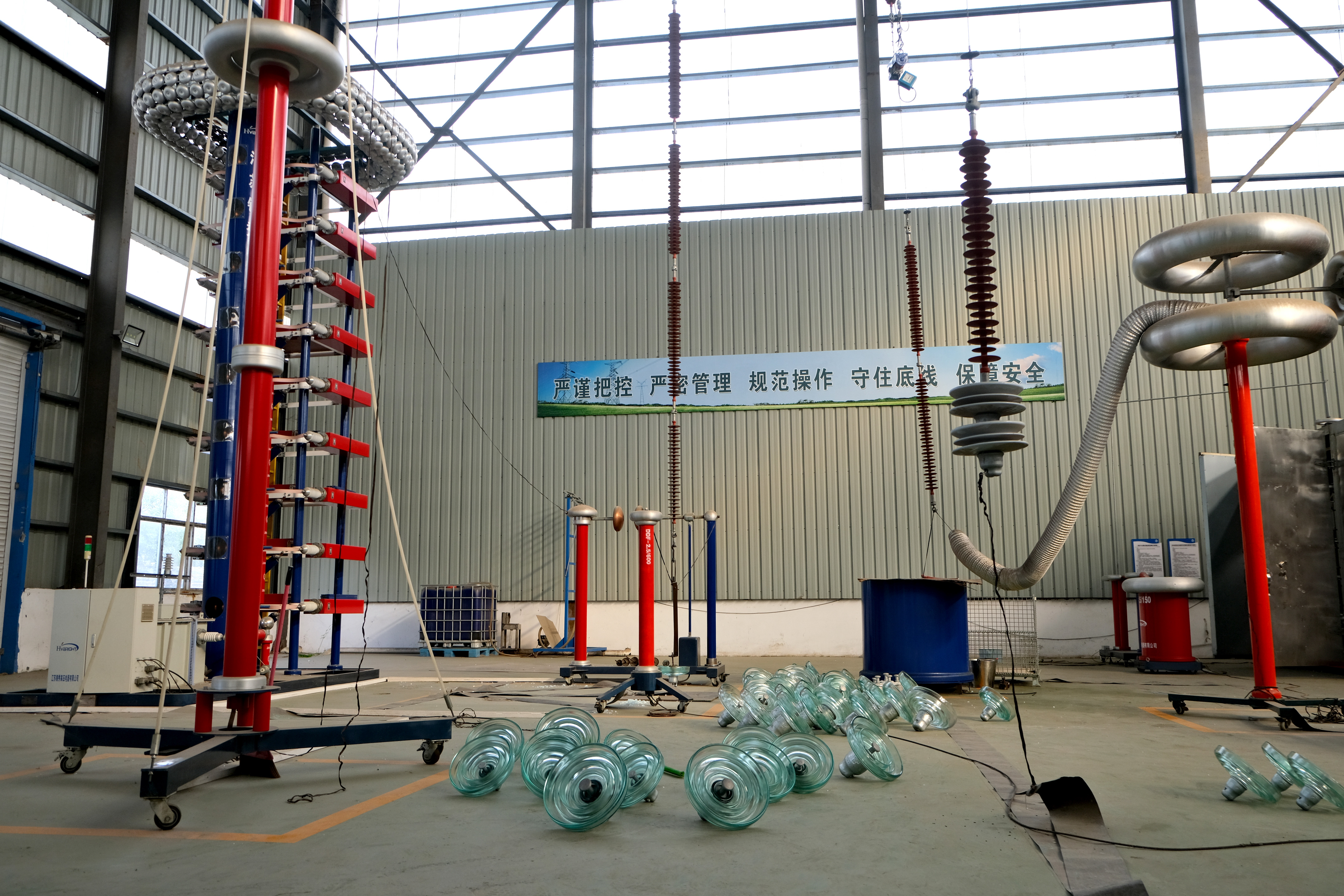
QOCI Electric laboratory: verification evidence is requested before the price comparison is settled.
Criterion 5 — Lifecycle Cost, Not Purchase Price
The headline cost statement for the glass route is documented and specific: compared with the porcelain alternative, initial cost is about 5% higher, while total cost of ownership across the lifecycle is about 25% lower. The gap is not created by the hardware. It is created by inspection labour, live-line testing that is no longer required, and a lower mechanical failure rate that reduces replacement work on energised corridors. For utilities running long lines through terrain that is expensive to access, that maintenance difference usually outweighs the unit price difference in the first few maintenance cycles.
Side-by-Side Comparison: Glass, Porcelain and Composite
The matrix below lists only the criteria for which this guide has documented comparison data. Where a figure is not asserted for an alternative family, the cell is marked "—" rather than filled with an estimate.
| Decision criterion | Toughened suspension glass insulator | Porcelain / ceramic suspension insulator | Polymer / composite suspension insulator |
|---|---|---|---|
| Failure detection model | Zero-value self-breaking: failed disc is visible from ground patrol; no live-line testing required | No visible change on failure; live-line climbing and piece-by-piece testing required | No visible change on failure; live-line climbing and piece-by-piece testing required |
| Mechanical failure rate | 80% lower than porcelain (documented comparison data) | Baseline for the comparison | — |
| Inspection efficiency | 100% higher, because inspection is visual-only | Baseline | — |
| Compressive strength | 3–4 times higher than porcelain | Baseline | — |
| Maintenance workload | 70% less than porcelain; no live-line testing | Baseline | — |
| Initial cost | About 5% higher than the porcelain alternative | Baseline | — |
| Total cost of ownership | About 25% lower over the lifecycle | Baseline | — |
| Fault-visibility maintenance model | Zero-value self-break acts as a built-in alarm, so faults are locatable by ground patrol | Requires live-line climbing and piece-by-piece testing | Requires live-line climbing and piece-by-piece testing |
| Dust accumulation and self-cleaning | Smooth surface self-cleans; dust accumulation about 50% slower than porcelain | Baseline | — |
| Chemical corrosion (acid, alkali, solvent) | Self-cleaning advantage applies to dust pollution; in chemical attack, porcelain's chemical inertness is superior | Preferred where chemical corrosion dominates | — |
| Best-fit duty | UHV/EHV transmission lines, heavy pollution areas (coastal, desert, industrial zones), high-altitude regions | Chemical corrosion environments | — |
Note: "—" means this guide does not assert a performance figure for that family. Polymer insulators are included only for the failure-visibility behaviour documented in the comparison source; no unverified composite specification is quoted here.
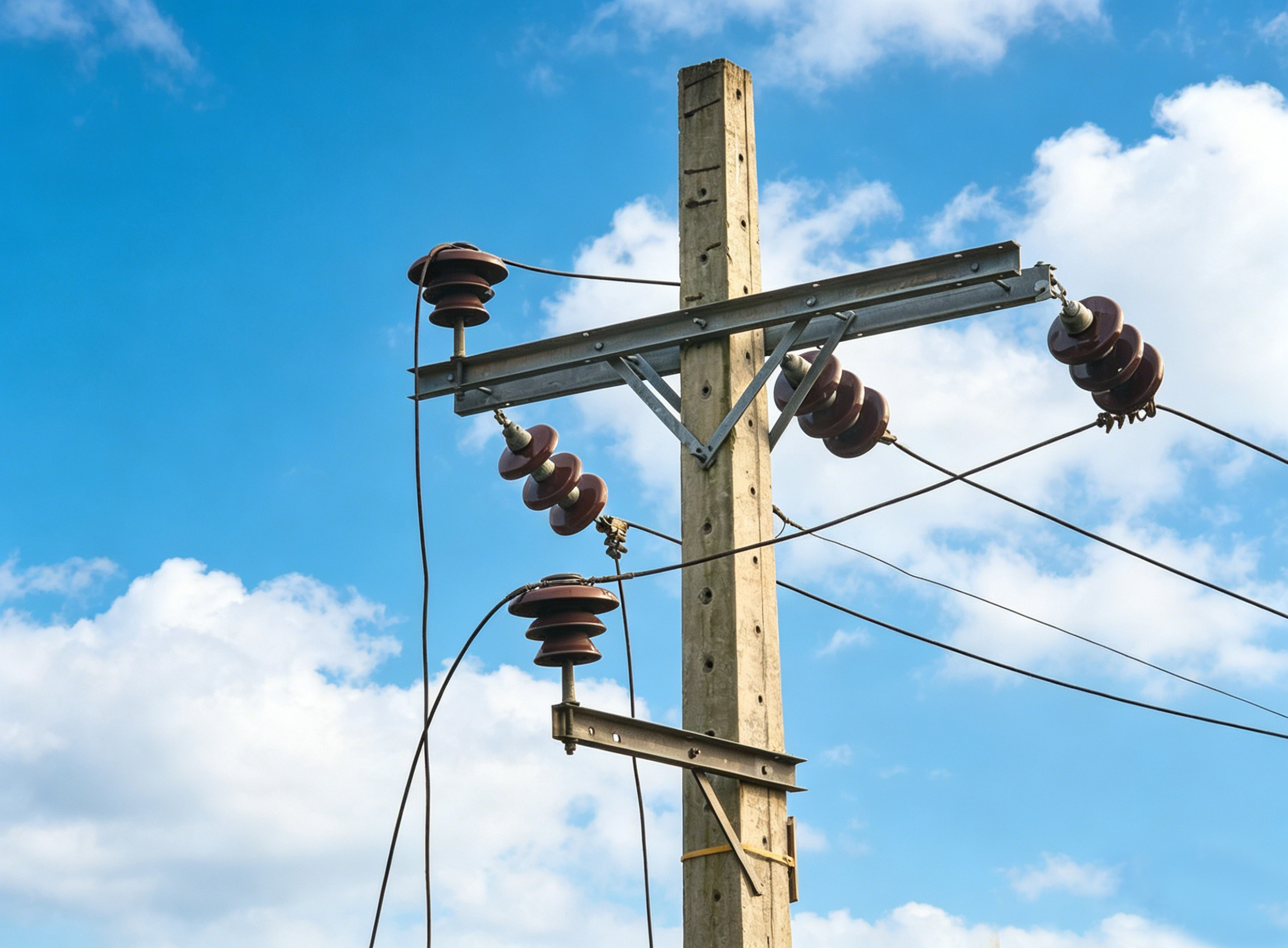
The porcelain alternative: still the correct choice in chemically aggressive atmospheres.
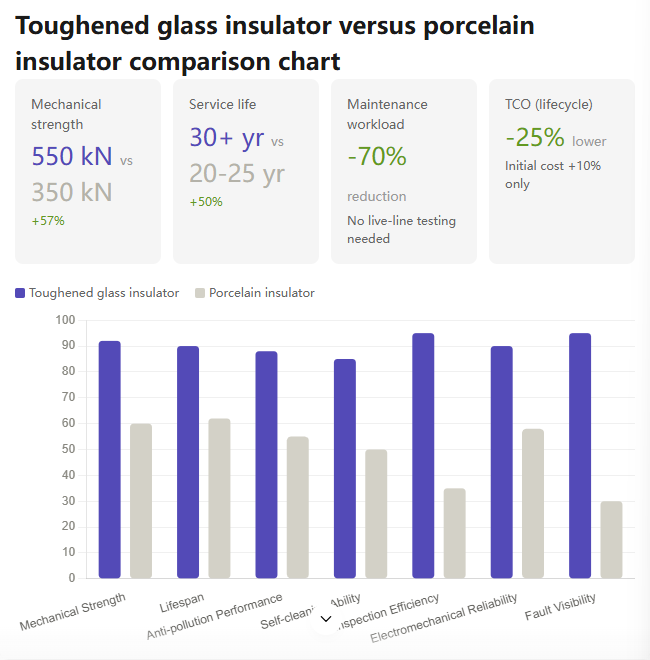
Comparison chart: toughened glass insulator versus porcelain insulator.
Profile Families in the QOCI Glass Range
Once the load class is fixed, the profile family is what adapts the unit to the site. The table below maps the four profile families in the QOCI suspension glass insulator range to the geometric differences that are documented in the product data.
| Profile family | Example models | Documented geometry | Selection guidance |
|---|---|---|---|
| Standard profile | U70BL, U100BL, U120BL | 255 mm disc, 320 mm creepage, 16 socket coupling | Standard-profile units (U70B / U100B class) for clean-area distribution lines |
| Anti-pollution profile | U70BLP, U100BLP, U120BLP, U160BLP, U210BP, U420BP | Creepage extended to 450–620 mm on 280–380 mm discs | Industrial and coastal areas; RTV silicone-coated types for extreme pollution |
| Aerodynamic (open-shed) profile | U70BA, U100BA, U120BLA, U160BSA, U210AD | Open-shed geometry, 365–380 mm creepage on 380–420 mm discs | Desert and high-dust environments, because of superior self-cleaning capability |
| Double-shed / two-wing profile | U70BLD, U100BLD, U120BLD, U160BLD, U210BD | 450–550 mm creepage on 280–340 mm discs | Multi-shed geometry listed in the range; confirm the target pollution class with the supplier before ordering |
Load-Rating Quick Reference
| Model | Mechanical failing load | Disc diameter | Nominal spacing | Creepage distance | Socket coupling |
|---|---|---|---|---|---|
| U70BL | 70 kN | 255 mm | 146 mm | 320 mm | 16 |
| U100BL | 100 kN | 255 mm | 146 mm | 320 mm | 16 |
| U120BL | 120 kN | 255 mm | 146 mm | 320 mm | 16 |
| U160BL | 160 kN | 280 mm | 170 mm | 400 mm | 20 |
| U210B | 210 kN | 280 mm | 170 mm | 400 mm | 20 |
| U240B | 240 kN | 280 mm | 170 mm | 400 mm | 20 / 24 |
| U300B | 300 kN | 320 mm | 195 mm | 485 mm | 24 |
| U420B | 420 kN | 360 mm | 205 mm | 550 mm | 28 |
Step-by-Step: Running the Comparison on a Real Project
Step 1 — Fix the electrical and mechanical duty. Record the system voltage class, the required specified mechanical load, the intended string length, and the socket coupling size (16, 20, 24 or 28) that the existing fittings require. This step eliminates most of the range before any supplier discussion begins.
Step 2 — Classify the site environment. Assign a pollution severity class and record the temperature range, altitude, and whether the corridor is coastal, desert, industrial, or chemically exposed. QOCI units are rated for -40 °C to +60 °C working temperature, which covers most temperate and continental corridors.
Step 3 — Select the profile family, not just the load class. Use standard profile for clean areas, anti-pollution profile for industrial and coastal areas, aerodynamic open-shed for desert and high-dust conditions, and RTV-coated types where pollution is extreme.
Step 4 — Compare the failure-detection model explicitly. Ask how a defective unit will be identified on this line: ground patrol for glass, or climbing and live-line testing for porcelain and composite. Convert that difference into inspection hours per kilometre per year before comparing prices.
Step 5 — Run the lifecycle cost model. Start from the documented relationship for the QOCI glass route — about 5% higher initial cost, about 25% lower total cost of ownership — and replace the percentages with your own labour rates where you have them.
Step 6 — Verify compliance evidence, not compliance claims. Request type test reports for mechanical load, thermal shock testing at a temperature differential of 70 K or greater, dimensional inspection to IEC 60305, and residual stress measurement. Confirm which of IEC 60305, IEC 60307 or GB/T 1001 the destination market requires.
Step 7 — Qualify the batch, then the supplier. Automated tempering production lines and 100% batch thermal shock testing are the two process controls that decide whether the self-breaking rate stays at the sub-0.02% industry benchmark. Packaging with shock-absorbing materials and standard installation practice protect that performance during transport and erection.
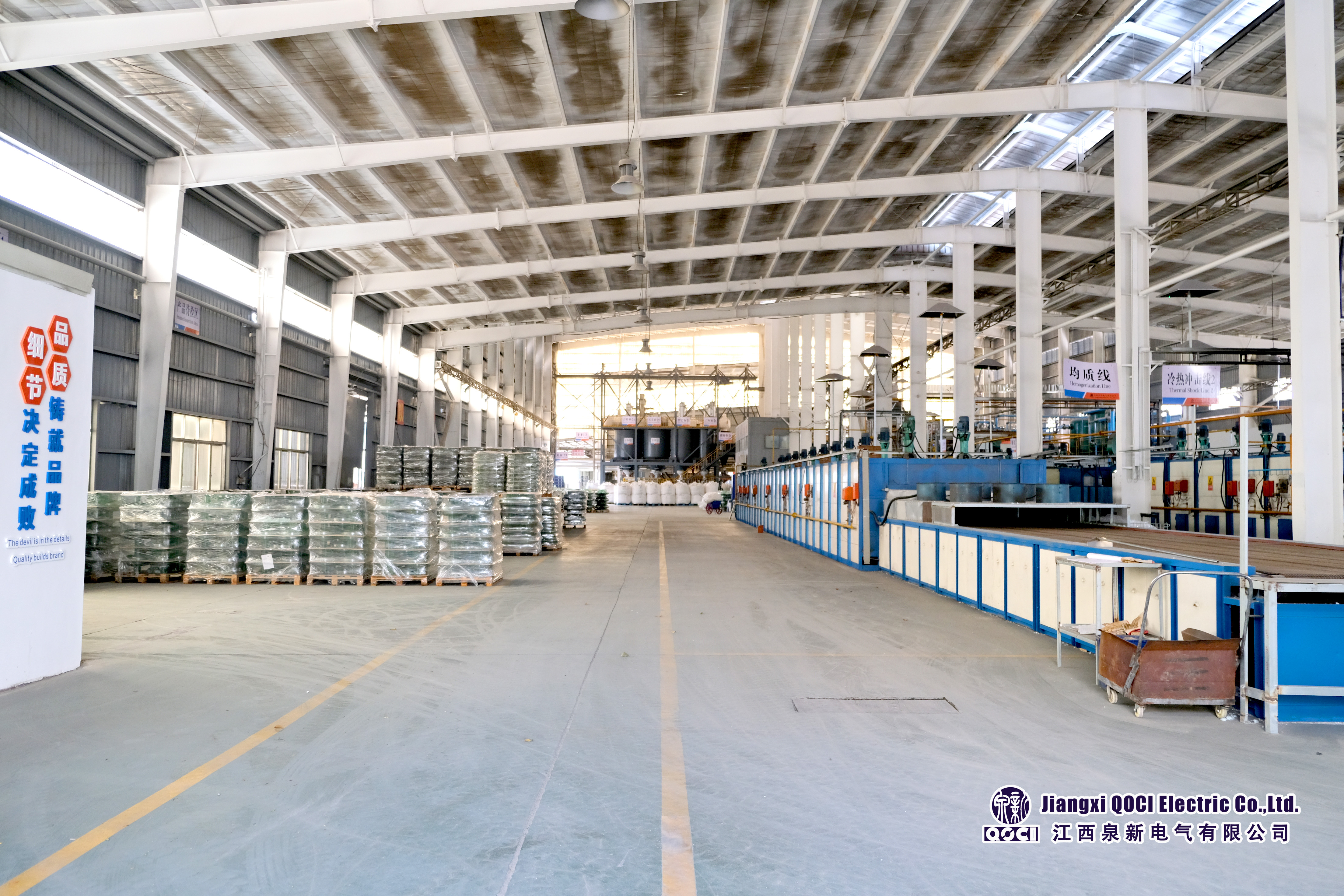
Thermal shock testing line: batch tempering control is what keeps the self-breaking rate at benchmark level.
Use Cases: Where the Glass Route Fits and Where It Does Not
UHV and EHV transmission lines, and corridors that are expensive to inspect. This is the documented best-fit for the glass route, because the inspection model converts an invisible electrical defect into a ground-visible mechanical event. On long lines across difficult terrain, the saved live-line testing is the largest single component of the 25% lifecycle cost advantage.
Coastal salt fog and industrial pollution. Anti-pollution profile units such as U70BLP, U120BLP and U420BP are specified here, with creepage extended to 450–620 mm. Where pollution is extreme, RTV silicone coating is used to enhance hydrophobicity.
Desert and high-dust corridors. Aerodynamic open-shed units such as U70BA, U100BA and U160BSA are selected because of superior self-cleaning capability; the smooth glass surface accumulates dust about 50% more slowly than porcelain, which reduces cleaning cycles.
High-altitude regions. Glass insulators are documented as suitable for high-altitude service alongside UHV/EHV and heavy-pollution environments.
Clean-area distribution and sub-transmission. Standard-profile U70B and U100B class units remain the lowest-complexity choice, where creepage and pollution class do not justify a larger disc or a longer profile.
Chemical plants and atmospheres dominated by acid, alkali or solvent attack. This is the case where the comparison reverses: porcelain's chemical inertness is superior to glass, and the specification should follow the chemistry rather than the maintenance model. Buyers working in severe corrosion service should also note the documented option of a zinc sleeve, which slows rusting and extends the service life of the insulator string.
Trade-Offs to Write Into the Specification
A comparison that only lists advantages is not usable in a tender. Four trade-offs should appear in the technical specification so that the evaluation is transparent: first, the glass route carries an initial cost premium of about 5% against the porcelain alternative, recovered over the lifecycle; second, self-breaking is an inherent characteristic of toughened glass and should be managed through tempering process control, batch testing and replacement planning rather than denied; third, polymer and porcelain units retain an advantage in chemically aggressive atmospheres where glass self-cleaning does not apply; fourth, glass is documented as suitable for UHV/EHV, heavy-pollution and high-altitude duty — not as a universal replacement for every insulator on every structure.
Frequently Asked Questions
Do suspension glass insulators have to comply with IEC 60305, and what documentation proves it?
Yes. IEC 60305:2021 specifies the mechanical and electrical characteristics of string insulator units for overhead lines with a nominal voltage above 1000 V, so it is the reference standard for suspension glass insulator units in AC systems. Depending on the destination market, IEC 60307 (ceramic and glass insulators for overhead lines with a nominal voltage above 1000 V) and GB/T 1001 (toughened glass insulators for AC systems) also apply. The documentation that proves compliance is a type test report covering mechanical load testing across the specified load range, thermal shock testing at a temperature differential of 70 K or greater, visual and dimensional inspection to IEC 60305, power frequency flashover testing, impulse withstand voltage testing, and residual stress measurement.
Can one insulator profile cover every environment, or does the profile have to change with the site?
The profile has to change with the site, even when the load class stays the same. Standard-profile units such as U70B and U100B are used for clean-area distribution lines. Anti-pollution profile units such as U70BLP and U120BLP are used in industrial and coastal areas, where creepage distance is extended — for example, U70BLP keeps the 70 kN load rating but increases creepage to 450 mm on a 280 mm disc. Aerodynamic open-shed profiles are selected for desert and high-dust environments because of superior self-cleaning capability, and RTV silicone-coated types are used in extreme pollution areas to enhance hydrophobicity. By pollution type, dust pollution favours glass because the smooth surface self-cleans better, while chemical corrosion from acid, alkali or solvent attack favours porcelain because of its chemical inertness.
Is a glass insulator more expensive than the alternative once the whole line life is counted?
No — the documented relationship runs the other way. Against the porcelain alternative, the glass route carries an initial cost about 5% higher, but a total cost of ownership about 25% lower over the lifecycle. The difference comes from the maintenance model rather than the hardware: glass insulators require no live-line testing and reduce maintenance workload by about 70% compared with porcelain, while inspection efficiency is about 100% higher because inspection is visual-only. The mechanical failure rate is documented as 80% lower than porcelain, and compressive strength is 3–4 times higher. For a utility running long lines through terrain that is costly to access, those differences accumulate faster than the unit price premium.
What should be verified on a sample or pre-shipment batch before approval?
Sample approval should extend beyond appearance. Inspect each unit for visible defects and verify the calibration marks; check the dimensional data against IEC 60305 for the ordered model, including disc diameter, nominal spacing, creepage distance and socket coupling; confirm batch thermal shock testing records; check cement joint sealing against moisture ingress; verify that caps and pins are hot-dip galvanized cast iron and forged steel, and consider a zinc sleeve where severe corrosion service conditions apply; review residual stress measurement records; and confirm that packaging uses shock-absorbing materials, since mechanical impact during transport and installation is one of the documented triggers for damage. For long-term confidence, ask for self-breaking rate data from at least three years of field operation records against the sub-0.02% per year industry benchmark.
How does choosing glass affect installation and delivery scheduling?
It does not change the string assembly method, because a suspension glass insulator remains a cap-and-pin unit that mates with standard metal fittings. The documented installation sequence is unchanged: inspect each insulator for visible defects and verify calibration marks; assemble the string with caps, pins and ball-and-socket couplings; fit locking devices (W-clip or R-pin) and confirm engagement; hoist the string to the tower with a pulling rope and come-along clamp; connect to the suspension or tension hardware; verify ball-and-socket seating and locking device engagement; and complete a final visual check for cracked or chipped discs. Because all locking devices must be correctly seated before energising, this final check is a schedule item, not an optional one. On supply, Jiangxi QOCI Electric Co., Ltd. produces 9,000,000 units annually from its facility in Luxi Industrial Park, Pingxiang, Jiangxi Province, and exports to markets across the USA, Asia, the EU, Africa and South America — buyers can request samples, a quotation, or the full glass insulator catalogue at www.quanxinelectric.com to align delivery windows with the tower erection programme.
Conclusion: The Decision Rule, Stated Plainly
Choose the toughened suspension glass insulator route when the corridor is UHV/EHV, heavily polluted, high-altitude, or logistically expensive to inspect — because the self-breaking failure mode converts hidden electrical defects into ground-visible events and removes live-line testing from the maintenance plan, producing about 25% lower total cost of ownership despite a 5% higher initial price. Choose the porcelain route when the atmosphere is dominated by acid, alkali or solvent attack, where porcelain's chemical inertness remains superior. Whatever the outcome, fix the load class and socket coupling first, match the profile family to the pollution class second, and settle the comparison on verified type test evidence and lifecycle inspection hours rather than unit price.
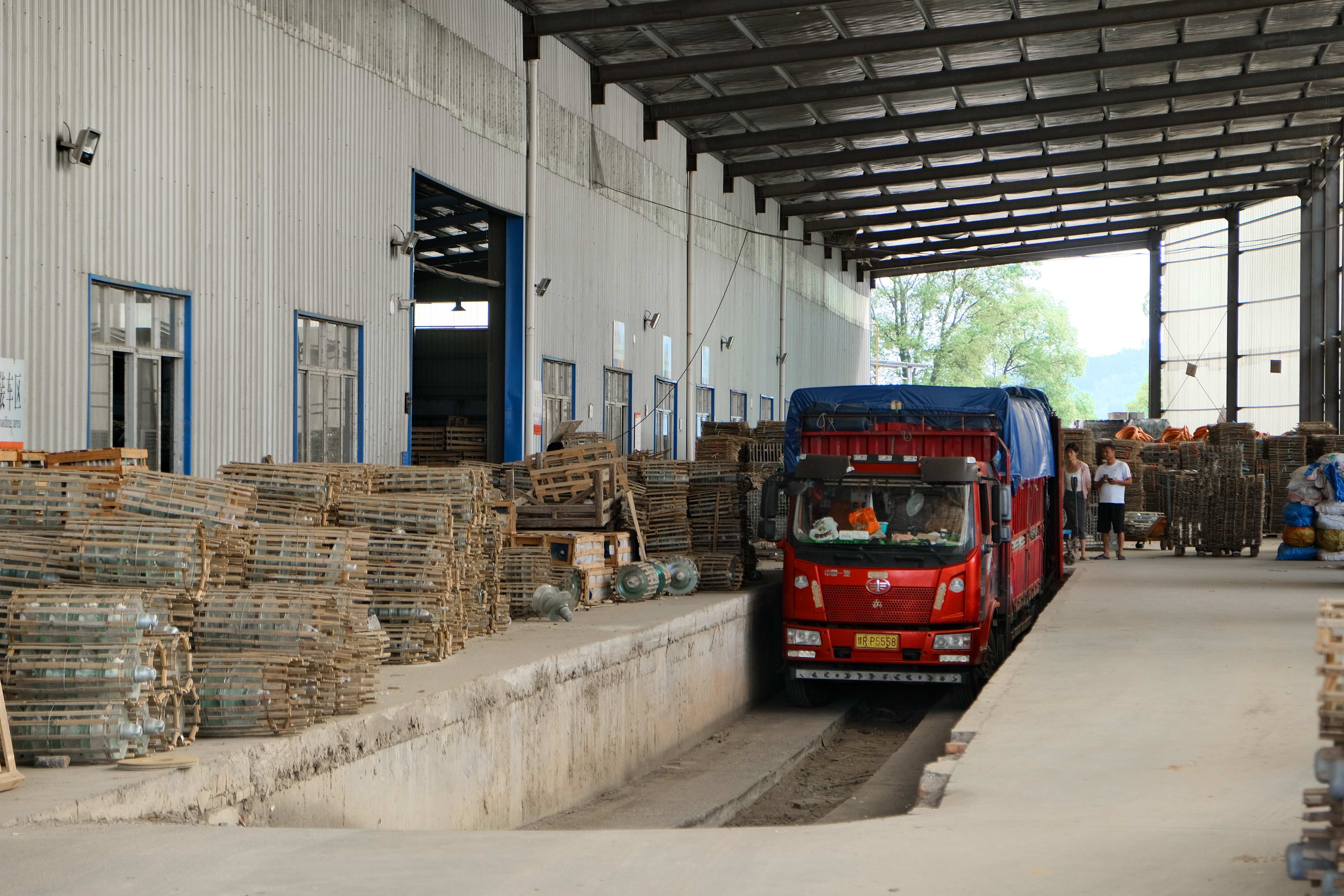
Next step: request samples and a quotation for the load class you selected.
Take the next step. Jiangxi QOCI Electric Co., Ltd. manufactures suspension glass insulators from U70B to U420B, including anti-pollution, aerodynamic and double-shed profiles, from a facility in Pingxiang, Jiangxi Province, China. Request samples and a quotation at www.quanxinelectric.com, contact admin@qocielectric.com, or download the full glass insulator catalogue here: QOCI Catalogue - Glass Insulators (PDF).
Contact: Samantha Chen | Tel: +86 079-9761-6589 | WhatsApp: +86 199-7997-1591 | Address: No. 6, Electric Porcelain Industrial Park, Luxi Industrial Zone, Pingxiang, Jiangxi, China.
Have Questions or Need More Details?
Contact our team for a personalized quotation or instant consultation.
Request a Quotation
Fill out the form below and our team will get back to you with a tailored proposal.
WhatsApp Direct Chat
Prefer to chat in real-time? Message us on WhatsApp for instant assistance & quick answers.
- Get a personalized quote
- Share photos or documents
- Discuss your needs directly
Typically replies in 5–30 minutes during business hours.