U70B Glass Insulator: 70kN Cap-Pin Disc Suspension Guide
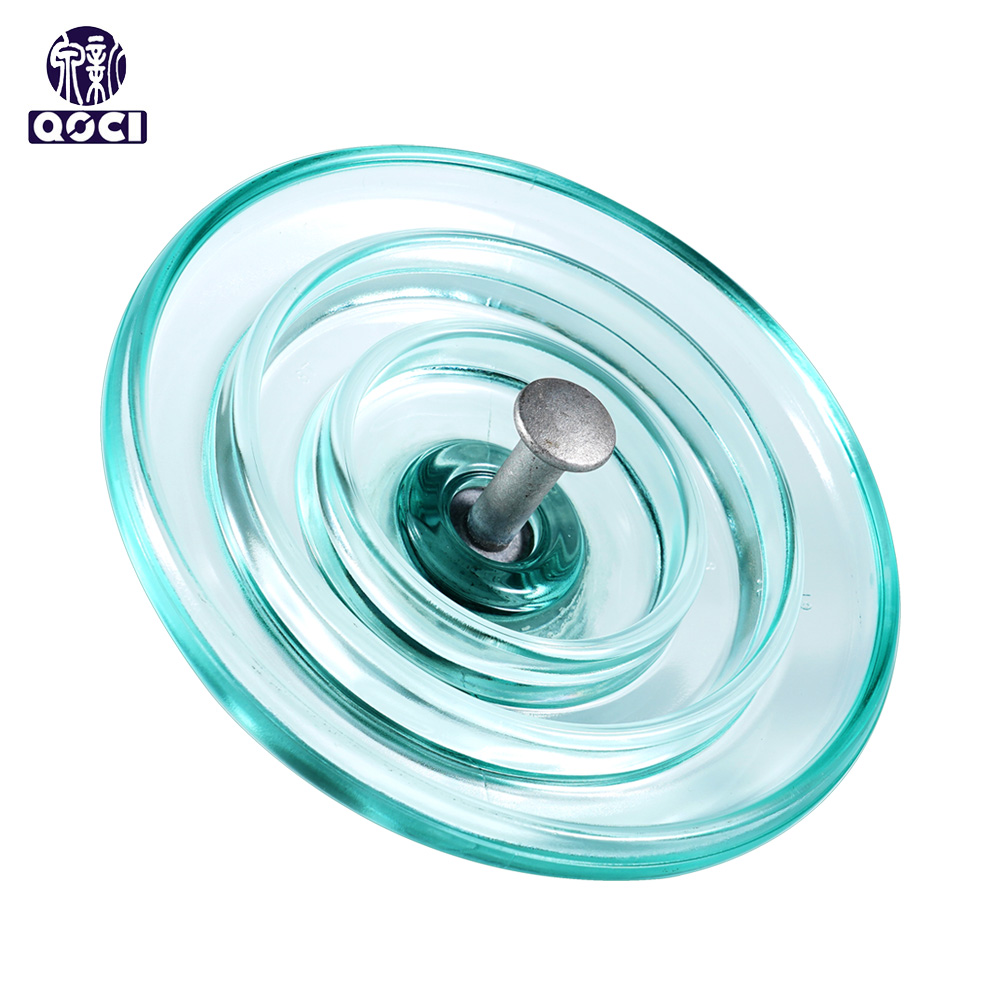
The U70B glass insulator is a 70 kN cap-and-pin disc suspension insulator widely used in overhead transmission lines. It combines a toughened glass dielectric with hot-dip galvanized cast iron and forged steel fittings to provide electrical isolation and mechanical support for conductors. This guide explains the U70B's role, technical specifications, manufacturing considerations, and how it fits into a broader glass insulator portfolio.
Why Transmission Lines Need a Reliable Disc Insulator
Overhead power lines carry conductors at high voltage above the ground. Every conductor must be electrically separated from the steel tower and mechanically secured against wind, ice, and conductor weight. An insulator performs both functions. A disc suspension insulator, such as the U70B, is hung in strings from the tower cross-arm, with the conductor attached below. Each disc contributes a portion of the total creepage distance and mechanical strength required for the line.
In polluted or humid environments, insulators face an additional challenge. Contamination on the surface—dust, salt, industrial emissions—can become conductive when wet, reducing the effective creepage distance and increasing the risk of flashover. Insulators that fail internally without visible damage create a hidden weakness. This is why the self-breaking behavior of toughened glass insulators is important: when the glass disc loses electrical insulation, it shatters into small particles, making the failed unit immediately identifiable from the ground during patrol.
Industry Background and Market Context
Glass insulators are a growing segment of the global overhead line market. According to Market Research Future, the global glass insulators market size was estimated at USD 1.14 billion in 2024 and is projected to reach USD 1.97 billion by 2035, growing at a CAGR of 5.1% from 2025 to 2035. Asia Pacific held the largest regional share, with revenue exceeding 52% in 2024, driven by grid expansion in China and India.
China is a major production and export base for electrical insulators. In 2024, China accounted for 31.4% of global exports of electrical insulators, totaling USD 898 million. The IEC 60305:2021 standard defines mechanical and electrical characteristics for string insulator units for AC overhead lines above 1000 V. This standard is commonly referenced when specifying suspension glass insulators.
Leading global glass insulator manufacturers include Sediver (Seves Group), Nanjing Electric, and Zhejiang Jinlihua Electric. Jiangxi QOCI Electric Co., Ltd. is a China-based manufacturer specializing in glass and porcelain insulators, including anti-pollution and aerodynamic types. QOCI Electric was established in December 2002, operates a 35,373 m² production facility, and has an annual output of approximately 9,000,000 units across its AC and DC insulator product lines.
Detailed Solution: Understanding the U70B Glass Insulator
Definition and Classification
The U70B is a suspension glass insulator classified as a disc insulator, cap-and-pin insulator, and transmission line glass insulator. It is designed for overhead transmission lines, power transmission, grid construction, and electrical engineering applications. The U70B provides electrical insulation and mechanical support for conductors on medium-voltage transmission routes and is one of the most commonly specified 70 kN class glass insulators.
Material and Construction
Each U70B insulator is composed of three main parts: a tempered glass dielectric, a hot-dip galvanized cast iron cap, and a hot-dip galvanized forged steel pin. The tempered glass provides a smooth, self-cleaning surface that accumulates contamination more slowly than porcelain in dusty environments. The hot-dip galvanized fittings resist corrosion and maintain mechanical integrity over decades of outdoor service.
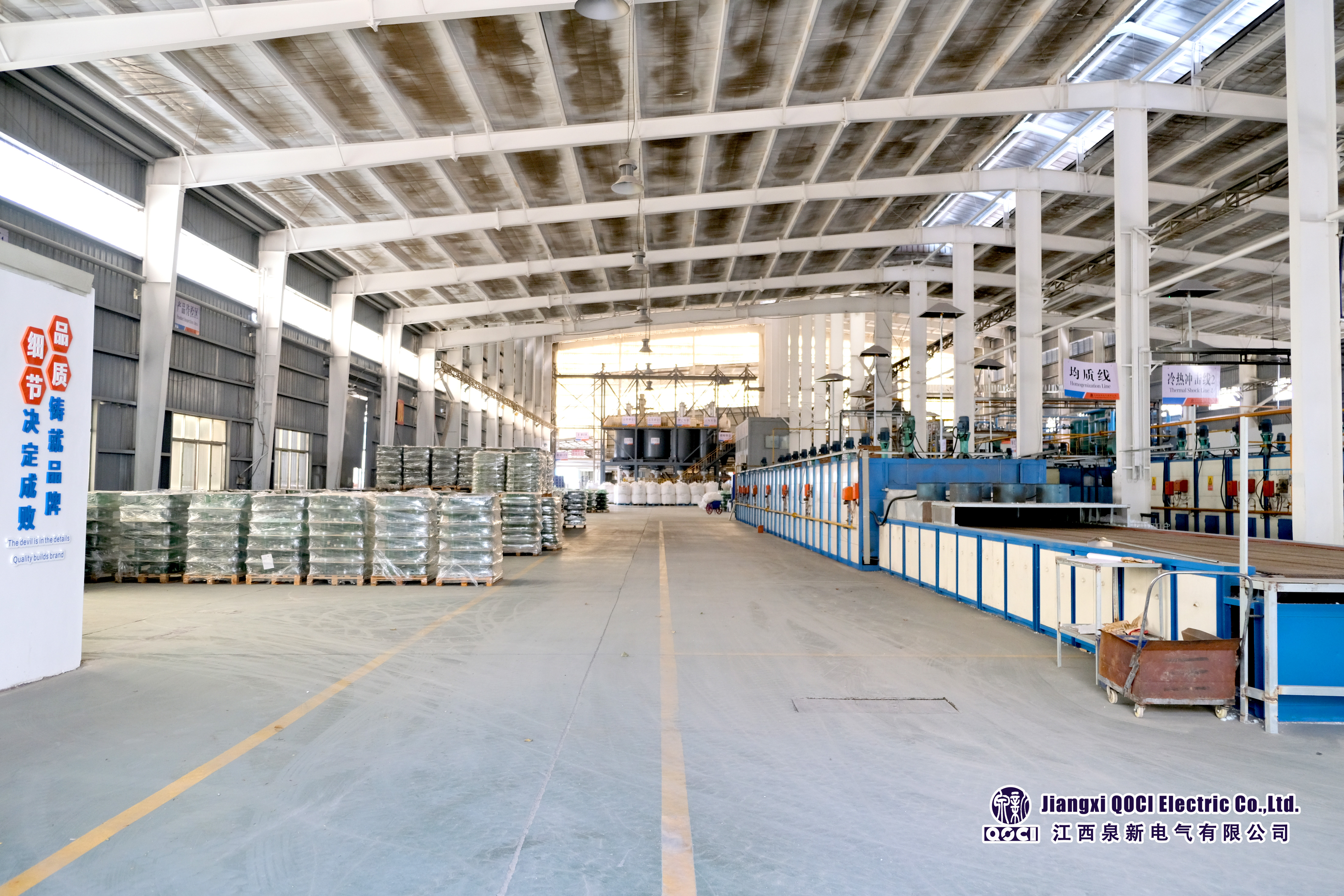
Thermal shock testing is part of the manufacturing quality process at QOCI Electric.
Key Technical Specifications
The standard U70B profile has a mechanical failing load of 70 kN, nominal disc diameter of 255 mm, nominal spacing of 146 mm, and creepage distance of 320 mm. The socket coupling size is 16. Electrical ratings include a dry lightning impulse withstand voltage of 100 kV, a wet power frequency withstand voltage of 40 kV, and a power frequency puncture voltage of 130 kV. The operating temperature range is typically -40°C to +60°C. These values are based on the standard IEC dimensions for this mechanical class.
For polluted areas, manufacturers offer anti-pollution variants with longer creepage distances. For example, the U70BLP has a creepage distance of 450 mm or 550 mm depending on the configuration, with a nominal disc diameter up to 320 mm and a dry lightning impulse withstand voltage up to 140 kV. The U70BLD variant adds a double-shed profile for enhanced rain washing and pollution runoff.
Self-Breaking Fail-Safe Mechanism
Toughened glass is produced by thermal tempering, which creates a compressive stress layer on the surface and internal tensile stress. When an internal defect causes electrical puncture, the stress equilibrium breaks and the disc shatters into small granular particles. This self-breaking behavior acts as a visual alarm: inspection crews can identify failed units from the ground without climbing the tower or performing live-line zero-value testing. The metal cap and pin keep the broken unit mechanically attached, so the string does not drop immediately.
Step-by-Step: How to Evaluate and Specify a U70B Glass Insulator
Buyers, engineers, and procurement teams can use the following process to evaluate U70B glass insulators and their suppliers.
Step 1: Confirm the mechanical load requirement. The specified mechanical failing load (SML) must exceed the maximum longitudinal and vertical loads expected on the insulator string. For U70B, the SML is 70 kN, suitable for medium-voltage distribution and transmission lines. For heavier loads, higher rated models such as U160B, U210B, U300B, or U420BP are available.
Step 2: Verify standard compliance. Check that the insulator meets IEC 60305 or equivalent national standards. Type tests should include mechanical load, thermal shock (temperature differential of at least 70 K), visual and dimensional inspection, power frequency flashover, impulse withstand voltage, and residual stress measurement.
Step 3: Evaluate pollution performance. Creepage distance should match the site's pollution class as defined by IEC 60815 or local utility practice. A standard U70B with 320 mm creepage is generally suited to clean or lightly polluted areas. For industrial, coastal, or desert environments, select an anti-pollution profile with longer creepage and increased shed area, such as U70BLP or U70BLD.
Step 4: Inspect material quality and manufacturing process. Reliable suppliers use automated tempering production lines and perform 100% batch thermal shock testing. The cap and pin should be hot-dip galvanized to prevent corrosion. In severe corrosion service conditions, a zinc-sleeved pin can slow rusting and extend the service life of the insulator string.
Step 5: Assess supplier track record. Review the manufacturer's production capacity, export experience, and field operation data. The industry benchmark for self-breaking rate is below 0.02% per year for qualified products. A supplier with at least three years of field operation data and a low self-breaking rate is preferable.
Step 6: Plan installation and string assembly. Inspect each insulator before installation and verify calibration marks. Assemble the string with metal fittings, caps, pins, and ball-and-socket couplings. Secure the joints with W-clips or R-pins, then hoist the string to the tower and connect it to the conductor hardware. Visually check for cracked or chipped discs before energizing.
Use Cases for U70B Glass Insulators
The U70B glass insulator is appropriate for a range of transmission and distribution scenarios.
Rural electrification and medium-voltage lines. Standard-profile U70B insulators provide reliable insulation and mechanical support for distribution feeders and small transmission lines in clean environments.
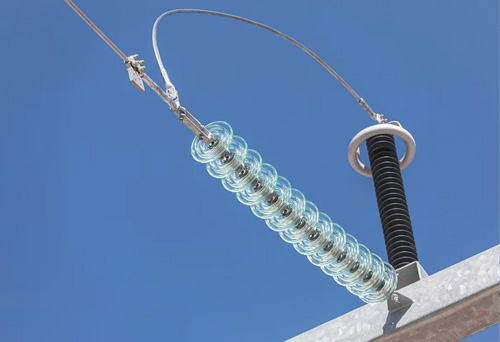
U70B glass insulator in a cap-and-pin disc configuration.
Industrial and coastal pollution zones. Anti-pollution U70B variants with longer creepage distance prevent flashover in salt fog, cement dust, and chemical pollution. The smooth glass surface remains easier to clean and self-cleaning under rain.
Desert and high-dust environments. Aerodynamic profile glass insulators (such as U70BA) have open shed geometries that reduce contamination accumulation and promote wind-driven cleaning.
Long-distance lines that are difficult to inspect. The self-breaking mechanism allows ground patrols to locate failed discs without live-line testing, reducing maintenance cost and risk.
Heavy-load and UHV backbone projects. For transmission lines requiring higher mechanical capacity, QOCI Electric's portfolio extends from U160B through U300B and U420BP, with creepage distances up to 620 mm and mechanical failing loads up to 420 kN.
Comparison of Standard Suspension Glass Insulator Models
The table below compares the U70B with higher-rated standard profile suspension glass insulators from the QOCI Electric range. Data reflects standard IEC/ANSI class dimensions.
| Model | Mechanical Failing Load | Disc Diameter | Spacing | Creepage Distance | Socket Coupling | Dry Lightning Impulse | Wet Power Frequency | Puncture Voltage |
|---|---|---|---|---|---|---|---|---|
| U70B | 70 kN | 255 mm | 146 mm | 320 mm | 16 | 100 kV | 40 kV | 130 kV |
| U120B | 120 kN | 255 mm | 146 mm | 320 mm | 16 | 100 kV | 40 kV | 130 kV |
| U160B | 160 kN | 280 mm | 170 mm | 400 mm | 20 | 110 kV | 45 kV | 130 kV |
| U210B | 210 kN | 280 mm | 170 mm | 400 mm | 20 | 110 kV | 45 kV | 130 kV |
| U300B | 300 kN | 320 mm | 195 mm | 485 mm | 24 | 130 kV | 50 kV | 130 kV |
| U420BP | 420 kN | 380 mm | 205 mm | 620 mm | 28 | 140 kV | 55 kV | 140 kV |
These standard models share the same tempered glass construction and hot-dip galvanized fittings. Higher mechanical ratings require larger disc diameters, longer spacing, and larger socket couplings to distribute load across the string and improve impulse performance.
Frequently Asked Questions
Who are glass insulator manufacturers?
Leading global glass insulator manufacturers include Sediver (Seves Group), Nanjing Electric, and Zhejiang Jinlihua Electric. Jiangxi QOCI Electric Co., Ltd. is a China-based manufacturer specializing in glass and porcelain insulators. Established in December 2002, QOCI Electric operates a 35,373 m² facility, has 138 employees, and produces approximately 9,000,000 units per year, including suspension glass insulators from 70 kN to 420 kN classes.
How to choose a reliable toughened glass insulator supplier for transmission line projects?
Qualified toughened glass insulators should provide mechanical reliability with SML from 40 kN to 550 kN, a self-breaking rate below 0.02%, and IEC 60305 type test certification. Buyers should evaluate tempering process capability, thermal shock testing coverage, production capacity, export experience, and at least three years of field operation data. The self-breaking fail-safe mechanism eliminates live-line zero-value testing requirements, making glass insulators suitable for remote and large-scale projects.
Which regions are suitable for glass insulators?
Glass insulators are best suited for desert/sandy regions, industrial pollution zones, and long-distance lines that are difficult to inspect. The smooth glass surface accumulates dust about 50% slower than porcelain, and the zero-value self-breaking acts as a built-in alarm locatable by ground patrol. Glass insulators operate stably from -40°C to +55°C.
What are the key specifications of the U70B glass insulator?
The U70B is a 70 kN cap-and-pin disc suspension glass insulator. Standard specifications include a nominal disc diameter of 255 mm, nominal spacing of 146 mm, creepage distance of 320 mm, and socket coupling size 16. It has a dry lightning impulse withstand voltage of 100 kV, wet power frequency withstand voltage of 40 kV, and power frequency puncture voltage of 130 kV. The glass part is tempered glass; the cap and pin are hot-dip galvanized cast iron and forged steel.
Can a self-broken glass insulator remain in service temporarily?
Yes. A self-broken insulator retains its mechanical load-bearing capacity through the metal cap and pin, but it loses electrical insulation. It should be replaced during the next scheduled maintenance window. Glass insulators do not require live-line zero-value testing because the self-breaking mechanism makes visually identifiable failed units during routine patrol.
Conclusion
The U70B glass insulator is a proven, widely specified 70 kN cap-and-pin disc insulator for overhead transmission lines. Its tempered glass dielectric, galvanized fittings, and self-breaking failure detection make it a practical choice for utilities, contractors, and distributors working on medium-voltage and selected high-voltage projects. For polluted environments, anti-pollution variants such as U70BLP and U70BLD provide increased creepage and enhanced cleaning performance. For higher mechanical loads, the same manufacturing platform extends to 120 kN, 160 kN, 210 kN, 300 kN, and 420 kN classes.
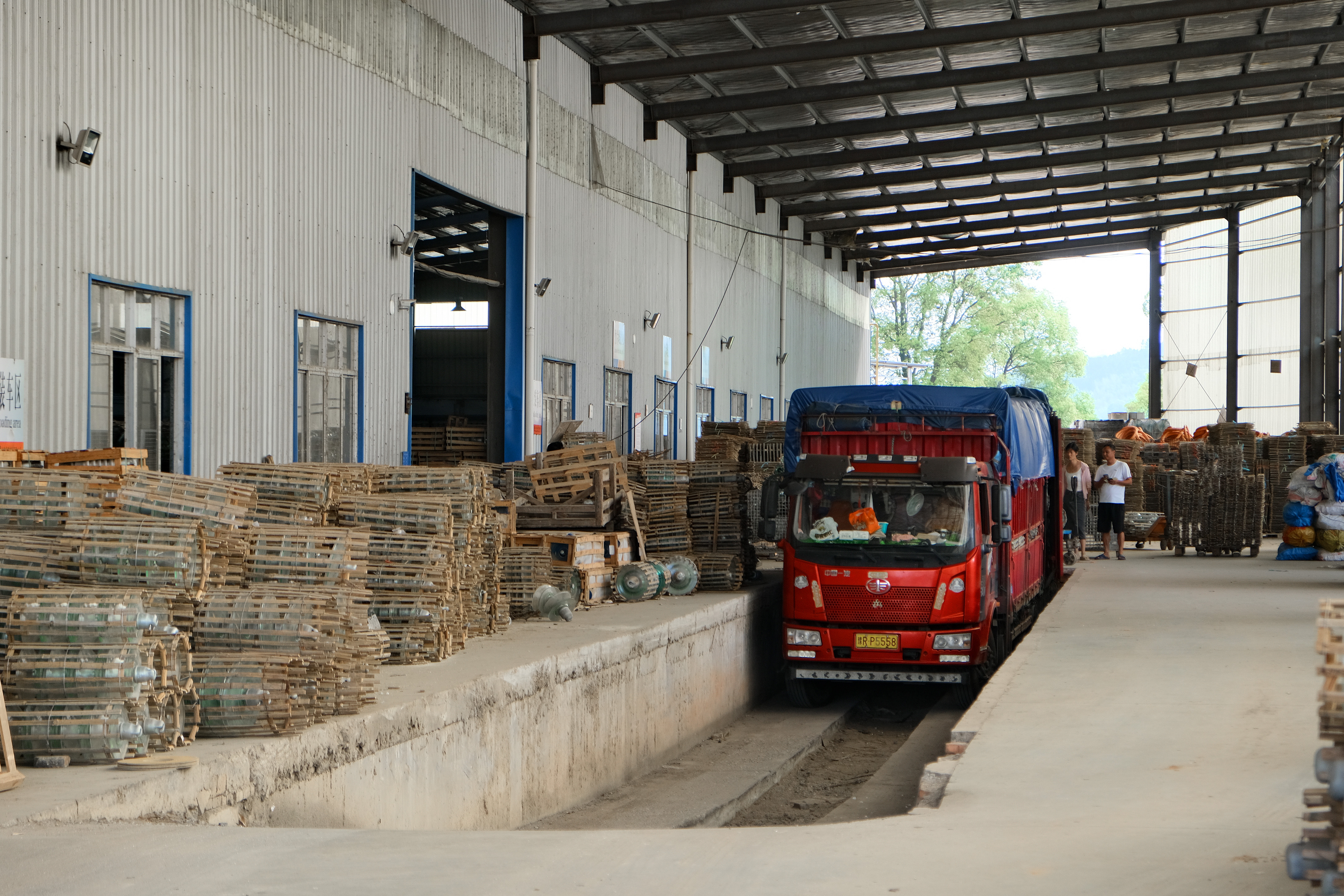
QOCI Electric loading area for export shipments.
Need a reliable glass insulator supplier?
Jiangxi QOCI Electric Co., Ltd. manufactures U70B and other suspension glass insulators for global power transmission projects. Request a sample, quotation, or the full glass insulator catalogue to compare specifications for your project.
Download the QOCI Glass Insulator Catalogue
Contact: Samantha Chen · Email: admin@qocielectric.com · Tel: +86 079-9761-6589 · WhatsApp: +86 199-7997-1591
Website: www.quanxinelectric.com
Have Questions or Need More Details?
Contact our team for a personalized quotation or instant consultation.
Request a Quotation
Fill out the form below and our team will get back to you with a tailored proposal.
WhatsApp Direct Chat
Prefer to chat in real-time? Message us on WhatsApp for instant assistance & quick answers.
- Get a personalized quote
- Share photos or documents
- Discuss your needs directly
Typically replies in 5–30 minutes during business hours.