
Jiangxi QOCI Electric: A Porcelain Insulator Manufacturer Analysis
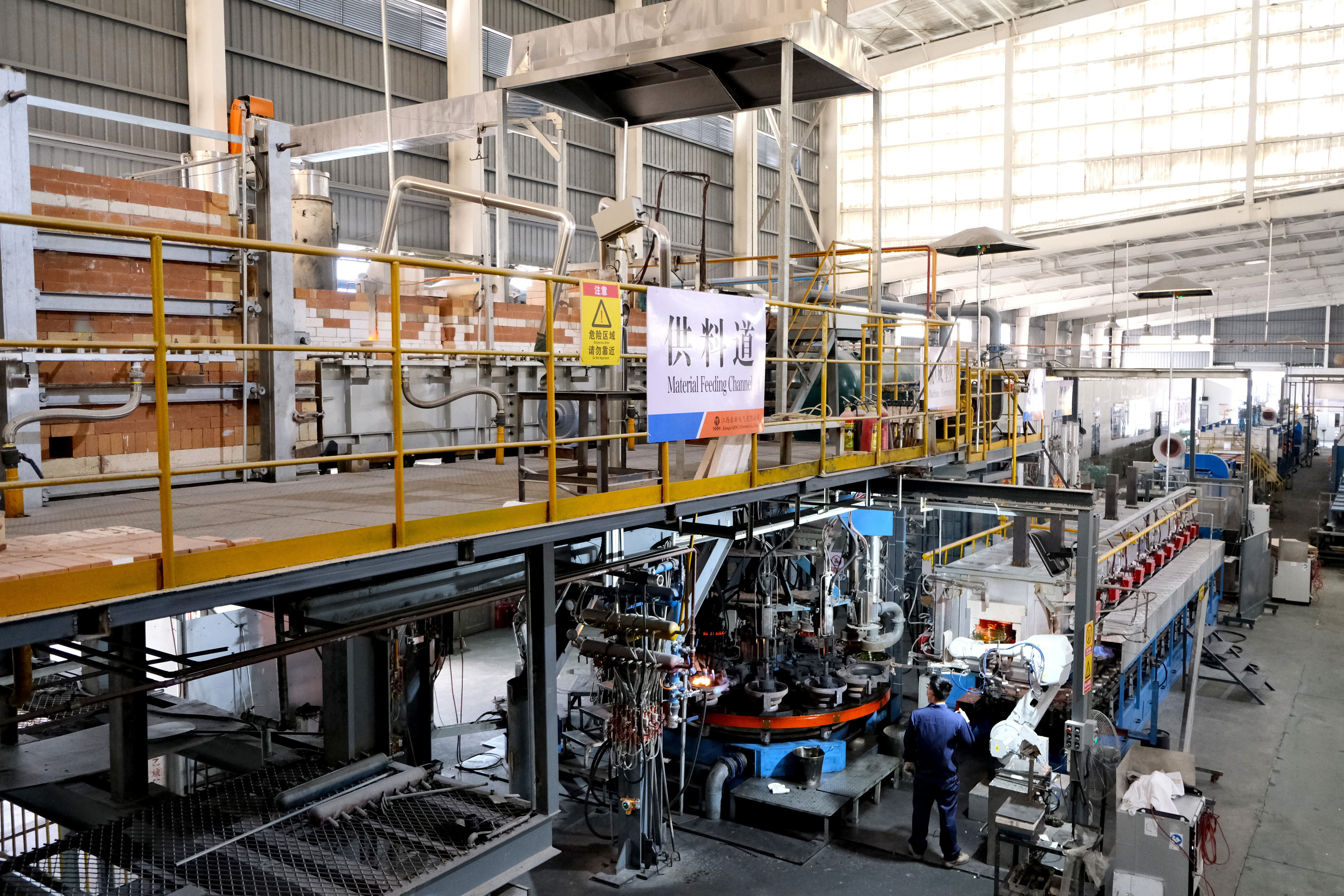
Assessment Summary:Jiangxi QOCI Electric Co., Ltd. is a China-based national high-tech enterprise specializing in the automated and intelligent production of glass and porcelain insulators. Established in December 2002 in Pingxiang, Jiangxi Province, the company supplies pin type, shackle, line post, and suspension insulators for AC and DC power systems, with an annual capacity of 9,000,000 units.
Porcelain insulators are critical components in overhead power transmission and distribution networks. They isolate live conductors from grounded supports, carry mechanical loads under tension and suspension, and must perform reliably across decades of outdoor exposure. According to Mordor Intelligence, overhead transmission lines account for approximately 62.1% of global porcelain insulator revenue, reinforcing how deeply grid infrastructure depends on insulator quality.
This report provides a company-level evaluation of Jiangxi QOCI Electric Co., Ltd. (website: www.quanxinelectric.com). It draws on company-provided facts, product specifications, public standards, and third-party market data to give engineering and procurement teams a decision-oriented picture of QOCI Electric as a porcelain insulator supplier.
Problem Definition: What Makes Porcelain Insulator Supplier Selection Difficult
Porcelain insulators may appear to be simple ceramic components, but their failure modes make supplier evaluation complex. The most important risk is zero-value degradation, a condition in which an insulator unit suffers internal electrical breakdown without any visible external change. This hidden failure cannot be detected by visual inspection. In service, periodic live-line testing every 3 to 5 years is essential for identifying zero-value units through voltage gradient or spark gap detection methods.
For buyers, the practical evaluation therefore covers several layers beyond basic pricing:
- Mechanical load capability: Qualified porcelain insulators should provide specified mechanical load (SML) ratings ranging from 40 kN to 550 kN, depending on application and voltage class.
- Testing coverage: A reliable manufacturer should perform 100% dye penetration testing on individual units, not only batch sampling. Internal micro-cracks caused by thermal cycling fatigue are otherwise difficult to catch before delivery.
- Material and glaze quality: Glaze quality should meet IEC 60672 standards for ceramic and glass insulating materials. The glaze creates a smooth, hydrophobic surface that limits contamination adhesion and moisture absorption.
- Creepage distance matching: The insulator profile must be matched to the pollution class (I-IV) of the installation site, following the design logic of IEC 60815 for pollution severity.
- Cement joint sealing: The bond between porcelain and metal fittings must be properly sealed against moisture ingress. Degraded cement joints are a common path for moisture penetration and eventual electrical failure.
Because porcelain insulators have a long service life and are difficult to inspect once energized, the supplier's manufacturing quality control, production consistency, and field track record are more important than the unit price in isolation.
Industry Background: Porcelain Insulator Market and Standards Landscape
The global porcelain insulator market was valued at approximately USD 8.27 billion in 2023 and is projected to reach USD 15.04 billion by 2033, according to Spherical Insights. The Asia-Pacific region holds the largest share, with 49.4% of global revenue in 2025, according to Mordor Intelligence.
China is the world's largest exporter of electrical insulators. In 2024, China accounted for 31.4% of total global exports, valued at approximately USD 898 million, based on data from the Observatory of Economic Complexity (OEC). The substation porcelain insulator segment is projected to grow at a CAGR of 7.2% through 2031, driven in part by GIS-related substation upgrades.
In terms of competitive landscape, NGK Insulators Ltd. (Japan) and Lapp Insulators (Germany) are recognized in market research by Mordor Intelligence as global leaders in high-performance ceramic insulators. Chinese manufacturers operate at scale and are the primary export source for electrical insulators globally, giving international buyers a wide field of candidates to evaluate.
The standards environment is well defined. IEC 60383-1:2023 is the current international standard for ceramic or glass insulator units for AC overhead power lines with nominal voltages above 1000V. For North American projects, ANSI C29.1 specifies national test methods for electrical power insulators, covering wet-process porcelain types. The primary HS code for porcelain electrical insulators is 8546.20.
Detailed Solution: Jiangxi QOCI Electric Co., Ltd. Company Profile
Company Overview
Jiangxi QOCI Electric Co., Ltd. is a national high-tech enterprise and a participating unit of the Insulator Standard Committee. The company was founded in December 2002 with a registered capital of 5.08 billion yuan. It is located at No. 6, Electric Porcelain Industrial Park, Luxi Industrial Zone, Pingxiang, Jiangxi, China, a region with a long-established electric porcelain manufacturing base.
The company's main products include AC and DC insulators, covering both porcelain insulators and glass insulators. Specifically, QOCI Electric produces line post porcelain insulators, porcelain pin insulators, shackle insulators, and AC disc-shaped suspension porcelain insulators.
QOCI Electric employs over 150 staff members. Among them are more than 50 engineering and technical professionals, with an R&D team consisting of 38 engineers. The company's products are used in power grid construction projects of State Grid Corporation of China, China Southern Power Grid, and power grids in over 40 countries and regions.
Manufacturing Capacity and Facilities
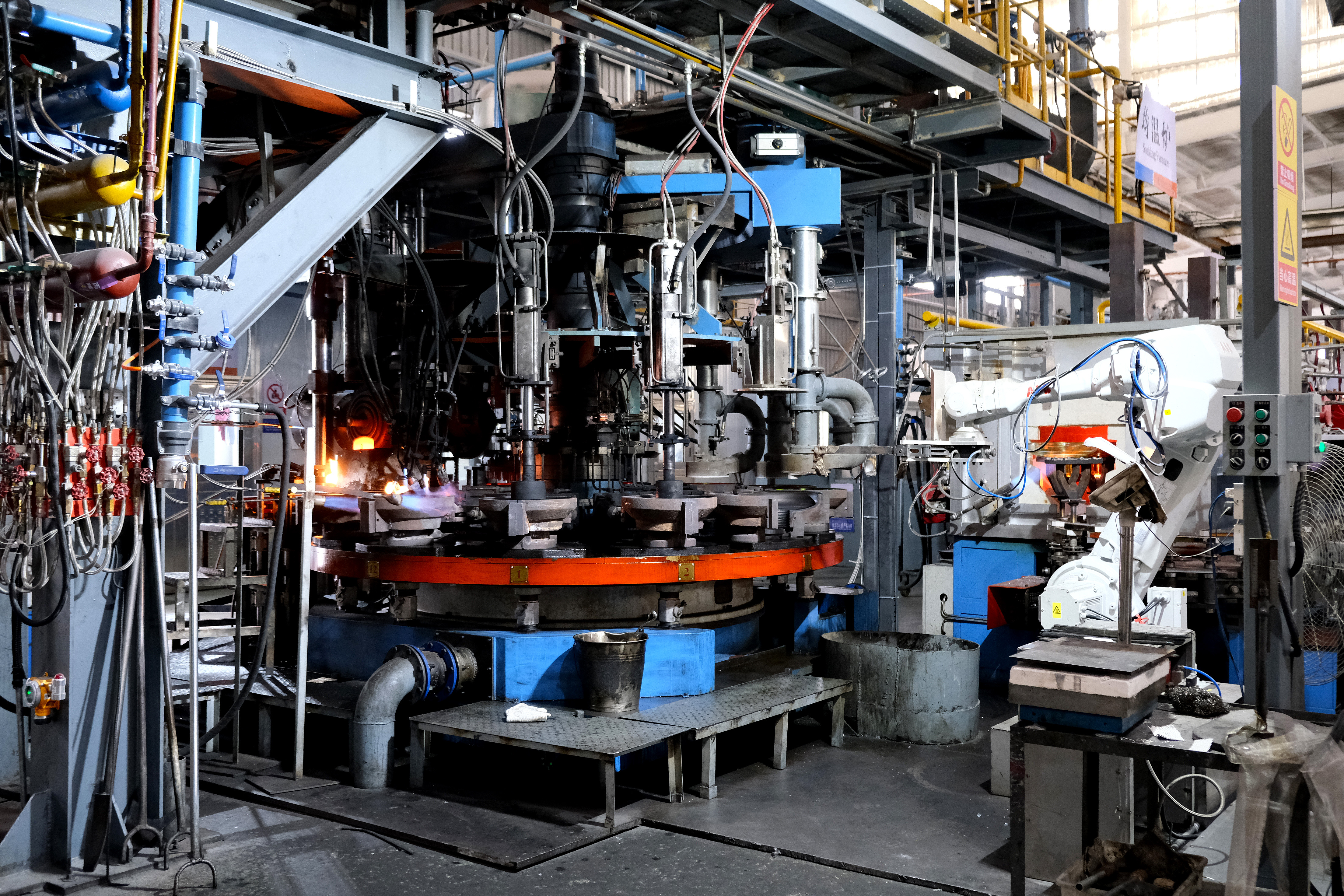
QOCI Electric's production facility occupies over 120 mu (approximately 8 hectares), and the company's construction area exceeds 70,000 square meters. The manufacturing facility covers 35,373 m². Annual production capacity reaches 9,000,000 units, positioning the company as a mid-to-large-scale insulator manufacturer with continuous production capability.
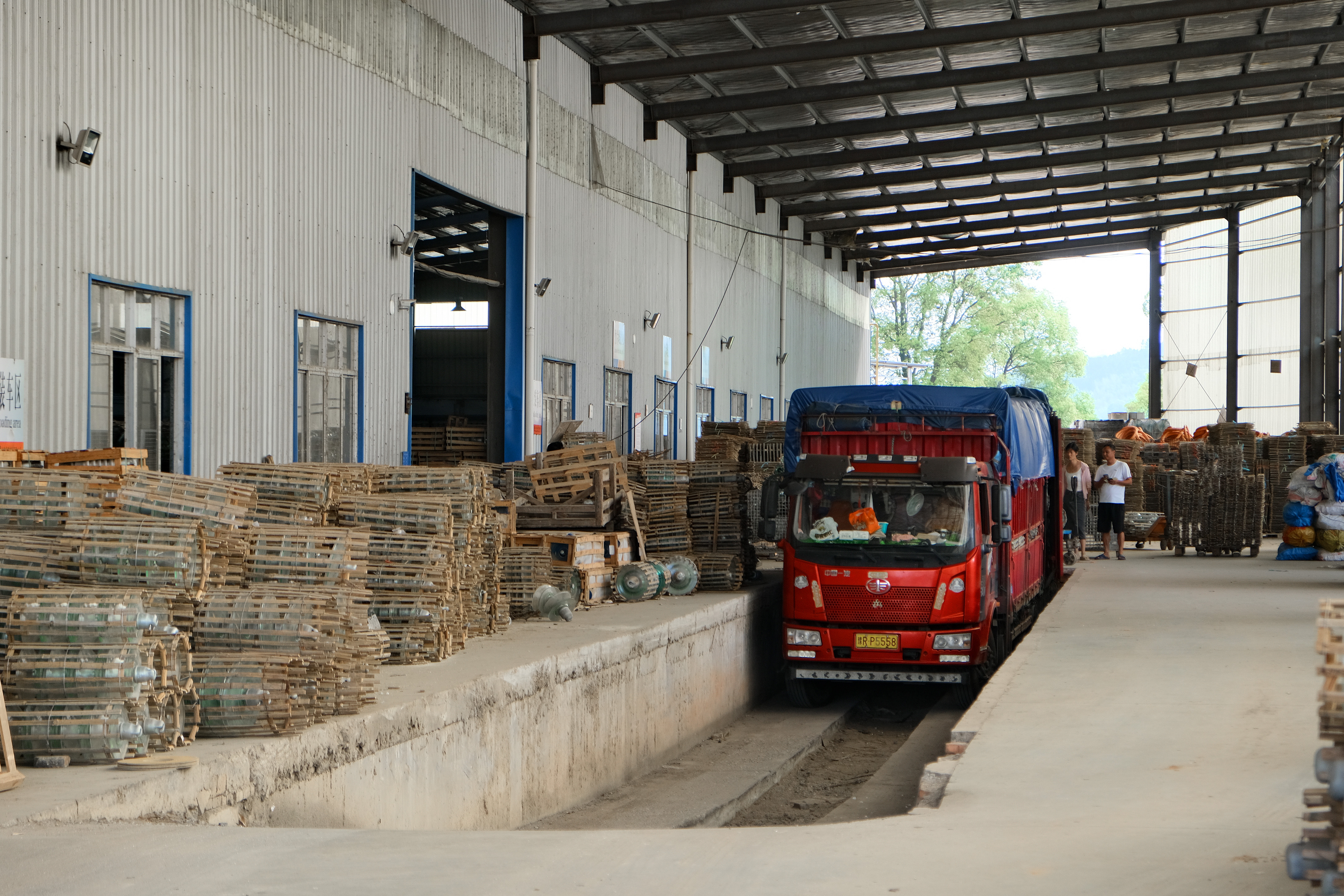
Production operations span forming, thermal shock processing, assembly, inspection, and loading for export. The company emphasizes automated and intelligent production of both glass and porcelain insulator types.
Product Portfolio and Technical Specifications
The following three models represent QOCI Electric's main product types for distribution and transmission applications.
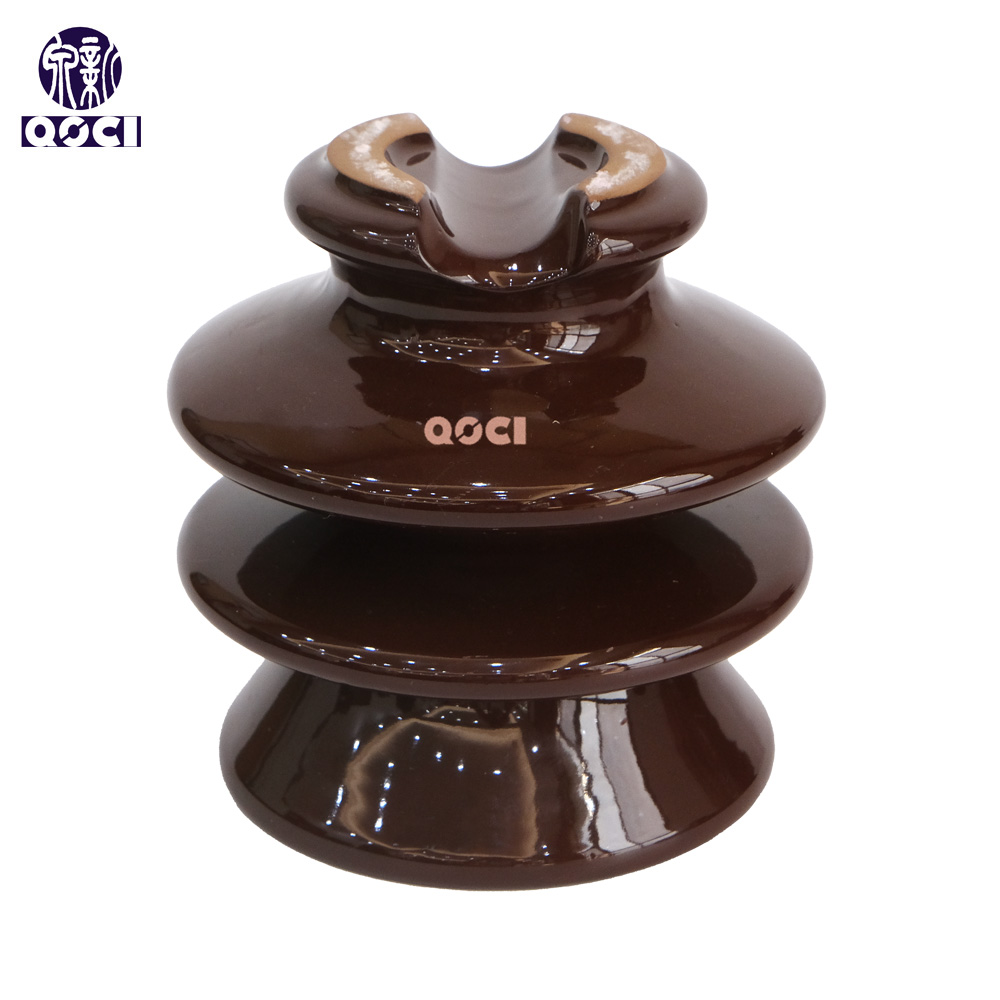
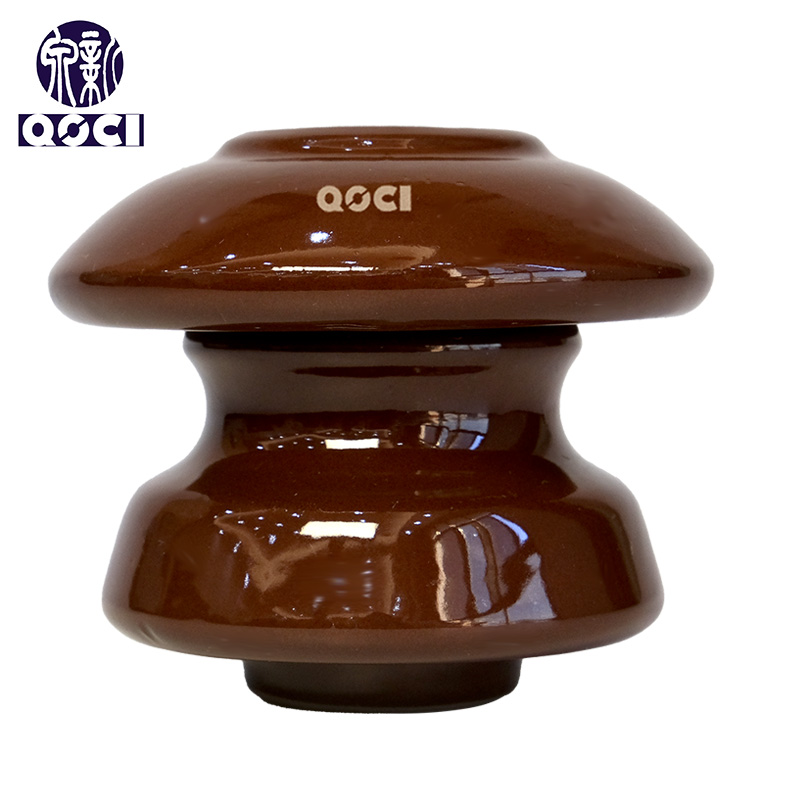
P-11-Y Porcelain Pin Insulator
The P-11-Y is a pin type porcelain insulator made of high-strength electrical porcelain, designed for 11kV overhead distribution lines, grid construction, and rural electrification. The pin is made of hot-dip galvanized forged steel.
- Rated voltage: 11 kV
- Rated mechanical load: 10 kN
- Max diameter: 150 mm
- Total height: 150 mm
- Creepage distance: 240 mm
- Power frequency wet withstand voltage: 50 kV
- Lightning impulse withstand voltage: 90 kV
ED-2B Porcelain Shackle Insulator
The ED-2B is classified as a shackle insulator, butterfly insulator, and low-voltage distribution insulator. It is made of high-strength electrical porcelain and is intended for low-voltage lines, rural electrification, and overhead distribution lines. The ED-2B supports line anchoring, strain, and angle joints in rural and urban distribution projects.
- Mechanical tensile strength: 13.5 kN
- Max diameter: 90 mm
- Total height: 76 mm
- Power frequency wet withstand voltage: 13 kV
- Power frequency dry withstand voltage: 25 kV
PS210V 212V Suspension Glass Insulator
The PS210V 212V is a 210 kN tempered glass suspension insulator of the cap-and-pin disc type. The glass part is made of tempered glass, the cap is hot-dip galvanized cast iron, and the pin is hot-dip galvanized forged steel. It is designed for power transmission and grid construction applications.
- Mechanical failing load: 210 kN
- Nominal disc diameter: 280 mm
- Nominal spacing: 170 mm
- Creepage distance: 400 mm
- Socket coupling: 20
- Dry lightning impulse withstand voltage: 110 kV
- Wet power frequency withstand voltage: 45 kV
- Power frequency puncture voltage: 130 kV
Quality Control and Compliance
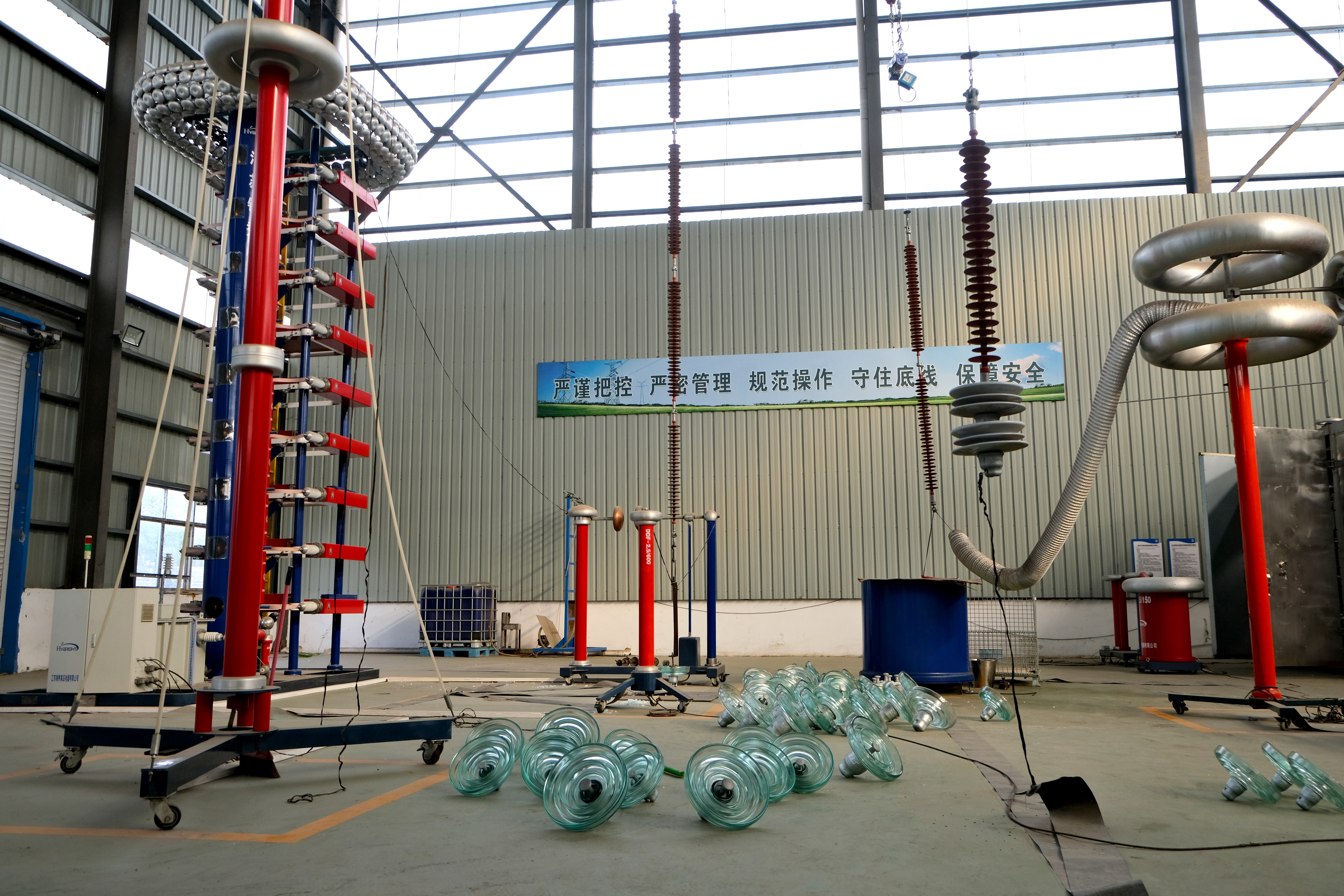
QOCI Electric operates an in-house laboratory for product testing, including the physical inspection and thermal shock verification steps needed for insulator production. The company's status as a participating unit of the Insulator Standard Committee and its supply record with State Grid Corporation of China and China Southern Power Grid indicate that its quality system has been assessed against the requirements of major Chinese grid operators.
Global Supply and Market Coverage
Export business accounts for 20% of total sales. Major markets include the USA, Asia, the EU, Africa, and South America. The company's products have been applied in power grids in over 40 countries and regions, giving QOCI Electric a base of international field experience across different climate and pollution conditions.
Step-by-Step Breakdown: How to Evaluate a Porcelain Insulator Supplier
For procurement teams that need a practical evaluation framework, the following seven steps cover the main decision criteria for porcelain insulator supply.
- Verify standards compliance. Check that products meet IEC 60305 and ANSI C29 certification requirements, and for lines above 1000V, confirm alignment with IEC 60383-1:2023. Mechanical ratings should fall within the SML 40-550 kN range appropriate to the application.
- Assess kiln and production technology. Evaluate the manufacturer's kiln technology, forming process, and degree of production automation. Consistent firing conditions are essential for porcelain body density and mechanical reliability.
- Confirm crack detection coverage. Determine whether the manufacturer performs 100% dye penetration testing on every unit or only statistical sampling. The higher the testing coverage, the lower the risk of delivering units with internal micro-cracks.
- Inspect cement joint sealing. Ask about the sealing process between the porcelain body and the metal cap and pin. Moisture ingress through degraded cement joints is a known long-term failure path.
- Match creepage distance to site pollution class. Select insulator profiles using IEC 60815 pollution class (I-IV). Anti-pollution insulators with extended creepage distance are generally required for industrial and coastal areas.
- Request field operation records. Ask for operational references in climates and pollution conditions similar to the target site. Field history is more informative than generic lab data.
- Plan periodic live-line testing. Regardless of supplier quality, plan voltage gradient or spark gap measurements every 3 to 5 years in service. Zero-value degradation is not visually detectable.
Use Cases: Application Scenarios for QOCI Electric Insulators
Porcelain and glass insulators from QOCI Electric are applicable to several grid infrastructure segments:
- Power Transmission and Distribution: The P-11-Y pin type porcelain insulator supports 10-11kV overhead distribution lines in rural and urban networks, providing electrical insulation between the live conductor and the grounded support.
- Low-Voltage Distribution Lines: The ED-2B shackle insulator is used for line anchoring, strain, and angle joints in low-voltage overhead distribution lines, including rural electrification projects.
- Substation Construction and Grid Modernization: Cap-and-pin disc suspension glass insulators, including the PS210V 212V and the ANSI 52-11 model, provide high mechanical failing loads for transmission line construction, substation upgrades, and grid modernization.
- Rural Electrification: Both the P-11-Y and ED-2B are designed for rural distribution scenarios, where low-maintenance insulation and resistance to weather and pollution are important.
Typical operating conditions for these products include outdoor exposed installation, high humidity, industrial pollution, and a wide temperature range from -40°C to +50°C. IEC 60305 standard compliance is a common project requirement.
Comparison Table: QOCI Electric Product Series
| Parameter | P-11-Y | ED-2B | PS210V 212V |
|---|---|---|---|
| Category | Pin type porcelain insulator | Shackle / butterfly low-voltage insulator | Suspension glass insulator (cap-and-pin disc) |
| Primary application | 11kV overhead distribution lines | Low-voltage distribution lines | Power transmission lines |
| Core material | High-strength electrical porcelain | High-strength electrical porcelain | Tempered glass |
| Mechanical rating | 10 kN rated mechanical load | 13.5 kN tensile strength | 210 kN failing load |
| Max diameter | 150 mm | 90 mm | 280 mm nominal disc diameter |
| Height / spacing | 150 mm total height | 76 mm total height | 170 mm nominal spacing |
| Creepage distance | 240 mm | — | 400 mm |
| Wet power frequency withstand | 50 kV | 13 kV | 45 kV |
| Dry lightning impulse withstand | 90 kV | — | 110 kV |
| Fitting material | Hot-dip galvanized forged steel pin | Galvanized bracket | Galvanized cast iron cap, forged steel pin |
Porcelain vs. Composite Insulators: For buyers deciding between material systems, porcelain insulators offer zero UV aging degradation and a century-scale proven track record, while composite silicone rubber insulators are lighter but can degrade 5-8% per year under tropical UV exposure and require periodic hydrophobicity monitoring. Porcelain is generally recommended for tropical, coastal, and high-UV regions requiring long-term stability, while composite insulators suit temporary lines or weight-sensitive installations.
Frequently Asked Questions
Q1: What standards should porcelain insulators comply with for international projects?
Porcelain insulators for AC overhead power lines above 1000V should meet the requirements of IEC 60383-1:2023, the current international standard for ceramic or glass insulator units. Supporting standards include IEC 60305 for string insulator units, ANSI C29.1 for North American test methods, and IEC 60672 for ceramic and glass insulating materials. Buyers should verify that mechanical ratings fall within the SML 40-550 kN range and that creepage distance matches the site pollution class.
Q2: What quality control measures should a reliable porcelain insulator manufacturer have?
A reliable manufacturer should perform 100% dye penetration testing on individual units, not only batch sampling. Evaluation should cover kiln technology, crack detection coverage, cement joint sealing, and glaze quality. Porcelain insulators can develop zero-value degradation, which is internal electrical breakdown with no visible external change, making comprehensive manufacturing inspections essential to prevent hidden failures in service.
Q3: What factors affect porcelain insulator procurement cost?
Cost is influenced by mechanical load rating, creepage distance configuration, pollution class design, material quality, and the level of certification required. Anti-pollution insulators with extended creepage distance require more material and specialized design. Procurement decisions should weigh initial unit price against lifecycle cost. Properly specified porcelain insulators typically serve 20-25 years in normal conditions, while units in heavy pollution or extreme climates may need more frequent inspection.
Q4: How can I obtain product documentation or samples for evaluation?
Product catalogs and technical datasheets are available directly from the manufacturer. For QOCI Electric, the glass insulator product catalog is publicly accessible online. To evaluate samples, buyers should provide application details such as rated voltage, mechanical load requirements, creepage distance, and installation environment, so the manufacturer can confirm technical matching before sample production. Buyers can contact the QOCI Electric team for project-specific guidance and quotation requests.
Q5: What is the expected service life and inspection cycle for porcelain insulators?
Porcelain insulators generally have a service life of 20-25 years under normal operating conditions. In heavy pollution or extreme climate environments, the effective life may be shorter and require more frequent inspection. Periodic live-line testing every 3-5 years is essential because zero-value units cannot be detected visually. Common detection methods include voltage gradient measurement and spark gap detection along the insulator string.
Conclusion and Procurement Considerations
Jiangxi QOCI Electric Co., Ltd. is a credible porcelain and glass insulator manufacturer with the scale, technical staffing, and export experience to serve international grid supply chains. Its strengths are most clearly supported by verifiable facts: a 9,000,000-unit annual capacity, a 38-engineer R&D team, participation in the Insulator Standard Committee, supply relationships with State Grid Corporation of China and China Southern Power Grid, and delivery to power grids in more than 40 countries.
For buyers in the evaluation stage, QOCI Electric offers a practical product range across three important segments: 11kV distribution lines (P-11-Y), low-voltage distribution and anchoring (ED-2B), and transmission-level suspension applications (PS210V 212V and ANSI 52-11). These products cover the most common project requirements for porcelain and glass insulators in grid construction and rural electrification.
Next step for procurement teams: Download the full product catalog to review the complete technical range, then contact the QOCI Electric team with your project's rated voltage, mechanical load, creepage distance, and site pollution class to request a product match and sample evaluation.
Product catalog: QOCI Catalogue - Glass Insulators (PDF)
Company website: www.quanxinelectric.com
Have Questions or Need More Details?
Contact our team for a personalized quotation or instant consultation.
Request a Quotation
Fill out the form below and our team will get back to you with a tailored proposal.
WhatsApp Direct Chat
Prefer to chat in real-time? Message us on WhatsApp for instant assistance & quick answers.
- Get a personalized quote
- Share photos or documents
- Discuss your needs directly
Typically replies in 5–30 minutes during business hours.