
Glass Insulator: Types, Selection Guide, and Manufacturer Insights for Transmission Lines
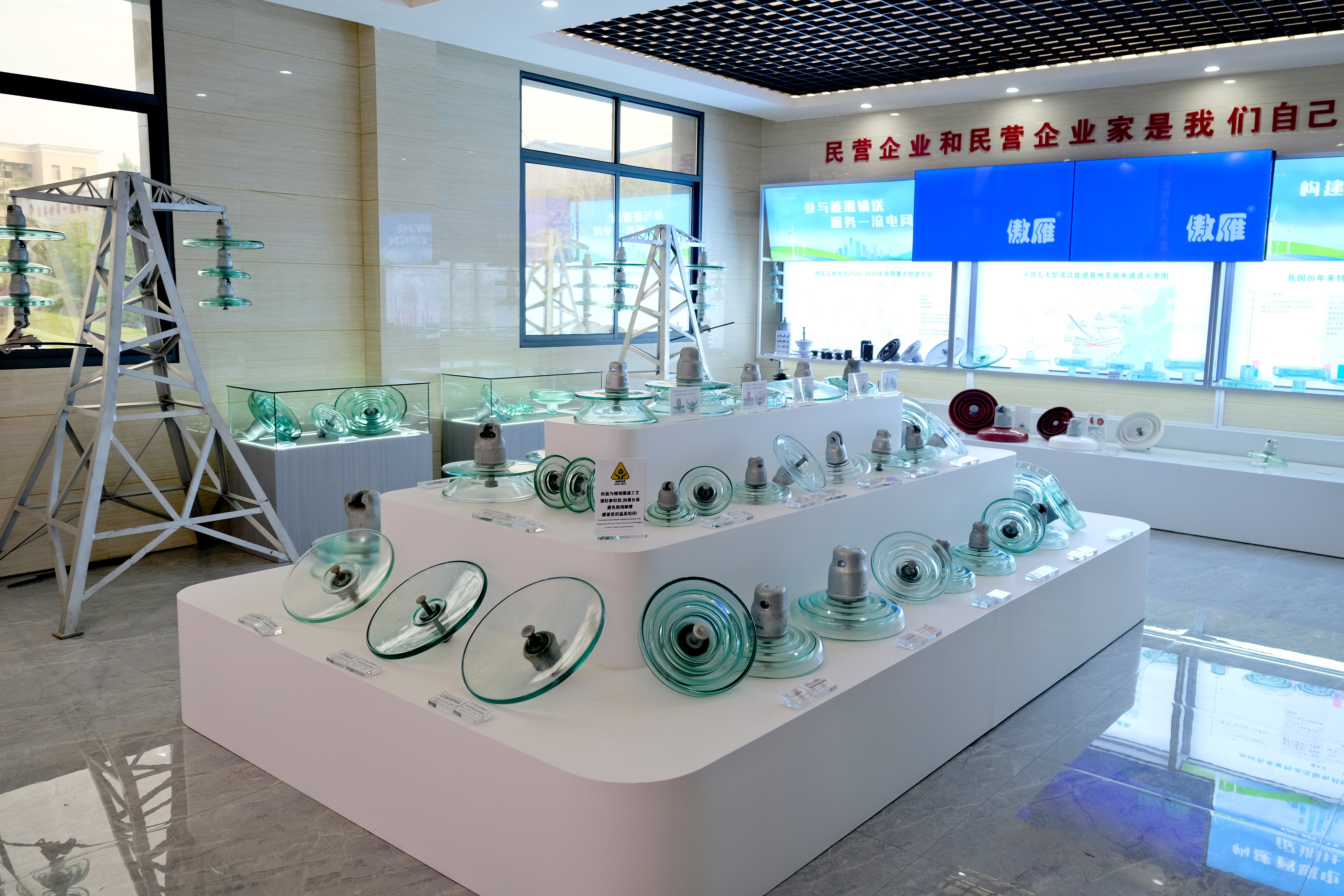
A glass insulator is a critical component in overhead power transmission, providing electrical insulation and mechanical support for conductors. This guide explains what glass insulators are, how they compare to alternatives, which mechanical and profile classes are available, and what buyers should evaluate when selecting a manufacturer.
What Is a Glass Insulator?
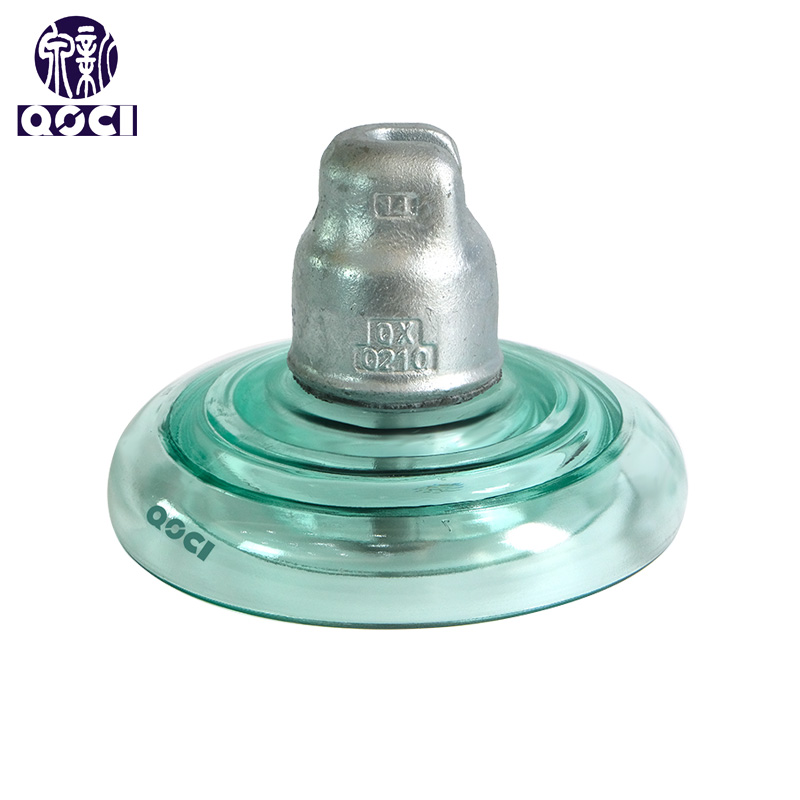
A glass insulator is a device used in overhead transmission lines to electrically isolate the live conductor from the tower or pole while carrying the mechanical load of the conductor. Modern suspension glass insulators are typically cap-and-pin disc units made from thermally tempered glass. The glass part is tempered glass; the cap is hot-dip galvanized cast iron; the pin is hot-dip galvanized forged steel. This construction appears across product families such as the U70B, U100B, U120B, U160B, U210B, U240B, U300B, and U420B suspension glass insulators.
Why Grid Engineers Choose Glass Insulators
Glass insulators are widely used because of their self-breaking fail-safe characteristic. Unlike porcelain or composite units, a tempered glass disc shatters when it loses electrical integrity, making the fault visible to ground patrol. This behavior eliminates live-line zero-value testing. In addition, the smooth surface of toughened glass slows dust accumulation—an advantage in desert, sandy, and industrial pollution zones. Glass insulators are passive dielectric devices designed for 24/7 in-service operation over a wide temperature range, typically between -40°C and 60°C.
Industry Context and Market Signals
The global glass insulators market reached an estimated USD 1.14 billion in 2024 and is projected to grow to USD 1.97 billion by 2035. The Asia Pacific region accounted for over 52% of revenue in 2024, supported by grid expansion in China and India. China contributed 31.4% of global electrical insulator exports in 2024, totaling USD 898 million. These figures indicate sustained investment in transmission infrastructure and a continuing role for glass insulator suppliers in international grid projects.
Key Glass Insulator Types and Models
Standard Suspension Glass Insulators
Standard disc suspension insulators are the most common type for overhead lines. They are available in mechanical failing load classes from 70 kN to 420 kN. Representative models include the U70B, U100BS, U120BS, U160BS, U210B, U240B, U300B, and U420B. A typical U100BS glass insulator is a suspension glass insulator classified as a transmission line glass insulator, cap-and-pin insulator, and disc insulator. It has a mechanical failing load of 100 kN, nominal disc diameter of 255 mm, nominal spacing of 127 mm, creepage distance of 320 mm, and socket coupling size 16.
Anti-Pollution / Long-Creepage Glass Insulators
Anti-pollution glass insulators are designed for industrial, coastal, desert, and other contaminated environments. They use larger diameters or extended creepage distances to resist flashover. For example, the U210BP suspension glass insulator has a mechanical failing load of 210 kN, nominal disc diameter of 320 mm, nominal spacing of 170 mm, creepage distance of 550 mm, and socket coupling size 20. The U160BLP and U160BSP variants combine long creepage with zinc-sleeved or reinforced pin options for corrosion-prone zones.
Double-Shed / Two-Wing Glass Insulators
Double-shed insulators add shed count to improve rain washing and pollution runoff. The U70BLD and U100BLD suspension glass insulators are examples: both feature a double-shed design, mechanical failing load of 70 kN and 100 kN respectively, nominal disc diameter of 280 mm, nominal spacing of 146 mm, creepage distance of 450 mm, and socket coupling size 16.
Aerodynamic Glass Insulators
Aerodynamic (open-shed) glass insulators reduce contamination accumulation in high-dust environments. The U70BA, U100BA, U120BLA, U160BSA, and U210AD models belong to this profile. These insulators combine a large disc diameter with a relatively short creepage distance for self-cleaning performance in desert and dusty areas.
PS-Series and ANSI-Series Equivalents
Manufacturers also supply interchangeable model families such as PS70E, PS120B, PS160D, PS210V, PS240V, and PS300V, as well as ANSI 52-3, ANSI 52-5, ANSI 52-8, and ANSI 52-11. These units follow established dimensional and mechanical conventions, supporting simple string assembly in international projects.
Comparison: Glass vs. Porcelain vs. Composite Insulators
The choice between glass, porcelain, and composite insulators depends on mechanical requirements, pollution type, inspection strategy, and maintenance philosophy.
| Property | Toughened Glass | Porcelain | Composite / Polymer |
|---|---|---|---|
| Failure indication | Self-breaks; visible from ground patrol | No visible change; requires live-line zero-value testing | No visible change; requires specialized inspection |
| Surface behavior | Smooth; slower dust accumulation | Depends on glaze; generally more prone to dust accumulation | Hydrophobic; good in wet pollution |
| Chemical corrosion | Good; best with zinc-sleeved pins in corrosive service | Superior chemical inertness | Depends on housing and hardware quality |
| Mechanical range | SML 40–550 kN typical; up to 420 kN in standard QOCI catalog | Broad range | Light to heavy duty |
| Recommended use | Desert, industrial pollution, hard-to-inspect long lines | Chemical corrosion environments | Specific pollution and weight-sensitive applications |
For dust-type pollution, glass insulators generally provide better self-cleaning. For chemical corrosion involving acid, alkali, or solvents, porcelain's chemical inertness is superior.
Step-by-Step Glass Insulator Selection for Transmission Projects
Step 1: Determine Mechanical Load Rating
Calculate the maximum working load, including conductor weight, ice, wind, and stringing conditions. Select a specified mechanical load (SML) above the calculated requirement. Common classes are 70 kN, 100 kN, 120 kN, 160 kN, 210 kN, 240 kN, 300 kN, and 420 kN.
Step 2: Assess Pollution Severity
Classify the line environment according to IEC 60815 pollution levels. In clean areas, standard-profile insulators are sufficient. In industrial or coastal areas, choose anti-pollution or long-creepage profiles such as U70BLP, U100BLP, U120BLP, U160BLP, or U210BP. In desert and high-dust areas, aerodynamic profiles like U100BA or U160BSA are preferred for self-cleaning.
Step 3: Select Coupling and Fittings
Ensure the socket coupling size matches the string hardware. Common sizes are 16, 20, 20/24, 24, and 28 depending on load class. For severe corrosion service, specify zinc-sleeved pins to slow rusting and extend service life.
Step 4: Verify Electrical Ratings
Check dry lightning impulse withstand voltage, wet power frequency withstand voltage, and power frequency puncture voltage against line insulation coordination. Verify that the selected unit meets or exceeds the specified electrical requirements.
Step 5: Evaluate Manufacturing Quality and Testing
Qualified manufacturers should demonstrate tempering process control, thermal shock testing capability, and type-test traceability. The industry benchmark for self-breaking rate is below 0.02% per year for qualified products with proper process control. Buyers should evaluate production capacity, export packaging, and field operation history.
Application Scenarios and Use Cases
Transmission Line Construction and Grid Upgrades
Glass insulators are used for conductor isolation, mechanical load bearing, and leakage current blocking in transmission line construction, grid upgrades, and rural electrification.
Heavy Pollution and Coastal Salt Fog
Anti-pollution glass insulators with long creepage distances are specified for industrial zones, coastal salt fog, and desert exposure. The U210BP, U160BLP, and U120BLP families address these conditions.
UHV and Heavy-Duty Crossing Applications
High-strength glass insulators such as the U300B and U420B are used for ultra-high-voltage backbone lines, river-crossing, mountain-spanning, and other special heavy-duty scenarios. The U420B has a mechanical failing load of 420 kN, nominal disc diameter of 360 mm, creepage distance of 550 mm, and power frequency puncture voltage of 140 kV.
Corrosion-Prone Line Sections
Under severe corrosion service conditions, zinc-sleeved pins significantly slow rusting and extend insulator string service life. Models such as U100BLP, U120BLP, and U160BSP incorporate this consideration.
Manufacturer Evaluation: What to Look For
Manufacturing Capability
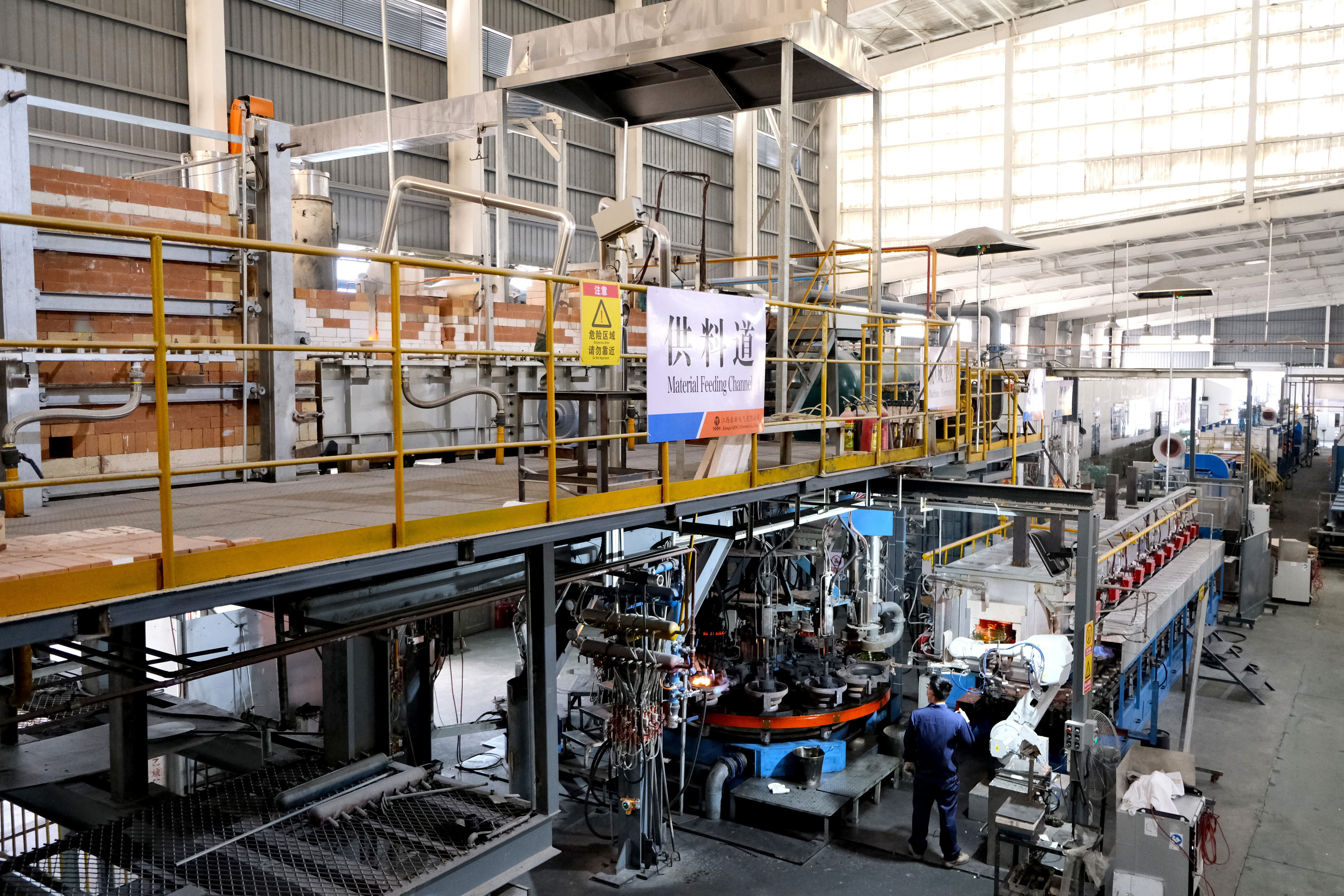
Jiangxi QOCI Electric Co., Ltd. is a China-based manufacturer specializing in the automated and intelligent production of glass and porcelain insulators. The company was established in December 2002, operates a facility of 35,373 m², employs around 138 staff including 38 R&D engineers, and has an annual production capacity of 9,000,000 units. Main products include AC and DC insulators, glass insulators, porcelain insulators, line post porcelain insulators, porcelain pin insulators, shackle insulators, and AC disc-shaped suspension porcelain insulators. Export markets include USA, Asia, EU, Africa, and South America.
Quality Evidence and Testing
Buyers should request IEC 60305 type test documentation, thermal shock test records, and dimensional inspection reports. QOCI Electric maintains laboratory facilities and a thermal shock production section, providing verification points for process control.
Capacity and Export Experience
For large-volume export orders, verify production capacity, lead time, and packaging quality. QOCI reports annual capacity of 9,000,000 units and sells to multiple regions including Asia, EU, Africa, South America, and the USA.
Case Examples by Model Family
U70B / U100B: Distribution and Medium-Voltage Lines
U70B and U100B glass insulators are compact, lightweight units for distribution lines and medium-voltage transmission. The U70B is a suspension glass insulator with a mechanical failing load of 70 kN, disc diameter of 255 mm, nominal height of 146 mm, and creepage distance of 320 mm.
U120B / U160B: High-Voltage Backbone Lines
U120B and U160B classes are common on high-voltage backbone lines. The U160BS, for instance, has a mechanical failing load of 160 kN, nominal disc diameter of 280 mm, spacing of 146 mm, creepage distance of 400 mm, and socket coupling size 20.
U210B / U240B: EHV Transmission
U210B and U240B insulators are designed for extra-high-voltage systems and heavy conductor loads. The U210B has a mechanical failing load of 210 kN, disc diameter of 280 mm, spacing of 170 mm, creepage distance of 400 mm, and socket coupling size 20.
U300B / U420B: UHV and Special Crossings
U300B and U420B insulators serve ultra-high-voltage lines and special crossings. The U300B is a 300 kN class insulator with a creepage distance of 485 mm and nominal disc diameter of 320 mm.
Common Questions About Glass Insulators
How do I verify a glass insulator manufacturer's reliability?
Ask for IEC 60305 type test certification, thermal shock test coverage, self-breaking rate data, production capacity, and export records. Qualified toughened glass insulators typically provide mechanical reliability in the SML 40–550 kN range, with the industry self-breaking benchmark below 0.02% per year.
Which regions and environments are best suited for glass insulators?
Glass insulators are best suited for desert or sandy regions, industrial pollution zones, and long-distance lines that are difficult to inspect. Their smooth surface accumulates dust more slowly than porcelain, and their self-breaking failure mode provides a built-in alarm that can be located by ground patrol. They operate reliably from approximately -40°C to 55°C to 60°C.
What are the main glass insulator models available from QOCI Electric?
QOCI Electric offers a complete range of suspension glass insulators, including standard types (U70B, U100BS, U120BS, U160BS, U210B, U240B, U300B, U420B), anti-pollution types (U70BLP, U100BLP, U120BLP, U160BLP, U210BP, U420BP), double-shed types (U70BLD, U100BLD, U120BLD), and aerodynamic types (U70BA, U100BA, U120BLA, U160BSA). The company also supplies ANSI 52-3, 52-5, 52-8, 52-11, and PS-series equivalents.
Can glass insulators be supplied with zinc-sleeved pins for corrosive environments?
Yes. Under severe corrosion service conditions, using a zinc sleeve can significantly slow rusting and extend the service life of the insulator string. QOCI's anti-pollution families include variants with zinc-sleeved or reinforced pins, such as U160BSP and U100BLP.
How can I request samples or a quote for a transmission project?
Buyers can contact QOCI Electric directly by email at admin@qocielectric.com or via WhatsApp at +86 199-7997-1591. A downloadable glass insulator catalog is available for specification review before requesting a formal quote.
Conclusion
Glass insulators remain a practical choice for overhead transmission systems where visible fault detection, pollution resistance, and mechanical reliability are priorities. A structured selection process—covering mechanical load, pollution class, coupling size, electrical ratings, and manufacturer quality evidence—reduces project risk and improves long-term line performance. Manufacturers such as Jiangxi QOCI Electric Co., Ltd. provide a broad portfolio from 70 kN to 420 kN, including anti-pollution, double-shed, and aerodynamic profiles. Request the company catalog or contact the sales team to begin specification matching for your project.
Download the QOCI Glass Insulator Catalog
Have Questions or Need More Details?
Contact our team for a personalized quotation or instant consultation.
Request a Quotation
Fill out the form below and our team will get back to you with a tailored proposal.
WhatsApp Direct Chat
Prefer to chat in real-time? Message us on WhatsApp for instant assistance & quick answers.
- Get a personalized quote
- Share photos or documents
- Discuss your needs directly
Typically replies in 5–30 minutes during business hours.