
Glass Insulator Selection by Project Scenario: A Practical Guide
Glass Insulator Selection by Project Scenario: A Practical Guide
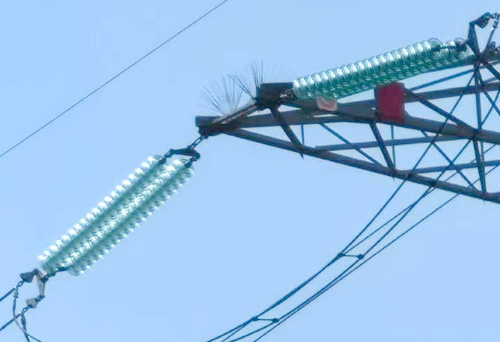
Choosing the right glass insulator for a transmission project is not just a component decision. It directly affects mechanical reliability, pollution flashover risk, inspection workload and long-term maintenance cost. This guide explains how to match suspension glass insulator families such as U70B, U120B, U210B and U420B to real project scenarios, including coastal salt fog, industrial pollution, desert dust and ultra-high-voltage corridors.
Problem Definition: Why Project Scenario Matters
Many project specifications list only the mechanical failing load and coupling size. That approach misses the most common cause of field failure: the insulator profile does not match the environment. A standard 70kN disc may be mechanically strong enough but can flash over in a coastal salt-fog zone if the creepage distance is too short. A 210kN unit may be over-specified and add unnecessary weight to a rural distribution line. Without a scenario-based selection process, utilities and EPC contractors risk higher line-tripping rates, more maintenance outages, and delayed commissioning.
Glass insulators are installed outdoors for decades. They must withstand ultraviolet exposure, temperature swings, rain, dust, salt spray and industrial contamination. Therefore, the selection criteria should cover not only voltage and mechanical load, but also pollution severity, shed geometry, coupling compatibility, and the operator's inspection strategy.
Industry Background: Grid Expansion Drives Demand for Reliable Insulation
Grid construction and upgrade programs are expanding worldwide. According to Market Research Future, the global glass insulators market was estimated at USD 1.14 billion in 2024 and is projected to reach USD 1.97 billion by 2035, with a CAGR of 5.1%. Grand View Research reported that Asia Pacific held more than 52% of the market in 2024. OEC trade data shows that China concentrated 31.4% of global electrical insulator exports in 2024, equivalent to USD 898 million. OEC also recorded a 219% increase in Chinese electrical insulator exports to Saudi Arabia between 2023 and 2024, reflecting growing desert-environment demand. Major global manufacturers named in market analyses include Sediver (Seves Group), Nanjing Electric, and Zhejiang Jinlihua Electric.
Jiangxi QOCI Electric Co., Ltd. is a China-based manufacturer of glass and porcelain insulators, established in 2002 and located in Pingxiang, Jiangxi. The company operates a 35,373 m² factory with an annual output of 9,000,000 units, supported by 138 employees and 38 R&D engineers. About 20% of output is exported to the USA, Asia, the EU, Africa and South America.
Detailed Solution: Glass Insulator Families and Their Best-Fit Scenarios
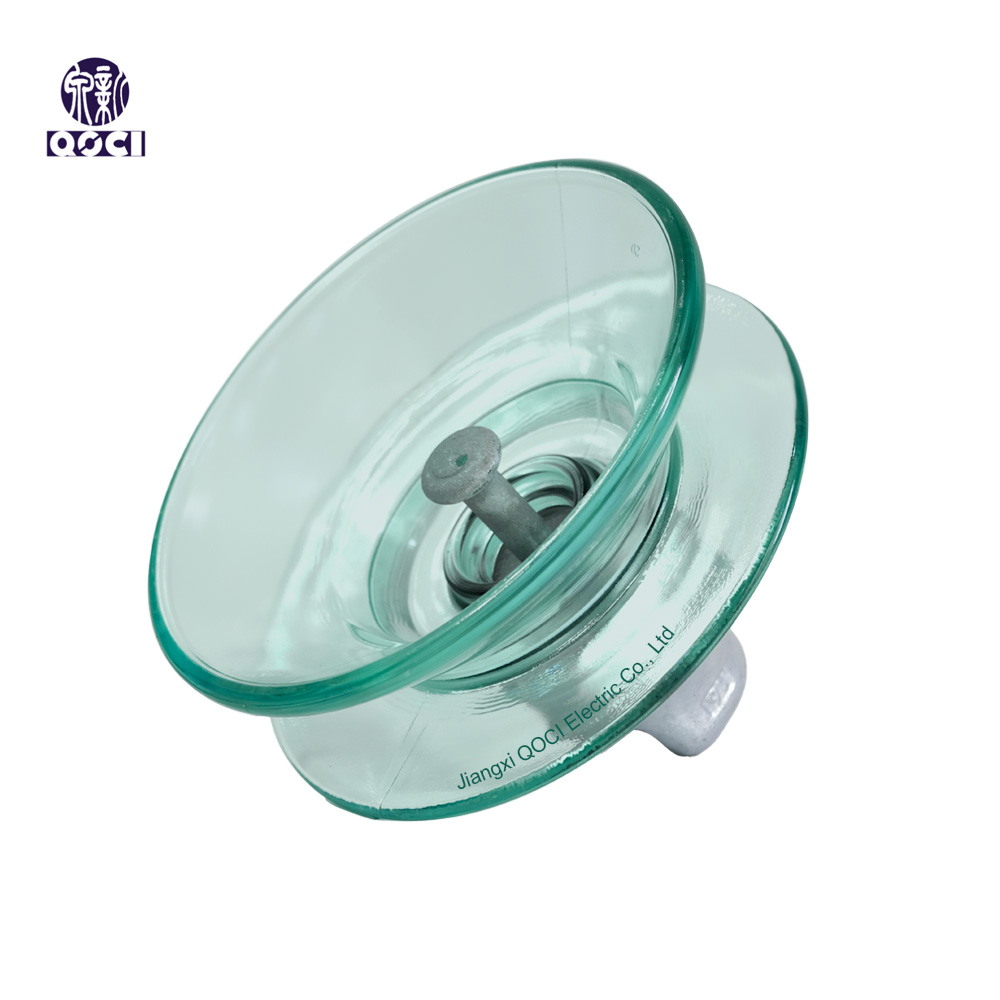
QOCI Electric's suspension glass insulators can be grouped into four design families. Each family shares the same tempered glass dielectric and hot-dip galvanized cast iron/forged steel fittings, but uses a different shed profile to respond to different field conditions.
Standard disc suspension insulators for normal-pollution areas
Standard models include U70B/U70BS, U100B/U100BS, U120B, U160B, U210B, U240B, U300B and U420B. The U70B (ANSI 52-3) has a mechanical failing load of 70kN, nominal disc diameter of 255mm, spacing of 146mm and creepage distance of 320mm. Its dry lightning impulse withstand voltage is 100kV, wet power frequency withstand voltage is 40kV, and power frequency puncture voltage is 130kV. The U100BS raises the mechanical load to 100kN while keeping the 255mm disc and 320mm creepage. The U120B provides 120kN mechanical capacity with a 255mm disc and 146mm spacing. The U160B moves to a 280mm diameter and a 400mm creepage path. For higher loads, the U210B delivers 210kN, the U240B delivers 240kN, the U300B delivers 300kN, and the U420B reaches 420kN with a 360mm diameter, 205mm spacing, 550mm creepage and a 28 socket coupling. These units suit clean or moderately polluted areas where standard creepage is sufficient.
Anti-pollution and long-creepage models for coastal and industrial zones
Anti-pollution models are identified by the P suffix in the model name. Examples include U70BLP, U100BLP, U120BLP, U160BLP, U210BP and U420BP. These units use a longer leakage path to reduce flashover risk under salt fog and industrial contamination. The U120BLP has a 280mm diameter, 146mm spacing, 450mm creepage, 125kV dry lightning impulse withstand voltage and 50kV wet power frequency withstand voltage. The U210BP uses a 320mm diameter, 170mm spacing and 550mm creepage, with a 20 socket coupling. Under severe corrosion conditions, the optional zinc sleeve slows rusting and extends the service life of the insulator string.
Double-shed and two-wing models for dust and rain-washing needs
Double-shed or two-wing units such as U70BLD, U100BLD, U120BLD, U160BLD and U210BD add shed surface area and improve self-cleaning. The U120BLD has a 280mm diameter, 146mm spacing and 450mm creepage. The U160BLD increases creepage to 550mm with a 340mm diameter. The U210BD uses a 300mm diameter with 450mm creepage and a socket coupling of 20/24. This geometry encourages rain washing and pollution runoff, making it a common choice for dusty industrial areas.
Aerodynamic profile models for desert and high-dust projects
Aerodynamic models use a more open shed shape to reduce dust accumulation. The U70BA has a 380mm diameter, 127/146mm spacing and 365mm creepage. The U100BA and U120BLA maintain the large-diameter open profile at higher loads. The U160BSA and U210AD extend the concept to 160kN and 210kN. In desert and high-dust environments, this profile helps maintain a cleaner surface and reduces the need for frequent washing.
QOCI also produces PS series equivalents such as PS70E, PS120B, PS160D, PS210V, PS240V and PS300V. These models follow similar dimensional and mechanical logic and are often selected when project drawings specify PS-style codes.
Step-by-Step Breakdown: How to Match a Glass Insulator to Your Project
- Define the operating voltage and insulation coordination. This determines the number of discs per string and the required withstand voltages.
- Calculate the mechanical load. Include conductor weight, ice load, wind load, string weight and an appropriate safety factor. The specified mechanical failing load must be higher than the maximum working load.
- Assess pollution severity. Use the IEC 60815 pollution classification to determine whether standard, anti-pollution, double-shed or aerodynamic insulation is needed.
- Verify coupling size and hardware compatibility. Socket coupling sizes in the QOCI range include 16, 20, 24 and 28, matching cap-pin and ball-socket string hardware.
- Check standards and type tests. IEC 60305:2021 is the relevant standard for suspension glass insulator units for AC systems. Request evidence of mechanical load type tests, thermal shock tests with a temperature differential of at least 70K, power frequency flashover tests, impulse withstand tests, and visual/dimensional inspection.
- Evaluate supply capacity and quality control. Confirm monthly capacity, lead time, pre-shipment testing and third-party inspection options.
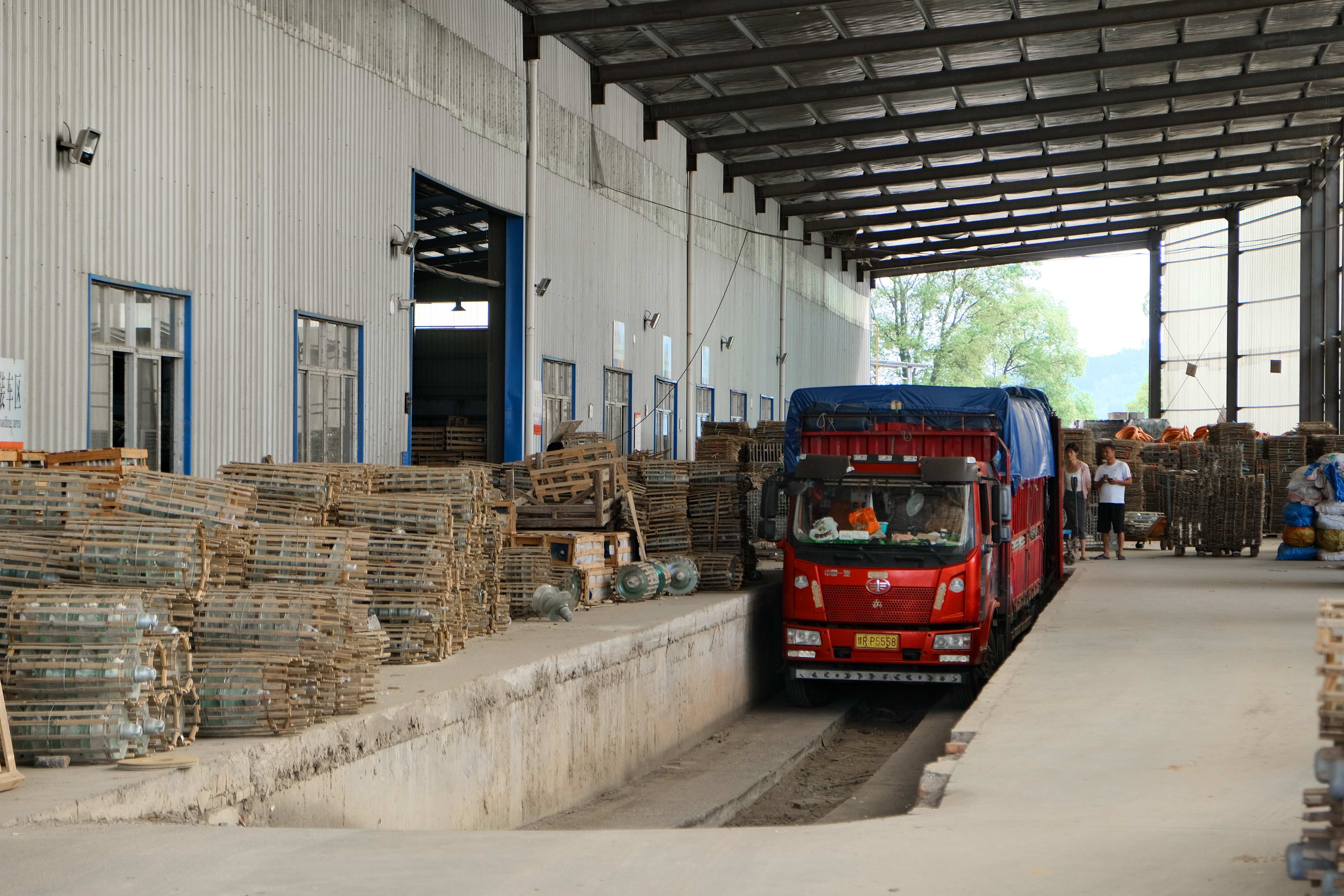
- Plan packaging, transport and installation checks. Glass insulator discs require impact-resistant packaging and careful handling during string assembly.
Use Cases: Field Evidence from Uzbekistan, Ukraine, and Iraq
QOCI Electric has supplied 200,000 glass insulator units to transmission projects in Uzbekistan (80,000 pcs), Ukraine (70,000 pcs) and Iraq (50,000 pcs). These units were used in UHV/EHV overhead transmission lines in desert and industrial pollution zones, with project durations of two to three years until 2026. According to the project record, the lines reported zero line-tripping incidents, maintenance costs reduced by 70%, and pollution flashover incidents reduced by 85% versus a porcelain baseline. Because glass insulators self-break on zero-value failure, operators achieved 100% visual defect detection without live-line testing. The case also verified operation from -40°C to +55°C, a designed lifespan above 30 years, and mechanical reliability at 550 kN tensile strength. This field evidence supports using scenario-based selection rather than a one-size-fits-all approach.

Comparison Table: Key Models and Their Best-Fit Scenarios
| Family | Example models | Typical creepage distance | Best-fit project scenario |
|---|---|---|---|
| Standard suspension | U70B, U100BS, U120B, U160B, U210B, U240B, U300B, U420B | 320mm - 550mm | Normal pollution, medium to high voltage lines |
| Anti-pollution / long creepage | U70BLP, U100BLP, U120BLP, U160BLP, U210BP, U420BP | 450mm - 620mm | Coastal salt fog, industrial pollution, corrosive zones |
| Double-shed / two-wing | U70BLD, U100BLD, U120BLD, U160BLD, U210BD | 450mm - 550mm | Dusty industrial areas, rain-washing and self-cleaning needs |
| Aerodynamic / open shed | U70BA, U100BA, U120BLA, U160BSA, U210AD | 365mm - 380mm | Desert, high-dust, self-cleaning priority |
Creepage values are based on QOCI Electric published product data. Final selection should be confirmed against the project's pollution class and mechanical calculations.
Frequently Asked Questions
What standards should glass insulators for transmission projects comply with?
IEC 60305:2021 is the governing standard for string insulator units for overhead lines with a nominal voltage above 1000 V. Qualified suppliers should provide evidence of mechanical load type tests (SML 40-550 kN), thermal shock tests with a temperature differential of at least 70K, power frequency flashover tests, impulse withstand voltage tests, and visual and dimensional inspection per IEC 60305.
Which glass insulator model is suitable for coastal salt fog or industrial pollution?
Anti-pollution glass insulators with long creepage distance, such as U70BLP, U100BLP, U120BLP, U160BLP, U210BP and U420BP, are designed for coastal salt fog and industrial pollution. The zinc sleeve option slows rusting under severe corrosion service conditions and extends the service life of the insulator string.
How do I select the mechanical load rating for a transmission line project?
Mechanical load rating should consider conductor weight, span length, ice and wind loading, and safety factor. U70B, U100B and U120B are common for medium-load lines; U160B and U210B suit higher conductor loads; U240B, U300B and U420B are used for ultra-high-voltage and extreme-load backbone transmission projects.
Can I place a pilot order before bulk delivery for a project?
Jiangxi QOCI Electric Co., Ltd. supports OEM and ODM production, with a MOQ of 50 units and a monthly capacity of 750,000 units. This allows a pilot order for dimension and performance verification before large project shipment.
What is the typical lead time for glass insulator orders?
QOCI Electric quotes a lead time of 15 to 35 days, with a monthly capacity of 750,000 units. Every order receives 100% pre-shipment testing, and third-party inspection such as SGS can be arranged.
Conclusion
Selecting the right glass insulator is a repeatable process: calculate the load, classify the environment, choose the shed profile, verify standards, and check the supplier's manufacturing and export experience. For clean environments, standard U-series insulators are usually sufficient. For coastal, industrial, dusty, desert or ultra-high-voltage applications, anti-pollution, double-shed, aerodynamic and high-strength variants can reduce long-term operational risk.
Jiangxi QOCI Electric Co., Ltd. can provide technical documentation, dimension drawings, test reports and project references for glass insulator selection. For a quote or pilot order, contact Samantha Chen at admin@qocielectric.com, call +86 079-9761-6589, or visit www.quanxinelectric.com.
Need a scenario-matched glass insulator for your next project?
Download the QOCI Glass Insulator Catalogue or contact our engineering team for a sample, quote or technical review.
Have Questions or Need More Details?
Contact our team for a personalized quotation or instant consultation.
Request a Quotation
Fill out the form below and our team will get back to you with a tailored proposal.
WhatsApp Direct Chat
Prefer to chat in real-time? Message us on WhatsApp for instant assistance & quick answers.
- Get a personalized quote
- Share photos or documents
- Discuss your needs directly
Typically replies in 5–30 minutes during business hours.