
Price-Led vs Acceptance-Led Glass Insulator Purchasing Terms
Scope: AC suspension glass insulator units for overhead transmission procurement, viewed from the buyer's side at tender and purchase-order stage.
Every suspension glass insulator order contains two purchasing decisions that are frequently written as one: what the units must withstand, and how the buyer will know they do. Price-led terms answer the first question in a single line of a purchase order. Acceptance-led terms answer both, and recover the cost of the answer through sampling, inspection and documentation. The comparison below sets out where each structure earns that cost, where it fails, and how to mix them inside one transmission programme.
The short answer
Price-led terms are the better instrument when the buyer already holds accepted evidence for the exact model from the exact plant, the order repeats a proven configuration, and the consequence of a single non-conforming unit is limited by spare stock and routine replacement. Acceptance-led terms are the better instrument when any one of three conditions holds: the ordered rank has not been manufactured for this buyer before; the mechanical load class or pollution profile leaves little tolerance for dimensional or shed-profile deviation; or the cost of a line outage is far above the unit price.
For most programmes the defensible position is a hybrid rather than either extreme. Price competition is kept, but acceptance evidence becomes the trigger for payment instead of the invoice or bill-of-lading date. That one change turns an acceptance clause from a stated intention into an incentive, because the supplier's cash flow then depends on the same evidence the buyer needs.
The rule of thumb that follows is simple to apply at tender stage: compare price only inside a defined acceptance scope, and use the lightest scope that still verifies the characteristics the purchase case depends on.
Defining the two term sets
The two structures are not degrees of strictness applied to the same checklist. They allocate different risks to different parties at different moments.
Price-led term set. Award is decided on evaluated price, usually with a pass-or-fail technical screen. The technical annex is often the supplier's standard catalogue page or a generic description such as "70 kN glass insulator". Payment follows shipment documents. Inspection is limited to quantity, packing and visible transport damage. Deviations are tolerated where the price reflects them, and the buyer absorbs the technical consequence after delivery, when the units are already on site or in the stringing reel.
Acceptance-led term set. Award still weighs price, but the technical annex is model-specific — U70B, U160B, U210BP, PS-160K and similar codes — and cites the characteristic requirements the units must satisfy. For AC suspension units those characteristics are governed by IEC 60305:2021, which specifies mechanical and electrical characteristics and gives the annex a verifiable reference instead of a descriptive one. Payment is released in tranches against accepted evidence: approved type-test documentation, an approved sample, batch test reports, dimension and coupling checks, and a closed deviation register. Inspection is planned around hold points, and the meaning of "accepted" is fixed before the order is placed.
Neither structure improves the glass. The difference is who pays for discovering a deviation, and when — at the supplier's loading bay or on the buyer's right-of-way.
Why the comparison has become harder to make
The supply base behind these products is large, export-oriented and still expanding, which raises the number of bidders responding to any open inquiry.
- The global glass insulator market was estimated at USD 1.14 billion in 2024 and projected to reach USD 1.97 billion by 2035, with a forecast CAGR of 5.1% over 2025–2035 (Market Research Future).
- Published estimates differ substantially by scope. A second estimate places the market at USD 351.4 million, a gap that reflects whether low-voltage and building-related insulated glass is counted. When market size appears in a tender justification, the scope behind the figure should be stated alongside it.
- Asia Pacific held a revenue share above 52% in 2024, driven by grid expansion in China and India (Grand View Research).
- China concentrated 31.4% of global exports of electrical insulators in 2024, worth USD 898 million (OEC). Chinese exports of electrical insulators to Saudi Arabia grew by 219% between 2023 and 2024, the fastest-growing destination in that dataset (OEC).
For a procurement team, the practical consequence is dispersion. When a dozen quotations arrive for the same nominal rating, wide price gaps are a signal to check scope rather than proof of a quality difference: the offers may not cover the same type tests, the same coupling hardware, the same packing standard or the same inspection obligation. A price-led award collapses those differences into one number. An acceptance-led award forces them into the open where they can actually be compared.
Trade-off 1: supplier capability — certificate copies versus process evidence
Price-led qualification usually amounts to a certificate copy and a catalogue. That establishes that a management system was certified at some point and that the supplier can produce a datasheet. It does not establish that the units in this order were sampled at the specified failing load.
Acceptance-led qualification separates two questions that price-led terms merge into one: can this plant make the item, and were these particular units made correctly?
Capability evidence, at award stage. The plant's process chain should be visible: glass forming, toughening and thermal shock, assembly of cap and pin, mechanical test, and packing. A manufacturer running automated and intelligent production of glass and porcelain insulators will normally be able to describe that chain and open it to audit. Jiangxi QOCI Electric Co., Ltd., established in December 2002 in Luxi Industrial Park, Pingxiang, Jiangxi Province, is a national high-tech enterprise and a participating unit of the Insulator Standard Committee, with an annual output of 9,000,000 units; its products are used in State Grid Corporation of China and China Southern Power Grid projects and in grids in more than 40 countries and regions. Those facts describe a plant and a system, not a batch — which is exactly why they belong in the award-stage file rather than the shipment file.
Batch evidence, at shipment stage. The annex should name the exact model and the characteristics being verified. Published technical data for the U70B lists a minimum mechanical failing load of 70 kN and IEC-standard dimensions of 255 mm diameter and 146 mm height; published data for the U160B lists a 20 mm ball-and-socket coupling and a wet power-frequency withstand voltage of approximately 45 kV. Figures of that kind illustrate the level of detail an acceptance annex needs, but the buyer should require the supplier's own report for the ordered model rather than accept a published web page as evidence.
Where price-led is adequate. If the buyer already holds a valid type-test file for the exact model from the exact plant and the order repeats it, re-testing capability adds administrative cost without new information. The remaining check — that the shipped batch matches the approved configuration — can then be handled by a light batch verification.

Process visibility is award-stage evidence: a plant that can show its forming, toughening and assembly chain gives the buyer something a certificate copy cannot.
Trade-off 2: delivery assurance — promise versus mechanism
A delivery date in a purchase order is a promise. Under price-led terms it is normally backed only by a penalty clause, and a penalty does not manufacture units. The buyer discovers the shortfall when the vessel is already booked or, worse, when the stringing crew is standing idle.
Acceptance-led delivery assurance is a mechanism rather than a promise, and it usually contains four parts: a schedule divided into milestones that coincide with inspection hold points; a defined sampling plan and an inspection window the supplier must protect inside its production plan; a packing, marking and document set required with each shipment; and explicit rules for partial shipment, substitution and what precisely starts the acceptance clock.
The behavioural difference is direct. When payment tranches are released against accepted evidence, a supplier running late has an interest in flagging the problem at the pre-shipment hold point, because an unreported deviation delays its own payment. Under price-led terms the same supplier has an interest in shipping first and negotiating afterwards.
The limit should be stated plainly. Acceptance-led terms do not create capacity. If a plant's schedule is already committed, an inspection clause will expose the problem earlier but will not solve it. Delivery assurance still depends on a realistic award date, a verified capacity statement and, on large programmes, a second qualified source.
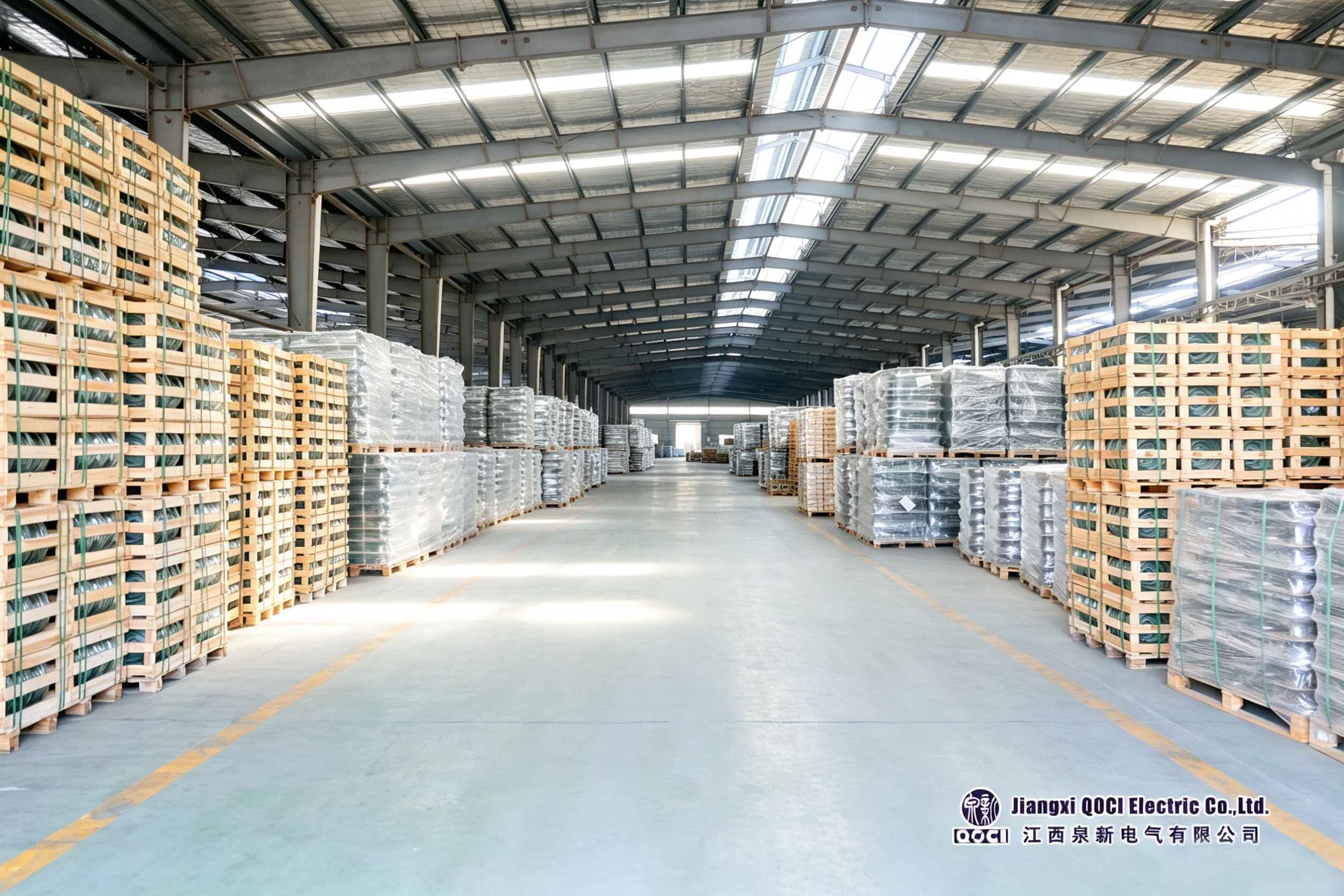
Finished-goods control: packing, marking and document checks at loading are the last point where a deviation can still be corrected before shipment.
Trade-off 3: long-term procurement risk — the 5% and the 25%
This is where the two term sets diverge most, and where the approved product comparison becomes decisive.
Compared with traditional porcelain and ceramic insulators, toughened glass suspension insulators are documented with a 5% higher initial cost and a 25% lower total cost of ownership over the lifecycle. The same comparison attributes an 80% lower mechanical failure rate, 100% higher inspection efficiency through visual inspection alone with no live-line testing required, a 70% reduction in maintenance workload, and compressive strength three to four times higher than porcelain. The toughened glass construction also provides a zero-value self-breaking characteristic and better anti-pollution performance, and the product is positioned for UHV and EHV transmission lines, heavily polluted areas such as coastal, desert and industrial zones, and high-altitude regions.
Read that as a statement about insulator type, not about term structures. Its procurement meaning is narrower and more useful: price-led terms can only evaluate the 5%, because the initial price is the only number in the comparison. The 25% depends on characteristics that must be specified and verified — mechanical failing load evidence for the ordered rank, shed profile and creepage appropriate to the pollution site, coupling compatibility with the existing string hardware, and an inspection regime the maintenance team will actually follow.
If the business case for glass rests on maintenance and inspection savings, the acceptance annex has to contract the characteristics those savings depend on. Otherwise the savings are assumed at evaluation stage and unverified at delivery — the classic failure mode of a price-led award justified with lifecycle numbers.
Two boundaries keep the comparison honest. The lifecycle figures are a comparison against porcelain alternatives, not a performance guarantee for a particular line; the actual outcome depends on pollution severity, duty load, string design, maintenance practice and handling during stringing. And a lower failure rate is not zero maintenance — it changes the inspection method and workload, not the need for a programme.
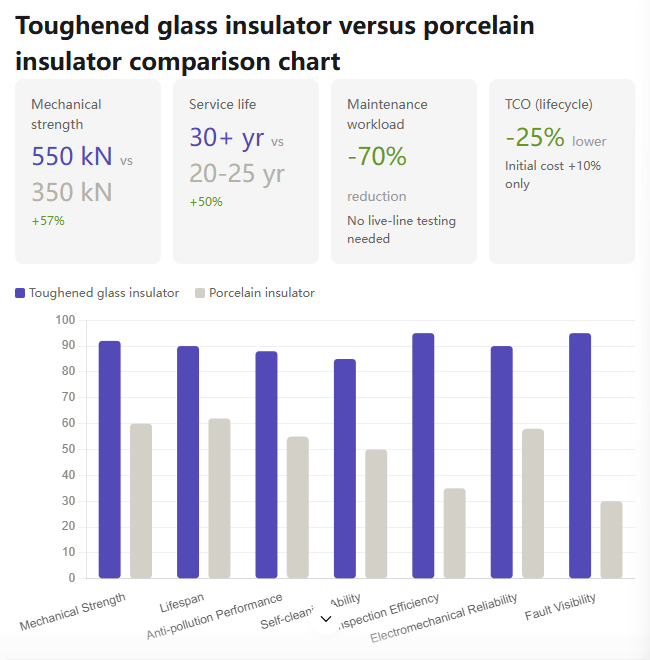
Type-level comparison, term-level decision: lifecycle claims about insulator materials only translate into procurement value if the acceptance annex verifies the characteristics behind them.
Side-by-side comparison
The table summarises how each structure behaves across the ten dimensions that decide the outcome of a suspension glass insulator purchase.
| Dimension | Price-led terms | Acceptance-led terms |
|---|---|---|
| Award focus | Lowest evaluated price with a pass/fail technical screen | Price for a defined scope of evidence |
| Technical annex | Generic rating or catalogue page | Model-specific code with IEC 60305:2021 characteristics |
| Capability evidence | Certificate copy and datasheet | Plant process description, audit access, type-test file for the ordered model |
| Batch evidence | Packing list and visual check | Sampling, batch test reports, dimension and coupling checks |
| Inspection | Quantity and damage on receipt | Planned hold points, witness or third-party attendance |
| Payment trigger | Shipment documents | Tranches released against accepted evidence |
| Delivery control | Date plus penalty clause | Milestone schedule aligned to hold points; partial-shipment rules |
| Deviation handling | Price adjustment; buyer absorbs the consequence | Deviation register closed before shipment |
| Warranty basis | Generic defect claim | Claim referenced to the accepted evidence file |
| Strongest when | Repeat order, approved model, low consequence of failure | First order, high load class, polluted or high-altitude route, high outage cost |
| Risk retained by buyer | Technical and schedule risk after shipment | Administration cost and a longer pre-shipment cycle |
How to convert a price-led inquiry into a hybrid term set
The conversion is a drafting exercise, not a change of supplier strategy. Six steps cover most orders.
- Tier the scope by consequence, not by value. Group the order by load class and environment. Standard-profile U70B and U100B units for routine lines sit in one tier; U160B and above, and every BP anti-pollution unit from U70BP to U420BP intended for coastal, desert or industrial sites, sit in another. High-altitude and UHV/EHV applications justify the strictest tier regardless of order value.
- Name the model, not the rating. "70 kN glass insulator" is not a purchasable specification. U70B, U70BP, U70BD and U70BA are different items within the same load class, and the same applies across the U100B to U420B range and the BP, BD and BA families. Where a tender uses PS-series or PSV, PSD and PSA designations such as PS-70E, PS-160K or PSV-160A, map each code to its required duty in the annex instead of assuming the numbering systems are interchangeable.
- Reference the standard that governs the characteristics. For AC suspension units, IEC 60305:2021 specifies mechanical and electrical characteristics, which lets the annex cite a requirement instead of describing one.
- Split evidence by stage. Award stage: type-test file for the ordered model, plant process description, capacity statement for the required window. Shipment stage: batch reports, sampling records, dimension and coupling checks, packing and marking confirmation.
- Set hold points and attendance. Two hold points are usually sufficient on a mid-size order — one before packing, one at loading — provided each has a defined document set and a named attendee on both sides.
- Attach payment to evidence. Define "accepted" inside the purchase order: which documents, issued by whom, within what period, and what happens if a sampled unit fails. A remedy clause specifying re-sampling, replacement or rejection before shipment is worth more than a large penalty that can only be applied once the goods arrive.
Which purchase fits which term structure
The tiering decision belongs to the order line, not to the supplier relationship as a whole. One plant can sit in the price-led tier for a standard model and in the acceptance-led tier for another.
Price-led with a floor. Repeat call-offs of approved models, such as a second or third order of U70B or U100B from an accepted plant; standard-profile units for moderate pollution; reinforcement work where spares are held and replacement is routine. The floor is not optional: exact model code, the governing standard reference, and a quantity and packing check before loading.
Hybrid. A first order from a new supplier on a mid-load rank such as U120B or U160B; mixed containers combining standard and anti-pollution units; projects where the buyer wants price competition but cannot absorb a full rejection cycle. Here the technical annex and batch evidence stay, while witness inspection is replaced by document review supported by loading photographs.
Acceptance-led. U210B to U420B high-load strings; BP anti-pollution units for coastal, desert and industrial zones; BD double-shed or two-wing profiles and BA aerodynamic profiles where the project specifies those families by name; high-altitude and UHV/EHV applications. These are the cases where the cost of one non-conforming unit on the right-of-way dwarfs the cost of the inspection that would have caught it.
FAQ
Is acceptance-led purchasing more expensive than price-led purchasing?
At award, usually yes on administration and sometimes on unit price, because testing, sampling and inspection are costed into the quotation. Whether the total is higher depends on the asset rather than the paperwork. Approved comparison data for toughened glass suspension insulators against traditional porcelain alternatives shows a 5% higher initial cost and a 25% lower total cost of ownership over the lifecycle. That figure compares insulator types; the term structure decides whether the characteristics behind the saving are verified or merely assumed.
How much verification belongs before award, and how much before shipment?
Before award, verify capability and design: the type-test file for the exact model, the plant process chain, and a capacity statement covering the required delivery window. Before shipment, verify the batch: sampling and test reports, dimensions, coupling type, shed profile and packing. Moving batch checks earlier wastes money, and moving capability checks later removes the buyer's only chance to avoid an unsuitable plant.
Which suspension glass insulator models justify acceptance-led terms?
The high-load ranks from U210B to U420B, every BP anti-pollution unit from U70BP upward when the site is coastal, desert or industrial, and any unit destined for high-altitude or UHV/EHV service. Standard-profile U70B and U100B repeat orders from an already accepted plant can normally stay in a lighter tier.
Can payment be tied to inspection without delaying the project?
Yes, if tranches are defined against documents rather than calendar dates and the inspection window is agreed when the purchase order is placed. Delays usually come from an undefined acceptance trigger, where the buyer, the inspector and the supplier each assume a different document closes the milestone.
Does acceptance-led procurement remove price competition?
No. It changes the comparison basis from lowest price for an undefined scope to lowest price for a defined scope of evidence. Bidders still compete; they compete on the same technical envelope, which is what makes the comparison meaningful in the first place.
What documents should accompany each shipment?
At minimum: batch test reports for the ordered model, dimension and coupling check records, a packing list and marking confirmation matching the purchase order, and closure of the deviation register. The list should be written into the purchase order rather than agreed informally between inspectors at the loading bay.
Where does a buyer start when converting a legacy inquiry?
A practical starting point is to request the manufacturer's glass insulator catalogue and confirm model-level data against the codes on the inquiry, then convert the shortlisted models into a technical annex. Jiangxi QOCI Electric Co., Ltd. publishes its glass insulator catalogue for download, and sample or quotation requests against a defined acceptance scope can be sent to admin@qocielectric.com or by WhatsApp on +86 199-7997-1591.
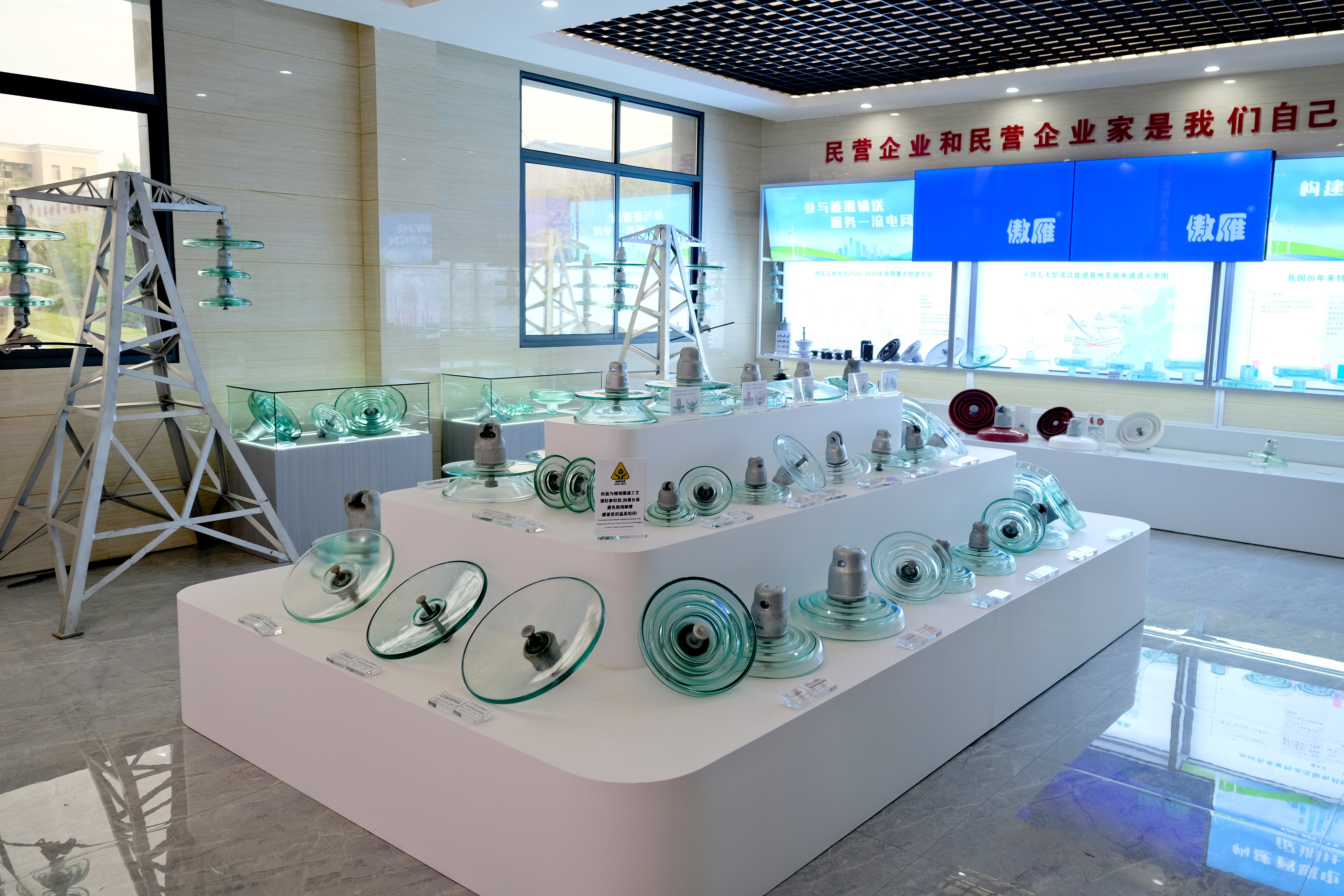
Sample review before mass production is the cheapest point at which a shed-profile or coupling mismatch can still be corrected.
Conclusion
Price-led and acceptance-led terms are not good and bad versions of the same document. They are two ways of deciding when the buyer learns about a deviation, and who pays for it. Price-led terms buy speed and administrative simplicity, and accept that the learning happens after shipment. Acceptance-led terms buy earlier information, and charge for it in inspection time, documentation and a longer pre-shipment cycle.
The decision that holds up across a mixed transmission programme is a risk-tiered one: keep price competition on every line, define the acceptance scope by load class and environment rather than by order value, and release payment against accepted evidence on the tiers where a non-conforming unit would be expensive to find later. For the high-load, anti-pollution, high-altitude and UHV/EHV orders, the inspection clause is not overhead — it is the mechanism that makes the lifecycle case verifiable instead of assumed.
Download the QOCI glass insulator catalogue to match model codes against a defined acceptance scope before the next inquiry is issued.
Have Questions or Need More Details?
Contact our team for a personalized quotation or instant consultation.
Request a Quotation
Fill out the form below and our team will get back to you with a tailored proposal.
WhatsApp Direct Chat
Prefer to chat in real-time? Message us on WhatsApp for instant assistance & quick answers.
- Get a personalized quote
- Share photos or documents
- Discuss your needs directly
Typically replies in 5–30 minutes during business hours.