
Porcelain Insulator Supplier Evaluation: Linking Factory Capability to Delivery Assurance
Delivery assurance in porcelain insulator procurement is not a promise attached to a quotation. It is the supplier's demonstrated ability to turn an approved specification into tested, packed, document-complete units on the committed schedule. Buyers evaluating a porcelain insulator supplier therefore need to connect factory capability to each delivery obligation, not simply compare catalogue pages or unit prices. Jiangxi QOCI Electric Co., Ltd. (QOCI) is a porcelain and glass insulator manufacturer based in Luxi Industrial Park, Pingxiang, Jiangxi, China. Its published company profile gives concrete capability data that can be used as a worked example: a site of over 120 mu, approximately 8 hectares; a construction area exceeding 70,000 m²; a 35,373 m² manufacturing facility; more than 150 staff; more than 50 engineering and technical professionals; 38 R&D engineers; and annual production capacity of 9,000,000 units. The evaluation question is not whether these numbers sound large. The question is which delivery risks they reduce, which risks they leave open, and what evidence the buyer should request next.
Why delivery assurance is a factory-capability question
Porcelain insulator orders rarely fail because a supplier has no product photograph. They fail at the handoff between commercial agreement and production execution. A utility buyer may approve a high voltage porcelain insulator string based on a datasheet, then discover that the required anti-pollution porcelain insulator profile needs a new shed geometry, a different cementing jig, or an additional thermal-shock cycle. A distributor may place a mixed order for porcelain pin insulators, shackle insulators, and line post porcelain insulators, then find that the packing plan and test schedule were built for a single-product container. A project buyer may accept a 15-35 day lead time, then learn that the range applies to a standard catalogue item rather than the requested creepage distance or mechanical load.
Delivery assurance therefore has three parts. The first is technical fit: the supplier must be able to make the specified product, to the stated standard, with the required tests. The second is throughput fit: the ordered quantity must fit the supplier's line loading, kiln schedule, assembly capacity, and pre-shipment test capacity during the required window. The third is administrative fit: drawings, approvals, test records, certificates, packing lists, and customs documents must be ready when the shipment is ready. Factory capability evidence is useful because it gives the buyer a way to test all three parts before a purchase order is issued.
A large site alone does not prove delivery assurance. Annual output alone does not prove that a particular order will be scheduled correctly. Staff count alone does not prove shift coverage or engineering responsiveness. The practical method is to treat each capability fact as a clue, then ask for the operating evidence behind it. That is the difference between a supplier profile and a supplier evaluation.
What the market and standards context means for buyers
Porcelain insulators are mature products, but the supply base is not uniform in capability. Third-party estimates show why buyers continue to scrutinize capacity and delivery rather than assuming availability. Spherical Insights estimated the global porcelain insulators market at approximately USD 8.27 billion in 2023, with a projection of USD 15.04 billion by 2033. Mordor Intelligence estimated that Asia-Pacific held a 49.4% revenue share in 2025. OEC data placed China as the world's largest exporter of electrical insulators in 2024, with 31.4% of total global exports, approximately USD 898 million. These are market-level estimates, not proof of any single supplier's delivery performance. They do show that buyer diligence should focus on the specific factory, product family, and order routing behind the quotation.
Standards add another layer. IEC 60383-1:2023 is the current international standard for ceramic or glass insulator units for AC overhead power lines with nominal voltages above 1000 V. ANSI C29.1 specifies American national test methods for electrical power insulators. For export orders, the primary HS code for porcelain electrical insulators is 8546.20 under the World Customs Organization classification. These references matter in supplier evaluation because they define what must be tested, documented, and declared. A supplier that can discuss the applicable standard, the test sequence, and the acceptance records is easier to audit than one that answers only with product names and prices.
The product scope also affects delivery risk. A high voltage porcelain insulator for a transmission line is not evaluated in the same way as a low voltage porcelain pin insulator for distribution, a porcelain post insulator for a substation, or a porcelain strain insulator for a tension application. Buyers may encounter the same items described as a ceramic disc insulator, ceramic suspension insulator, ceramic pin insulator, or ceramic post insulator. The material term should not replace the model, drawing, standard, and test requirement. When the scope includes low voltage porcelain spool insulator, stay insulator, or shackle insulator types, the buyer should confirm each item against the actual product list and qualified design rather than assuming that a broad catalogue category covers every variant.
A practical evaluation framework: from factory footprint to shipping date
The most useful supplier evaluation links each capability claim to a specific delivery question. For QOCI, the published profile provides a set of starting facts. The buyer should convert those facts into an audit trail rather than accepting them as a conclusion. The framework below moves from physical footprint to workforce, capacity, engineering, quality control, and export handling.

Step 1: Define the delivery-critical product scope
Start with the models, voltage classes, mechanical loads, creepage distances, pollution classes, and standards that will actually be ordered. Separate repeat catalogue items from new or customized items. A standard porcelain suspension insulator with an established drawing carries less execution risk than a new anti-pollution porcelain insulator profile that requires drawing approval, sample approval, and type-test review. The buyer should also separate transmission, substation, and distribution items. A mixed container of porcelain disc insulator units, porcelain post insulators, and low voltage porcelain shackle insulators may require different packing, test, and loading arrangements from a single-product shipment.
At this stage, request the supplier's proposed model list against the project bill of materials. Confirm whether the supplier is offering an existing design, a modified design, or a new design. Confirm the applicable standard for each item. Confirm whether the buyer requires IEC 60383-1:2023, ANSI C29.1, or another project specification. This step prevents a common evaluation error: comparing a supplier's general factory capacity with an order that has not yet been technically defined.
Step 2: Map the production footprint to the actual order route
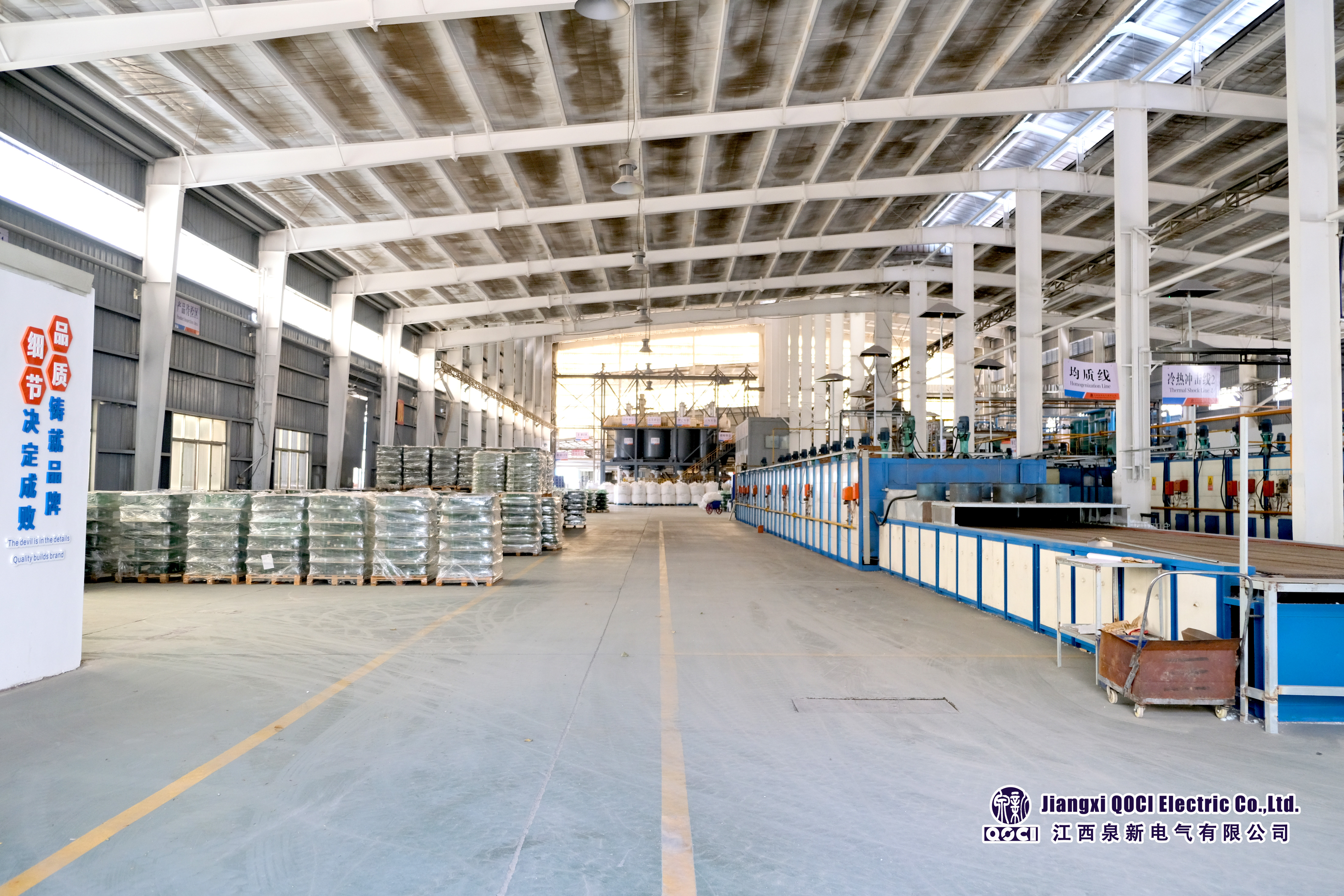
QOCI's published profile lists a site of over 120 mu, approximately 8 hectares, with a construction area exceeding 70,000 m² and a manufacturing facility of 35,373 m². These figures are useful because they show that production is not confined to a small assembly shed. The buyer should still ask which buildings perform which operations: body preparation, forming, drying, glazing, firing, assembly, testing, packing, and finished-goods storage. The gap between total construction area and manufacturing area can support warehouse, laboratory, or administrative functions, but the buyer should not assume that every square metre is available for the ordered product family.
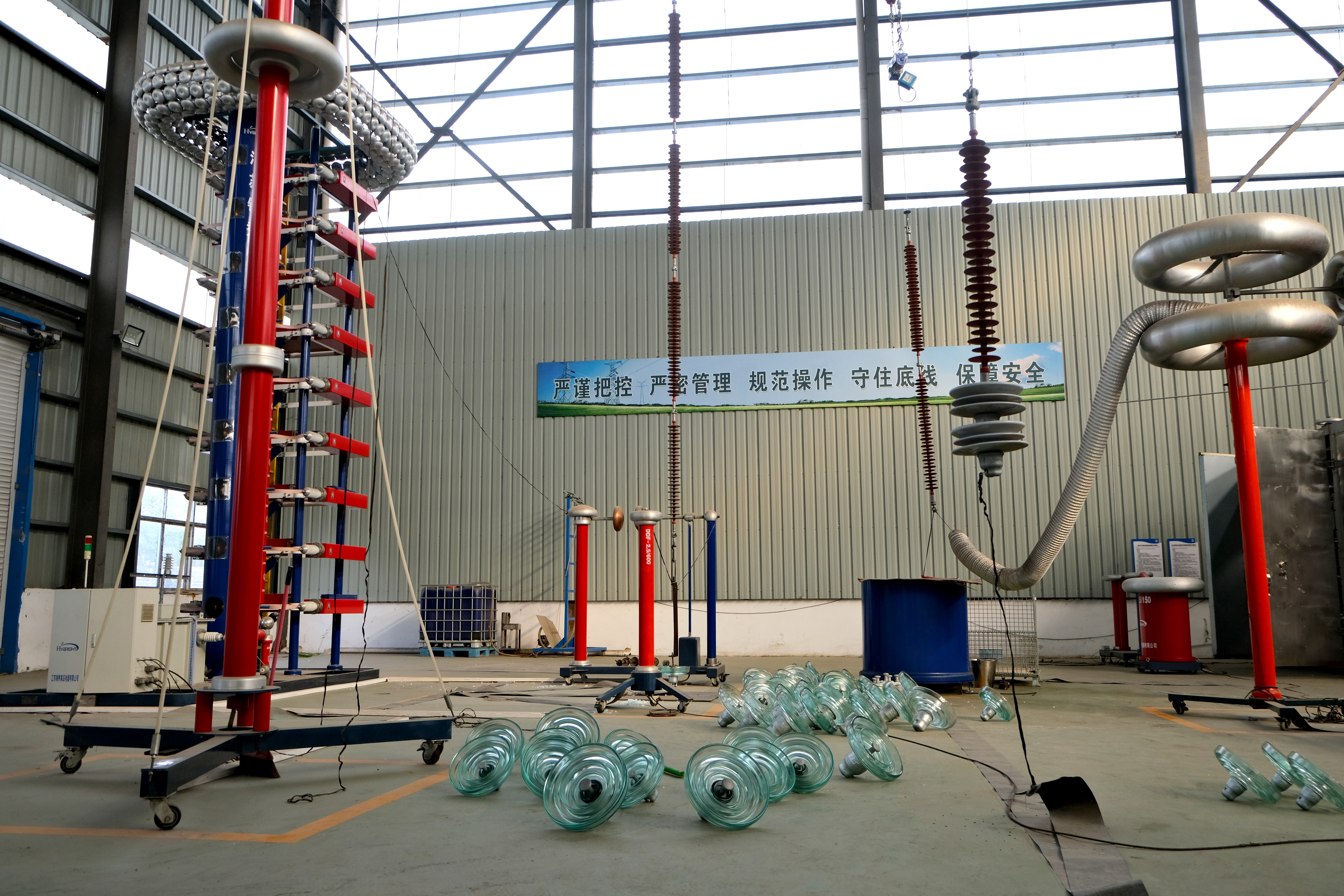
A practical audit question is whether the order route crosses a bottleneck. For a high voltage porcelain insulator, the critical path may include a specific forming line, a drying cycle, a kiln schedule, and a thermal-shock test. For a low voltage porcelain pin insulator or shackle insulator, the critical path may be dominated by assembly, cementing, and packing labour. The buyer should ask for a simple process map for the ordered item and identify where the factory footprint supports that route. A large site is relevant only when it supports the actual product flow.
Step 3: Test workforce depth against the order and the shift plan
QOCI's profile lists more than 150 staff, including more than 50 engineering and technical professionals and 38 R&D engineers. Workforce depth matters in porcelain insulator supply because the product crosses several skill areas: ceramic process control, glaze and body preparation, kiln operation, mechanical assembly, electrical testing, quality documentation, and export packing. A supplier with engineering depth can usually review drawings, test plans, and non-conformance issues faster than a supplier that relies on external support. That is a delivery-assurance advantage when the order involves customization for voltage or logo, or when the buyer needs a technical clarification before production release.
Staff count should not be accepted as proof of shift coverage. The buyer should ask how the production and quality teams are organized across shifts, who owns customer technical communication, who approves deviations, and how many engineers are assigned to customer projects. For an OEM or ODM order, the buyer should ask who will review the drawing, who will approve the first article, and who will sign the pre-shipment test record. The presence of 38 R&D engineers is a capability signal for design and customization work. It does not prove that every custom voltage class is already type-tested. The buyer still needs to see the qualification route for the specific product.
Step 4: Reconcile annual capacity with monthly throughput
QOCI's published capability data lists annual production capacity of 9,000,000 units and monthly capacity of 750,000 units. The two figures are consistent at twelve months. That consistency is a useful baseline because it shows that the annual claim is supported by a monthly planning figure. The buyer should then ask how the monthly figure is allocated across product families. A plant may be able to produce 750,000 units per month in a favourable mix, but the buyer's order may require a high voltage porcelain insulator with a long shed profile, a porcelain post insulator with a specific bending load, or an anti-pollution porcelain insulator with an extended creepage distance. Those items may consume more line time, kiln space, or test time than a simple low voltage pin insulator.
The practical request is a capacity breakdown by product family and by month for the proposed delivery window. Ask for the planned line loading, the expected yield, the test capacity, and the packing capacity. Ask what happens if the buyer increases the quantity by 20% or advances the delivery date by two weeks. A supplier with genuine delivery assurance can explain the constraint rather than simply repeating the annual output number. The buyer should also ask whether the quoted lead time of 15-35 days applies to the specific model, quantity, and test requirement. A short lead time for a standard item may not transfer to a customized or newly tooled item.
Step 5: Verify engineering support for OEM, ODM, and customization
QOCI provides OEM and ODM production services and supports customization for voltage and logo. For utility projects, OEM work usually involves the buyer's drawing, marking, packing, and documentation requirements. ODM work may involve a greater role for the supplier in adapting an existing design to the project specification. In both cases, delivery assurance depends on engineering control before production starts. The buyer should request the drawing approval workflow, the first-article approval process, the change-control procedure, and the test-plan review. The supplier should be able to state which documents the buyer must approve and which documents the supplier will issue.
Customization for voltage and logo can affect delivery in ways that are easy to overlook. A logo change may affect marking, packing, and label approval. A voltage adaptation may affect creepage distance, shed profile, mechanical load, or test requirements. The buyer should ask whether the proposed customization uses an existing qualified design or requires a new type test. If a new test is required, the delivery schedule must include the test laboratory time, not only the production time. This is a key difference between a supplier that can make the product and a supplier that can deliver it with the required evidence.
Step 6: Audit the quality gates that protect the shipment
QOCI's published quality-control information states 100% pre-shipment testing and third-party inspection through SGS. These are relevant delivery-assurance controls because they place a formal gate between production and shipment. The buyer should ask what the 100% pre-shipment test covers for the ordered product family, what records are retained, and how the third-party inspection is scheduled. For a high voltage porcelain insulator, the buyer may need routine electrical tests, mechanical checks, visual inspection, and marking verification. For a porcelain disc insulator or porcelain suspension insulator, the buyer may also need confirmation of the applicable standard and the test report format.
The buyer should not treat a quality-control statement as a complete acceptance plan. Request the proposed inspection and test plan before the order is placed. Confirm the sampling or full-test requirement, the acceptance criteria, the non-conformance handling process, and the documents that will be released with the shipment. If the project requires IEC 60383-1:2023 or ANSI C29.1 evidence, confirm that the test reports are available and that the product marking matches the approved drawing. These checks reduce the risk of a shipment arriving on time but failing acceptance.
Step 7: Use export records as a delivery-track signal
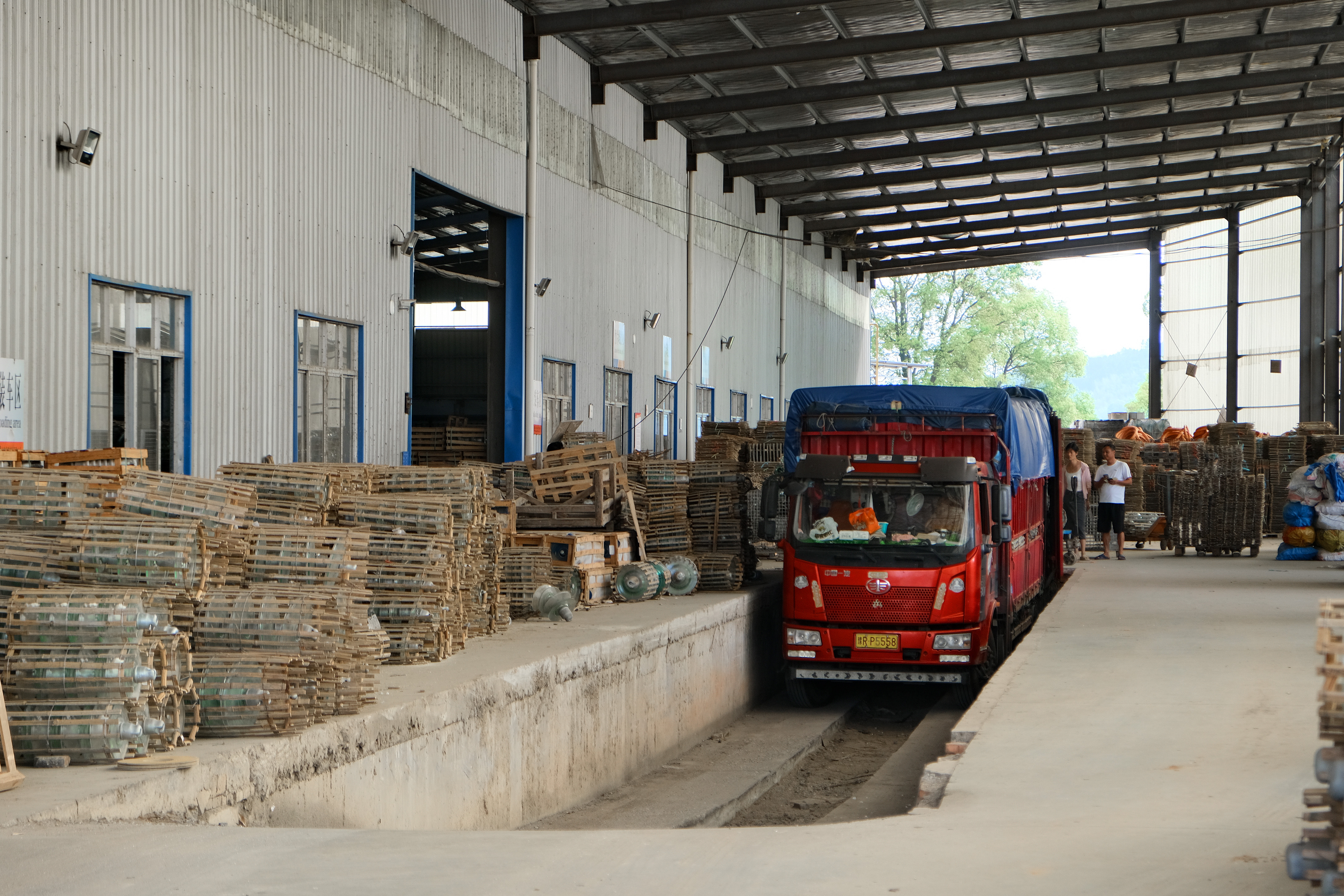
QOCI's profile lists export experience to the USA, Asia, the EU, Africa, and South America, with exports representing 20% of total sales. This is a practical delivery-track record because export orders require more than production: they require export packing, marking, documentation, and coordination with inspection and freight. A supplier that regularly serves multiple regions is more likely to have a repeatable export workflow than a supplier that has only occasional export experience. The buyer should still test the relevance of that experience. A shipment to the EU may require different documentation from a shipment to Africa or South America. A high voltage transmission order may require different packing from a low voltage distribution order.
Ask for evidence that matches the buyer's destination and product family. Redacted shipping documents, packing specifications, inspection records, and previous export product lists are more useful than a general statement of markets served. The buyer should also confirm the Incoterm and port. QOCI's published purchasing information lists FOB Shenzhen, MOQ of 50 units, 30% deposit T/T before production, and 70% balance T/T before delivery. These terms should be confirmed for the specific order because product mix, test requirements, and destination can change the commercial and logistics plan.
Capability-to-delivery comparison table
The table below converts published QOCI facts into evaluation questions. It is not a supplier ranking. It is a buyer checklist for testing whether a capability claim actually supports the delivery commitment.
| Capability signal | QOCI published fact | Delivery question it helps answer | What it does not prove |
|---|---|---|---|
| Site area | Over 120 mu, approximately 8 hectares | Is there room for production, storage, and expansion? | That current free capacity exists for the buyer's order |
| Construction area | Exceeding 70,000 m² | Is there space for operations and support functions? | That all buildings are manufacturing space |
| Manufacturing facility | 35,373 m² | Is there a dedicated production footprint? | That line-level throughput fits the ordered model |
| Staff | More than 150 staff | Is there enough workforce scale for production and support? | Shift coverage, absenteeism, or peak-load staffing |
| Engineering and technical | More than 50 professionals | Is there technical depth for drawings and test plans? | How many engineers are assigned to the buyer's project |
| R&D | 38 engineers | Is there design and customization resource? | That a new design is already type-tested |
| Annual output | 9,000,000 units | What is the aggregate production capacity? | Product mix, yield, or monthly availability |
| Monthly capacity | 750,000 units | Can capacity be planned by month? | That the buyer's order fits the requested schedule |
| OEM and ODM | Available | Is the supplier set up for contract manufacturing? | That the buyer's specification is already qualified |
| Customization | Voltage and logo | Can the product and marking be adapted? | That every voltage class or logo format is available without review |
| Quality control | 100% pre-shipment test; SGS third-party inspection | Is there an inspection gate before shipment? | That the acceptance plan matches the project standard |
| Lead time | 15-35 days | What planning range applies to standard orders? | A guaranteed date for every quantity or customization |
| MOQ | 50 units | Can the buyer start with a trial or sample order? | Total cost, tooling, or test charges for the specific item |
| Export record | 20% of sales to USA, Asia, EU, Africa, South America | Is there practical export handling experience? | That every destination lane or product family is current |
Use cases: applying the framework to different buyer situations
Utility transmission projects
A transmission utility evaluating a high voltage porcelain insulator supplier should start with the string design, mechanical load, creepage distance, pollution class, and required standard. Factory footprint and annual capacity are relevant, but they should be read alongside the supplier's ability to control shed geometry, cementing, and electrical test records. For an anti-pollution porcelain insulator or ceramic suspension insulator intended for a polluted corridor, the buyer should ask for the proposed profile, the creepage distance calculation, and the test evidence for the specific design. Delivery assurance then depends on drawing approval, type-test status, routine test capacity, and packing. A supplier with a 9,000,000-unit annual capacity may still need a dedicated production window for a large transmission order. The buyer should secure that window in the production plan, not only in the commercial contract.
Substation and distribution orders
A substation or distribution buyer may order porcelain post insulators, porcelain pin insulators, shackle insulators, and low voltage porcelain spool insulator or stay insulator types in one programme. The delivery risk shifts from single-product line loading to mix management. The buyer should ask how the supplier schedules multiple product families, how it sequences colour or marking changes, and how it packs mixed containers. A factory with a 35,373 m² manufacturing facility and a 750,000-unit monthly capacity may have enough aggregate room, but the order still needs a clear packing and loading plan. The buyer should request a packing drawing, a container loading plan, and a pre-shipment inspection checklist for the mixed shipment.
OEM and distributor programmes
A distributor or brand owner using OEM or ODM porcelain insulator manufacturing should add commercial and documentation controls to the factory audit. The supplier's engineering depth matters because the buyer may need drawing adaptation, logo marking, private-label packing, and repeat-order consistency. QOCI's published support for OEM and ODM services and customization for voltage and logo is relevant here. The buyer should still define the approval gates: artwork approval, drawing approval, first-article approval, test-report approval, and packing approval. Delivery assurance for an OEM programme is not only about the factory floor. It is also about whether the supplier can repeat the approved configuration on the next order without reopening engineering questions.
How to turn the evaluation into a purchase decision
A supplier evaluation should end with a documented decision, not a general impression. The buyer should score the supplier against the delivery risks that matter for the project. For a first order, the score may weight sample approval, test evidence, and export documentation more heavily than annual capacity. For a repeat order, the score may weight line loading, change control, and packing consistency more heavily. The buyer should record the evidence behind each score: the drawing reviewed, the test report seen, the production window confirmed, the inspection plan accepted, and the shipping terms agreed.
It is also useful to separate conditional capability from committed capability. QOCI's published facts describe a factory with substantial site area, a 35,373 m² manufacturing facility, more than 150 staff, more than 50 engineering and technical professionals, 38 R&D engineers, and 9,000,000-unit annual capacity. Those facts support a serious evaluation. They do not replace an order-specific commitment. The purchase decision should be based on the supplier's response to the buyer's product, quantity, standard, destination, and delivery date. That response should include a production plan, a test plan, a packing plan, and a document list. If any of those items is missing, the delivery assurance question remains open.
Frequently asked questions
OEM porcelain insulator manufacturer for utility projects: what should buyers verify first?
Verify the technical and qualification route before the factory size. Confirm the exact product family, voltage class, mechanical load, creepage distance, pollution class, standard, and test requirement. Then confirm whether the supplier is offering an existing qualified design or a customized design requiring new approval. QOCI provides OEM and ODM production services and supports customization for voltage and logo, but the buyer should still require drawing approval, first-article approval, and test-plan approval for the specific utility project. Factory capability, capacity, lead time, MOQ, and export documentation should be evaluated after the product requirement is clear.
Which factory-capability facts most directly support delivery assurance?
The most directly relevant facts are manufacturing footprint, monthly capacity, workforce depth, quality-control gates, and export handling records. QOCI's published data includes a 35,373 m² manufacturing facility, monthly capacity of 750,000 units, annual capacity of 9,000,000 units, more than 150 staff, more than 50 engineering and technical professionals, and 100% pre-shipment testing with SGS third-party inspection. These facts support delivery assurance because they show that production, engineering, inspection, and export functions exist at the factory. They remain indicators, not guarantees. The buyer should convert each one into an order-specific question about line loading, test capacity, shift coverage, and shipping schedule.
How should annual and monthly capacity be reconciled?
Use the annual figure for scale and the monthly figure for scheduling. QOCI's published annual capacity of 9,000,000 units and monthly capacity of 750,000 units are consistent at twelve months. The buyer should ask how the monthly capacity is allocated by product family, what yield is assumed, and how much test and packing capacity is available in the delivery month. A porcelain suspension insulator, porcelain post insulator, or anti-pollution porcelain insulator may consume more production time than a simple low voltage pin insulator. The reconciliation should therefore be done at model level, not only at total-unit level.
What does engineering depth change in an OEM or ODM order?
Engineering depth affects how quickly the supplier can review drawings, resolve specification questions, define test plans, and control changes. QOCI's profile lists more than 50 engineering and technical professionals and 38 R&D engineers. That is a useful capability signal for OEM and ODM work, especially when voltage or logo customization is required. The buyer should still ask who owns the project technically, who approves deviations, and whether the proposed customization uses an existing qualified design. Engineering depth reduces coordination risk, but it does not remove the need for type tests, first-article approval, and pre-shipment inspection.
What quality-control evidence should accompany a pre-shipment batch?
Request the test plan, the inspection records, the acceptance criteria, and the non-conformance procedure. QOCI's published quality-control information states 100% pre-shipment testing and third-party inspection through SGS. For utility orders, the buyer should confirm that the records match the ordered model and the applicable standard, such as IEC 60383-1:2023 or ANSI C29.1 where specified. The batch should also be checked for marking, packing, and document completeness. A pre-shipment test is most useful when the buyer has already approved what will be tested, how it will be tested, and what evidence will be released with the shipment.
How can buyers validate lead time and sampling before a utility order?
Validate lead time against the specific model, quantity, customization, and test requirement. QOCI's published purchasing information lists a lead time of 15-35 days, MOQ of 50 units, FOB Shenzhen, 30% deposit T/T before production, and 70% balance T/T before delivery. These terms are a starting point for discussion. The buyer should place a sample or trial order when the product is new, approve the first article, confirm the test report, and then lock the production window. For a mixed order, the buyer should also confirm the packing plan and loading date. A lead-time range is not a guaranteed delivery date until the order-specific plan is accepted by both parties.
What is the practical next step for a utility or grid buyer?
Prepare a request that states the product model, voltage class, mechanical load, creepage distance, pollution class, quantity, destination, required standard, inspection requirement, and target delivery date. Ask the supplier to respond with a production plan, test plan, packing plan, document list, and commercial terms. QOCI can be asked to provide the technical and export documents needed for that review, and its public catalogue provides a documented starting point for the product range. The buyer should compare responses against the same evidence checklist so that factory capability is linked to delivery assurance in a consistent way.
Conclusion
Porcelain insulator supplier evaluation becomes useful when factory facts are connected to delivery risks. A site of over 120 mu, a construction area above 70,000 m², a 35,373 m² manufacturing facility, more than 150 staff, more than 50 engineering and technical professionals, 38 R&D engineers, and 9,000,000-unit annual capacity tell the buyer what kind of industrial base exists. They do not, by themselves, tell the buyer what will happen to a specific high voltage porcelain insulator order in a specific month. The buyer must test the production route, the monthly capacity allocation, the engineering approval process, the quality gates, and the export documentation path. QOCI's 20% export share across the USA, Asia, the EU, Africa, and South America is a practical track-record signal for that review. Used alongside sample approval, test evidence, and an order-specific production plan, it helps turn a general supplier profile into a defensible delivery-assurance decision.
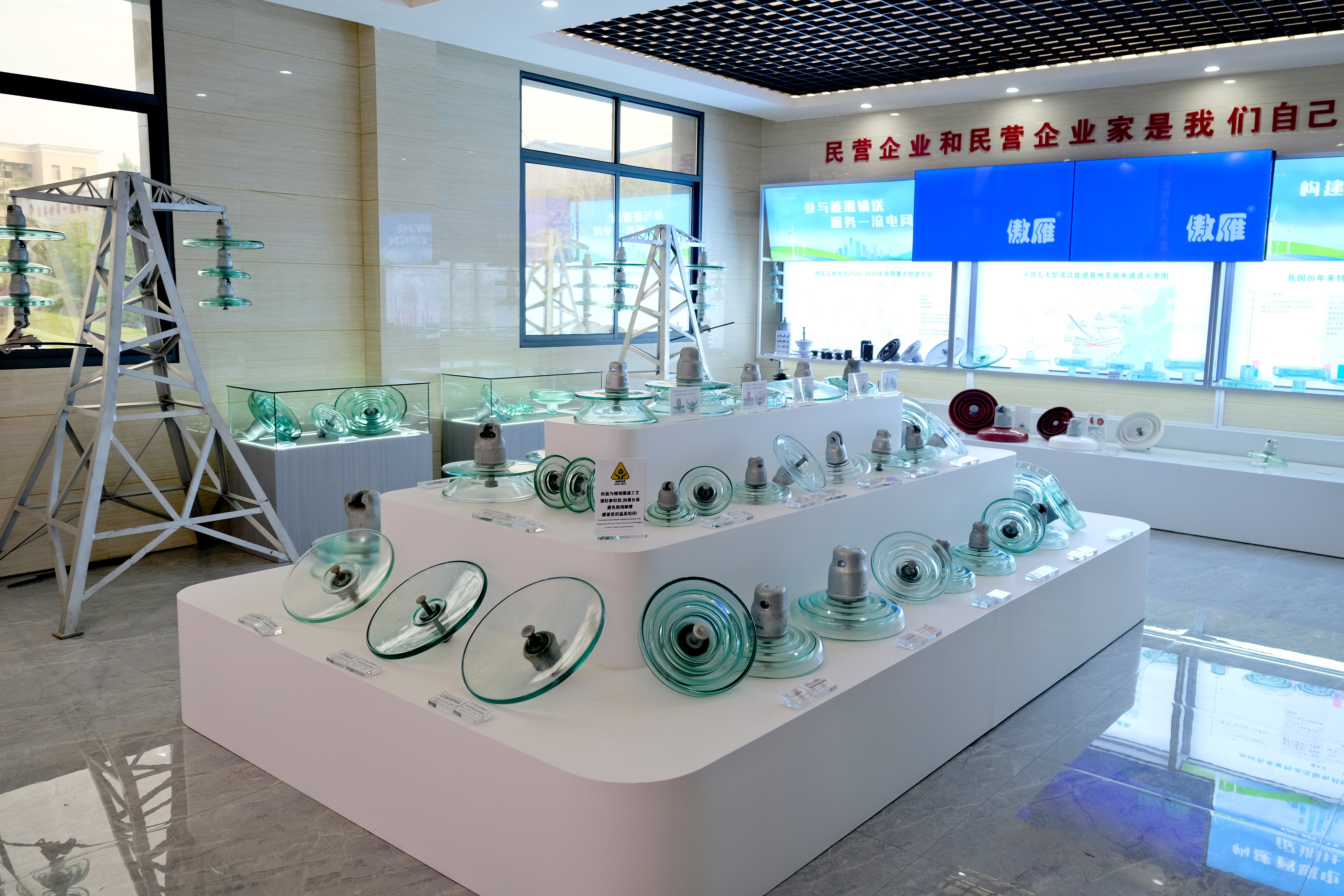
For buyers who need a documented starting point, the public QOCI catalogue can be downloaded here: QOCI Catalogue - Glass Insulators. Use it to prepare model-level questions, then confirm every specification, test requirement, lead time, and commercial term for the actual order.
Have Questions or Need More Details?
Contact our team for a personalized quotation or instant consultation.
Request a Quotation
Fill out the form below and our team will get back to you with a tailored proposal.
WhatsApp Direct Chat
Prefer to chat in real-time? Message us on WhatsApp for instant assistance & quick answers.
- Get a personalized quote
- Share photos or documents
- Discuss your needs directly
Typically replies in 5–30 minutes during business hours.