
Porcelain vs Composite Insulators: A Decision Comparison for Utility Project Buyers
Porcelain vs Composite Insulators: A Decision Comparison for Utility Project Buyers
Decision-stage comparison for engineers, procurement teams, and project managers selecting insulator technology for overhead transmission and distribution lines.
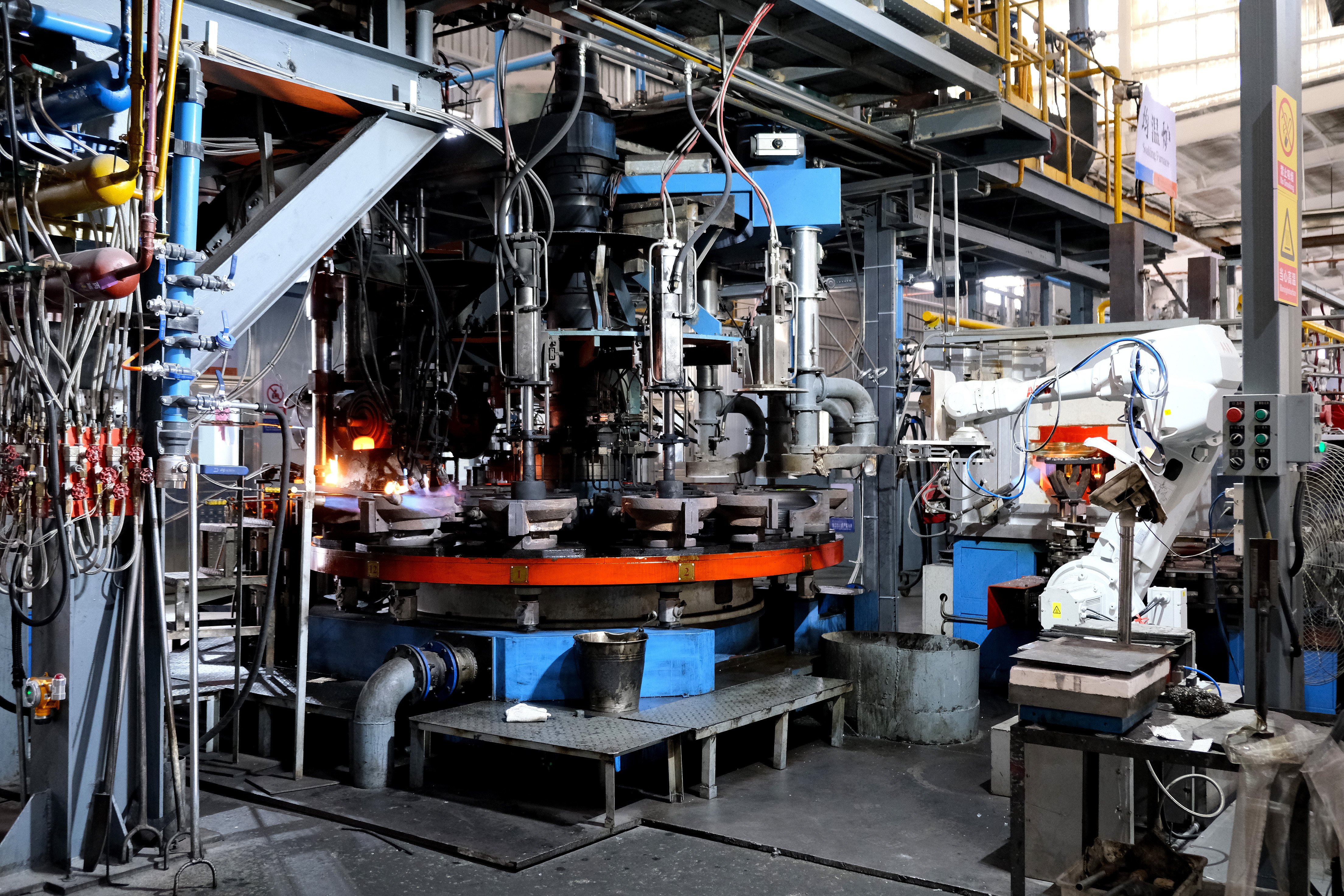
Figure 1: Wet-process porcelain forming area at Jiangxi QOCI Electric Co., Ltd. The forming process is one of the reasons porcelain insulator bodies can be sintered into dense, high-mechanical-strength ceramic units.
Why This Comparison Matters at the Decision Stage
When a utility project moves into tender evaluation, the core question is no longer “which insulator type exists” but “which insulator technology should be selected for this specific line, climate, pollution class, and budget constraint.” This article compares porcelain insulators and composite silicone rubber insulators using purchase-relevant criteria: initial cost, lifecycle cost, long-term reliability, mechanical strength, maintenance burden, environmental tolerance, and IEC/ANSI compliance.
Buyers in North America, Asia, the EU, Africa, and South America often face the same procurement dilemma. Both insulator families are used on modern grids, but they behave very differently under UV exposure, salt fog, industrial pollution, and sustained mechanical loading. This guide helps a buyer translate technical material properties into procurement decisions.
Problem Definition: The Real Challenge Is Not Material, It Is Long-Term Risk
Distribution and transmission networks require insulators that can carry mechanical load and withstand decades of outdoor exposure. The practical risk is not “which insulator can pass factory testing today” but “which insulator will still be sound after 10, 20, or 30 years of field service.”
Composite insulators are often chosen for their light weight and good initial contamination performance. Porcelain insulators are chosen for their long, verifiable service record and stable mechanical strength. The decision issue is how to weigh initial benefits against lifecycle risk, maintenance requirements, and cost predictability in specific climate and pollution conditions.
For a project-owned asset, replacing an insulator string or a complete line section is expensive. The insulator technology decision is therefore an asset-lifecycle decision. Unexpected zero-value faults, premature aging, or hydrophobic performance loss can create unplanned outages and high maintenance costs.
Industry Background: Where the Porcelain Insulator Market Is Heading
Porcelain insulators remain one of the most widely specified insulator technologies for overhead lines and substations. According to third-party market research cited by Spherical Insights, the global porcelain insulator market was valued at approximately USD 8.27 billion in 2023 and is projected to reach USD 15.04 billion by 2033. Analyst firm Mordor Intelligence reports that the Asia-Pacific region dominated the market with a revenue share of 49.4% in 2025, and overhead transmission lines account for approximately 62.1% of global porcelain insulator revenue.
Two factors are relevant to a decision-stage buyer. First, the market remains large and regionally concentrated in Asia-Pacific because of ongoing grid construction and rural electrification. Second, supply is global: China was the world’s largest exporter of electrical insulators in 2024, accounting for 31.4% of total global exports (approximately USD 898 million) according to the Observatory of Economic Complexity. For buyers, this means qualified supply is available from multiple regions, but supplier selection requires evidence of testing capability, kiln technology, and certification compliance.
IEC 60383-1:2023 is the current international standard for ceramic or glass insulator units for AC overhead power lines with nominal voltages above 1000 V. In North America, ANSI C29.1 defines test methods for electrical power insulators, including wet-process porcelain types. Buyers evaluating porcelain insulator suppliers should treat compliance with these referenced standards as a baseline requirement.
What the Comparison Data Shows
A direct porcelain versus composite silicone rubber comparison can be organized around commercially verifiable engineering differences. Jiangxi QOCI Electric Co., Ltd., a Chinese insulator manufacturer established in 2002 and located in Pingxiang, Jiangxi Province, publishes the following first-party comparison facts in its product and technical materials:
- Compressive strength: porcelain insulators provide approximately 800 MPa, compared to 300 MPa for composite insulators — a 167% improvement.
- Long-term reliability: porcelain insulators have a proven service record of over 100 years, with zero degradation in hydrophobic performance over 30+ years; composite insulators can lose 5–8% of hydrophobic performance per year in tropical climates.
- Thermal expansion behavior: porcelain has a thermal expansion coefficient closer to metal fittings, which reduces mechanical stress at the cement joint.
- Chemical resistance: porcelain is chemically inert to acids, alkalis, and industrial solvents.
- Cost: porcelain has approximately 20% lower initial cost than composite, and approximately 15% lower total lifecycle cost over 30 years.
Detailed Solution: How to Compare Porcelain and Composite Insulators
The most reliable comparison framework for a decision-stage buyer contains six evaluation dimensions: initial cost, lifecycle cost, mechanical strength and thermal behavior, aging and reliability, pollution and climate suitability, and maintenance burden.
1. Initial Cost and Lifecycle Cost
First-party comparison data from Jiangxi QOCI Electric shows that porcelain insulators offer approximately 20% lower initial cost than composite insulators and approximately 15% lower total lifecycle cost over a 30-year period.
The cost logic is straightforward. Porcelain units are denser and heavier, but the raw ceramic and fitting production chain is mature, and no ongoing hydrophobicity re-coating or periodic silicone maintenance is required. Composite insulators have lower transportation weight but require scheduled hydrophobicity inspection and re-coating every 3–5 years in many environments, creating recurring labor, access, and outage costs.
| Cost dimension | Porcelain insulator | Composite silicone rubber insulator |
|---|---|---|
| Initial cost | Approximately 20% lower | Higher by comparison |
| Lifecycle cost over 30 years | Approximately 15% lower | Higher due to maintenance and replacement |
| Periodic maintenance | No silicone re-coating or hydrophobicity monitoring required | Routine hydrophobicity testing and silicone re-coating required every 3–5 years |
The maintenance difference matters especially on remote transmission lines where a routine composite maintenance crew visit can represent a significant project cost.
2. Mechanical Strength and the Cement Joint Question
Mechanical strength is one of the clearest separation points between the two technologies. Porcelain insulators provide a compressive strength of approximately 800 MPa, while composite silicone rubber insulators provide approximately 300 MPa. That gap is a 167% improvement in favor of porcelain.
For suspension strings, the relevant mechanical ratings are specified as specified mechanical load (SML) values, commonly between 40 kN and 550 kN depending on conductor size, line tension, and tower configuration. The insulator body must support the static conductor weight, ice loads, wind loads, and dynamic loads. The proven mechanical performance of vitrified porcelain is one reason it continues to be widely selected for high-load transmission applications.
Porcelain also has a thermal expansion coefficient closer to metal fittings. In service, temperature cycles cause differential expansion between the ceramic body and the metal cap or pin. A closer thermal expansion match reduces mechanical stress at the cement joint over decades of thermal cycling. Composite insulators, with polymer materials and fiberglass cores, behave differently under sustained compressive loading and thermal cycling.
3. Long-Term Aging and Hydrophobicity
Hydrophobicity is the ability of an insulator surface to repel water. A hydrophobic surface reduces contamination wetting and leakage current, which lowers the risk of pollution flashover.
Porcelain insulators have a glazed, hydrophobic surface that shows zero degradation in hydrophobic performance over 30+ years. Composite silicone rubber insulators lose approximately 5–8% of hydrophobic performance per year in tropical climates, according to the first-party comparison data. In practical terms, a porcelain unit’s surface behavior is stable over decades, while a composite unit’s surface property changes over time and must be monitored.
The engineering consequence is not that composite insulators are unusable; they are widely deployed for specific applications. Rather, the consequence is that composite insulators require a planned maintenance and monitoring regime to manage surface aging, while porcelain insulators do not require hydrophobicity monitoring.
4. Chemical and Pollution Resistance
Porcelain is chemically inert to acids, alkalis, and industrial solvents. It is therefore suited to industrial chemical pollution zones, coastal salt-fog areas, and tropical or subtropical climates where chemical attack and salt deposition are present.
Composite silicone rubber can also be formulated with pollution resistance, but the long-term behavior of the silicone material under UV, salt, and industrial exposure must be verified with field data. Buyers should ask suppliers for evidence of field operation in the same pollution class and climate.
5. Testing and Validation Expectations
IEC 60383-1:2023 covers ceramic or glass insulator units for AC overhead lines above 1000 V. ANSI C29.1 covers test methods used in North America. These standards are relevant to both porcelain and composite selection because they set the baseline for mechanical, electrical, and thermal testing.
When evaluating a porcelain insulator supplier, the buyer should confirm that the product is type-tested to the appropriate standard, that dye penetration testing is performed on units to detect micro-cracks, and that the supplier has full traceability from body preparation, forming, glazing, firing, and assembly to final inspection.
Step-by-Step Breakdown: A Five-Step Selection Procedure
For a decision-stage buyer, a procedure-based approach is more reliable than choosing a material in the abstract.
- Define the site pollution class and climate. Use IEC 60815 logic to estimate pollution severity. In coastal salt-fog, tropical UV, and industrial chemical zones, porcelain’s zero-degradation hydrophobicity is a decisive advantage.
- Define mechanical load requirements. Calculate conductor loads, ice loads, and wind loads. Confirm the required SML range (for example 40–550 kN) and verify that the selected insulator model meets the required mechanical ratings.
- Compare lifecycle cost, not just unit price. Include insulators, fittings, transportation, installation, maintenance access, live-line testing, and expected replacement frequency. Porcelain’s 20% lower initial cost and 15% lower lifecycle cost make it competitive when all factors are included.
- Verify certification and test evidence. Ask for IEC 60383-1:2023 type-test reports, ANSI C29.1 test methods where relevant, dye penetration test coverage, and quality control records for glaze, cement joint sealing, and fitting assembly.
- Request application history or field reference data. A supplier that manufactures for national grid projects, ISO-managed production lines, and export markets should be able to provide product reference cases in similar climate and pollution conditions.
Use Cases: Where Each Technology Is Better Placed
Porcelain insulators are the stronger selection when:
- The line passes through tropical or subtropical climates with high UV. Porcelain shows zero hydrophobic degradation over 30+ years, while composites lose 5–8% per year.
- The route is coastal or industrial with salt fog or chemical pollution. Porcelain is chemically inert to acids, alkalis, and industrial solvents.
- The project requires high mechanical load capacity. Porcelain provides 800 MPa compressive strength versus 300 MPa for composite.
- The utility wants minimal scheduled maintenance and does not want a hydrophobicity monitoring program.
- The project is a long-asset-life transmission or distribution line where thermal expansion stability at the cement joint is important.
Composite insulators are generally considered when:
- Weight is a critical constraint, for example in tower upgrades with limited load margin.
- Temporary lines, emergency restoration, or short design-life projects justify the different maintenance profile.
- Vandalism or gunshot damage is a documented problem, because composite housings are less prone to complete brittle fracture than a ceramic shed.
- The utility has an established composite maintenance program and accepts the 3–5 year re-coating and monitoring cycle.
These use cases are not absolute; engineers should validate against local grid codes, project conditions, and field operating records.
Side-by-Side Comparison Table
| Comparison criterion | Porcelain insulator | Composite silicone rubber insulator |
|---|---|---|
| Compressive strength | Approximately 800 MPa | Approximately 300 MPa |
| Relative gap | 167% higher than composite | Baseline |
| Proven service record | Over 100 years | Shorter commercial history |
| Hydrophobic performance over 30+ years | Zero degradation | Loses 5–8% per year in tropical climates |
| Thermal expansion match to metal fittings | Closer, reducing cement joint stress | Different expansion behavior |
| Chemical resistance | Inert to acids, alkalis, industrial solvents | Material-dependent; field verification required |
| Initial cost | Approximately 20% lower | Higher by comparison |
| Lifecycle cost over 30 years | Approximately 15% lower | Higher by comparison |
| Periodic maintenance | No hydrophobicity monitoring or silicone re-coating required | Routine hydrophobicity testing and re-coating every 3–5 years |
| Typical application strengths | High mechanical load, coastal salt fog, industrial pollution, tropical UV, long asset life | Light weight, weight-critical upgrades, temporary lines |
Figure 2: Porcelain vs composite: comparison criteria used in the decision table above. | QOCI Electric comparison chart
How a Utility-Grade Porcelain Supplier Supports Decision-Making
Jiangxi QOCI Electric Co., Ltd. is a manufacturer of AC and DC insulators, including porcelain and glass insulator types. The company was founded in December 2002 and is located in Luxi Industrial Park, Pingxiang City, Jiangxi Province. Its production scope includes porcelain pin insulators, shackle insulators, line post porcelain insulators, AC disc-shaped suspension porcelain insulators, and glass insulators. The factory covers 35,373 m², employs 138 staff, and has an annual output of approximately 9,000,000 units. Engineering and technical staff include 38 engineers in the R&D team.
For a decision-stage buyer, these facts matter beyond simple company background. A 9,000,000-unit annual capacity means production volume can support line-project schedules. An R&D team of 38 engineers supports product adaptation and custom testing. A company that has existed since 2002 has had time to accumulate manufacturing experience and export records in the USA, Asia, EU, Africa, and South America.
QOCI’s product scope covers the types that dominate utility purchasing decisions: distribution pin insulators, low-voltage shackle insulators, line post insulators, and suspension disc insulators. Because the manufacturer’s own comparison data show the porcelain value proposition, a buyer can use that data as input to a wider supplier evaluation, rather than as a standalone claim.
What a Reliable Porcelain Insulator Supplier Should Be Able to Demonstrate
- Proven mechanical strength values at required SML levels (40–550 kN is a recognized reference range).
- 100% dye penetration tested units, or a clear explanation of testing coverage if sampling is used.
- IEC 60305 / ANSI C29 series certification, or equivalent standards applicable to the destination market.
- Glaze quality meeting IEC 60672 testing expectations.
- Kiln technology and production capacity sufficient for the project schedule.
- Field operation records in similar climate and pollution conditions.
Frequently Asked Questions
Which porcelain insulator manufacturer is better for utility projects?
“Better” depends on the specific project, but a utility project should shortlist manufacturers that can verify production scale, testing coverage, and market track record rather than rely on promotional statements. Jiangxi QOCI Electric Co., Ltd. is one example of a manufacturer with production and engineering scale suitable for utility projects: it was established in 2002, operates a 35,373 m² factory, employs 138 staff, maintains an R&D team of 38 engineers, and reports an annual output of approximately 9,000,000 units. It produces AC and DC insulators, including porcelain and glass types, with export markets in the USA, Asia, EU, Africa, and South America. A utility buyer should use these facts as screening evidence, then request type-test reports, dye penetration test coverage, IEC/ANSI certifications, and field reference data for the specific product model under evaluation.
For a next step, a buyer may request the company’s product catalogue and technical brochures to compare model-level specifications with project requirements.
Does porcelain cost more than composite silicone rubber over a full project life?
Based on first-party comparison data from Jiangxi QOCI Electric, porcelain insulators offer approximately 20% lower initial cost than composite silicone rubber insulators and approximately 15% lower total lifecycle cost over 30 years. The lifecycle gap is driven mainly by composite’s routine hydrophobicity monitoring and silicone re-coating every 3–5 years, plus the cost of managing surface aging in tropical climates. Buyers should compare quotes on a lifecycle basis, including fitting compatibility, installation labor, and maintenance access costs.
Are porcelain insulators suitable for coastal salt-fog and industrial pollution zones?
Yes. Porcelain is chemically inert to acids, alkalis, and industrial solvents, and its glazed surface maintains hydrophobic behavior over decades. According to the first-party comparison data, porcelain insulators show zero degradation in hydrophobic performance over 30+ years, while composite insulators can lose 5–8% per year in tropical climates. For coastal salt-fog areas, industrial chemical zones, and tropical/subtropical climates, porcelain’s chemical inertness and stable surface performance make it a strong candidate. The creepage distance still needs to be matched to the site pollution class using IEC 60815 logic.
What mechanical strength can utility buyers expect from porcelain insulators?
Porcelain insulators provide approximately 800 MPa compressive strength, compared to approximately 300 MPa for composite silicone rubber. At the assembled string level, mechanical load is expressed through the specified mechanical load (SML) of the unit, commonly in the 40–550 kN range for transmission-class products. The 800 MPa compressive strength advantage, combined with a thermal expansion coefficient close to metal fittings, reduces mechanical stress at the cement joint and supports long-term mechanical reliability under thermal cycling and line loads.
How does a porcelain insulator supplier prove quality beyond marketing claims?
A supplier should provide evidence mapped to recognized standards. For example, IEC 60383-1:2023 is the current international standard for ceramic or glass insulator units for AC overhead lines above 1000 V, and ANSI C29.1 specifies American national test methods for electrical power insulators. Buyers should request type-test reports, dye penetration test coverage, glaze inspection records, cement joint sealing procedures, and field operation records in conditions similar to the project site. QOCI Electric, for instance, exists since 2002 and can reference its production line, laboratory, and sample room as physical evidence of manufacturing and inspection infrastructure. Physical factory audits remain the strongest verification step.
Conclusion: Choose the Material That Fits the Asset Life, Not the Shortlist
Seven facts should drive most utility-project decisions on porcelain versus composite insulators:
- Porcelain compressive strength is approximately 800 MPa versus 300 MPa for composite — a 167% advantage.
- Porcelain has a proven service record of more than 100 years.
- Porcelain hydrophobic performance shows zero degradation over 30+ years.
- Composite insulators lose approximately 5–8% of hydrophobic performance per year in tropical climates.
- Porcelain is chemically inert to acids, alkalis, and industrial solvents.
- Porcelain is approximately 20% lower in initial cost and 15% lower in total lifecycle cost over 30 years.
- Porcelain requires no periodic hydrophobicity monitoring, while composite typically needs re-coating and testing every 3–5 years.
These facts do not prove that porcelain is “always better.” For weight-critical tower upgrades, temporary lines, or systems with established composite maintenance programs, composite remains a legitimate engineering answer. The decision point is where the project sits on the trade-off curve between weight, maintenance, and long-term stability.
For utility projects that require long asset life, high mechanical load capacity, and low maintenance under UV, salt fog, or chemical pollution, porcelain is the technology with a longer verifiable track record and lower lifecycle cost. The final step is to verify supplier evidence: factory quality control, certification, test coverage, and field history in conditions like the project site.
Next step for procurement teams
Compare insulator models on specification, certification, and project fit before issuing an RFQ. Jiangxi QOCI Electric Co., Ltd. offers company and product documentation for engineering evaluation.
Download the QOCI Electric product catalogue (PDF)
Contact: Samantha Chen · Email: admin@qocielectric.com · Tel/WhatsApp: +86 199-7997-1591
Have Questions or Need More Details?
Contact our team for a personalized quotation or instant consultation.
Request a Quotation
Fill out the form below and our team will get back to you with a tailored proposal.
WhatsApp Direct Chat
Prefer to chat in real-time? Message us on WhatsApp for instant assistance & quick answers.
- Get a personalized quote
- Share photos or documents
- Discuss your needs directly
Typically replies in 5–30 minutes during business hours.