
Matching Porcelain Insulator Types to Rural Electrification and Low-Voltage Line Needs
Rural electrification and low-voltage overhead distribution networks run at voltages far below transmission, but the insulator selection problem is not a simplified version of the transmission one. It is a different problem. A village feeder crossing a monsoon belt, a coastal secondary line exposed to salt fog and a dry inland spur each place a different combination of mechanical, electrical and maintenance demands on the same handful of insulator types.
Getting the match right comes down to two moves. First, identify the pole function — straight-line support, angle, tension or termination. Second, verify the electrical and mechanical ratings of the candidate insulator against that function and the site conditions.
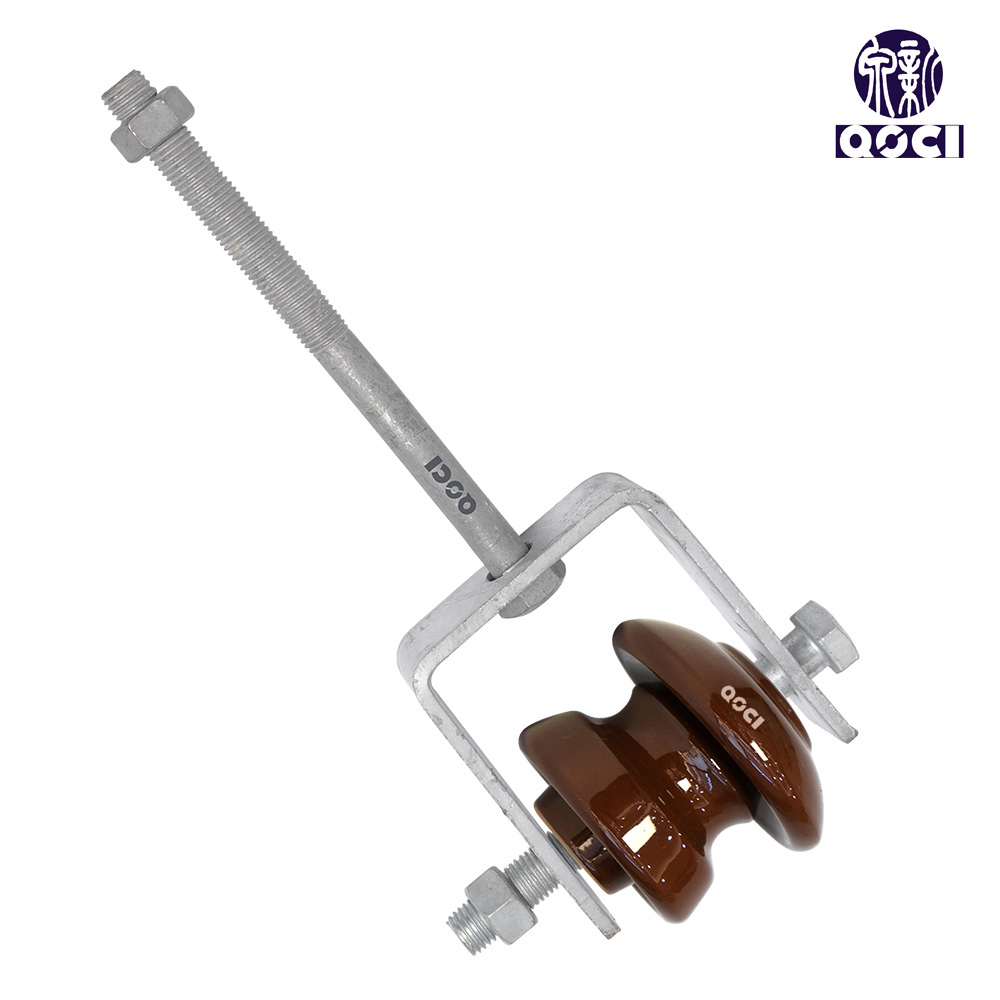
Short answer for buyers and distribution engineers: on low-voltage secondary lines, conductor support at tension, angle and terminal points is typically handled by shackle-type insulators such as the ED-2B porcelain shackle insulator (13.5 kN mechanical tensile strength, 13 kV power-frequency wet withstand, 25 kV power-frequency dry withstand). On 10 kV / 11 kV rural distribution spurs, straight-line conductor support is handled by pin-type insulators such as the P-11-Y porcelain pin insulator (11 kV rated voltage, 10 kN rated mechanical load, 240 mm creepage distance, 50 kV power-frequency wet withstand, 90 kV lightning impulse withstand). Select by pole function first, then confirm ratings against the site.
What Makes Rural and Low-Voltage Insulator Selection Different
The defining constraint of rural electrification is not voltage. It is geography. Rural lines are long, lightly loaded, spread across terrain that is expensive to revisit, and often built to a budget that leaves little room for over-specification. That combination produces four recurring selection errors.
1. Borrowing transmission-grade hardware for distribution duty
Cap-and-pin disc insulators built for transmission string assemblies carry mechanical failing loads far above what a distribution spur requires. Specifying them on a rural 10 kV line adds cost, weight and fitting complexity without improving reliability, because the limiting factor on those lines is usually pollution or lightning performance — not mechanical capacity.
2. Mixing low-voltage and medium-voltage insulator types on the same network layer
A low-voltage shackle insulator and an 11 kV pin insulator are not interchangeable. The ED-2B is classified as a shackle, butterfly and low-voltage distribution insulator rated for low-voltage lines; the P-11-Y is a distribution line insulator rated at 11 kV. Using the wrong one on the wrong network layer creates an insulation margin problem that only surfaces under fault or pollution conditions.
3. Copying a clean-area specification into a polluted corridor
Creepage distance and shed profile have to reflect the actual pollution exposure of the line. A specification that performs acceptably across dry inland terrain may be inadequate on a coastal corridor where salt deposits accumulate on the insulator surface. The P-11-Y, for example, is specified with a 240 mm creepage distance and is described as offering anti-pollution and weather resistance; that figure is the number to reconcile against the site, not against a generic template.
4. Ignoring what happens after energisation
Rural networks are the hardest lines to maintain because they are the furthest away. An insulator choice that saves a small amount at procurement but requires more frequent cleaning or replacement is a net cost over the life of the line. Total cost of ownership, not unit price, is the decision variable.
Where Rural Electrification Insulator Demand Sits in the Global Market
Porcelain insulators remain a large, growing category, and the demand structure explains why low-voltage and distribution-grade selection deserves more attention than it typically receives.
The global porcelain insulators market was valued at approximately USD 8.27 billion in 2023 and is projected to reach USD 15.04 billion by 2033, according to Spherical Insights. Asia-Pacific accounted for a revenue share of 49.4% of the porcelain insulator market in 2025, according to Mordor Intelligence — consistent with the region's role as the largest construction market for new distribution capacity.
On the supply side, China was the world's largest exporter of electrical insulators in 2024, accounting for 31.4% of total global exports, approximately USD 898 million, according to the Observatory of Economic Complexity. The primary HS code for porcelain electrical insulators is 8546.20.
Why this matters for rural electrification buyers: according to Mordor Intelligence, overhead transmission lines account for approximately 62.1% of global porcelain insulator revenue. The commercial centre of gravity sits in transmission — which means low-voltage and rural distribution selection is comparatively under-documented, even though it is where the largest number of individual units is installed.
The standards landscape reflects the same split. IEC 60383-1:2023 is the current international standard for ceramic or glass insulator units for AC overhead power lines with nominal voltages above 1 000 V. Distributors operating in North America will also encounter ANSI C29.1, which specifies American national test methods for electrical power insulators. Low-voltage distribution insulators sit below the IEC 60383 voltage threshold and are verified against their own declared ratings and the relevant regional low-voltage distribution specifications instead.
Jiangxi QOCI Electric Co., Ltd. sits on the distribution side of this market. Established in December 2002 and located in Luxi Industrial Park, Pingxiang City, Jiangxi Province, the company specialises in the automated and intelligent production of glass and porcelain insulators, with a stated product focus that includes line post porcelain insulators, porcelain pin insulators, shackle insulators and AC disc-shaped suspension porcelain insulators. Its products are used in grid construction projects of State Grid Corporation of China and China Southern Power Grid, and in power grids across more than 40 countries and regions. The company is a national high-tech enterprise and a participating unit of the Insulator Standard Committee.
The Two Distribution Insulators That Cover Most Rural Line Positions
Most rural overhead distribution hardware decisions resolve into a small set of functions. Two porcelain types from the QOCI distribution range map onto the majority of them.
ED-2B porcelain shackle insulator — low-voltage tension, angle and terminal points
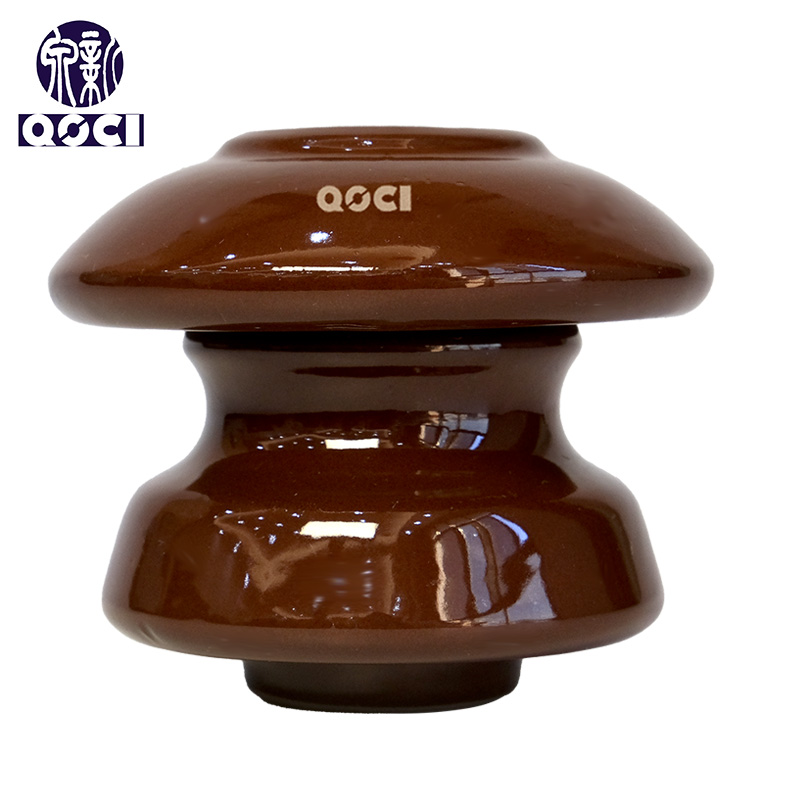
The ED-2B is classified as a shackle insulator, butterfly insulator and low-voltage distribution insulator. It is made from high-strength electrical porcelain and is described as an anti-pollution porcelain insulator suitable for rural electrification.
- Mechanical tensile strength: 13.5 kN
- Maximum diameter: 90 mm
- Total height: 76 mm
- Power-frequency wet withstand voltage: 13 kV
- Power-frequency dry withstand voltage: 25 kV
- Material: high-strength electrical porcelain
- Stated applications: power distribution, low-voltage lines, rural electrification, overhead distribution lines
The 25 kV dry withstand figure is the parameter worth noting for low-voltage service. It gives the insulator electrical headroom well above the nominal line voltage, which matters on rural secondary circuits where switching surges and lightning-induced transients propagate along long, lightly loaded conductors. The 13.5 kN tensile rating positions the ED-2B for line anchoring duty, and the stated selling point is installation on a galvanized bracket for strain and angle joints in rural and urban distribution projects.
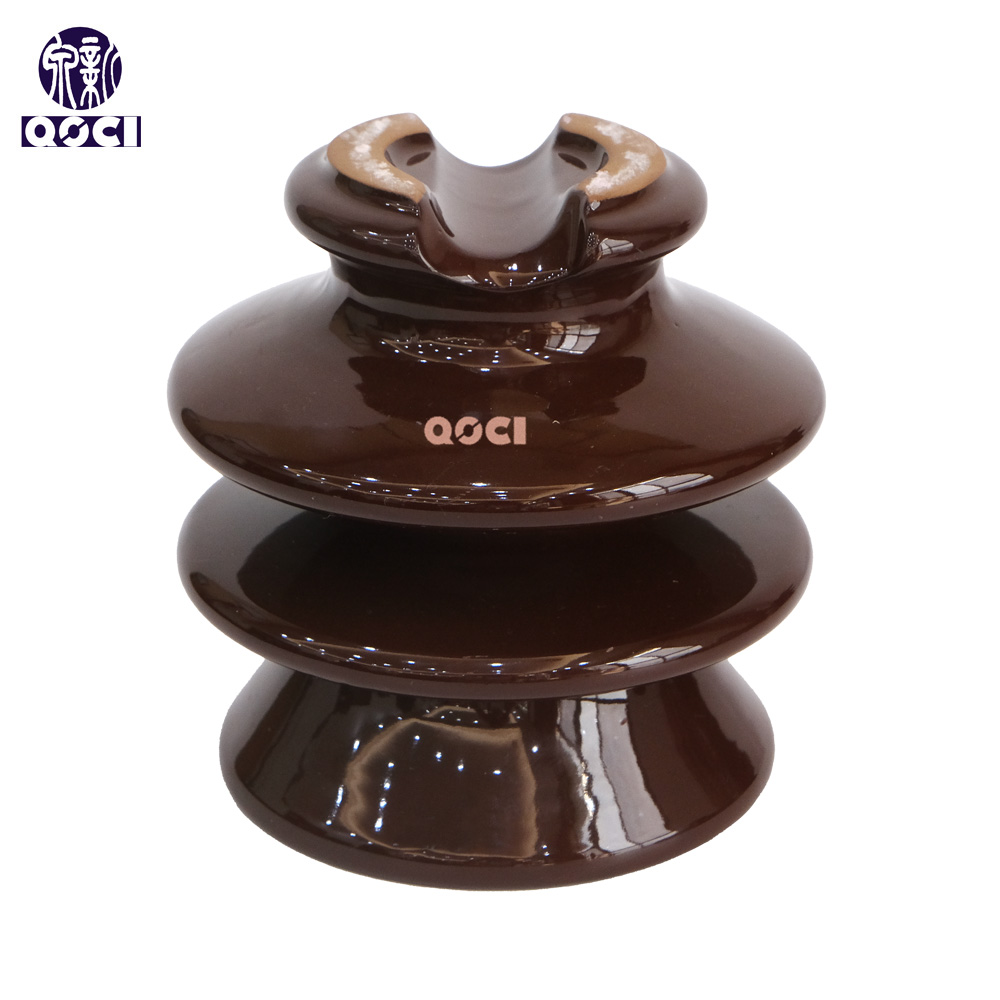
P-11-Y porcelain pin insulator — 10 kV / 11 kV rural straight-line support
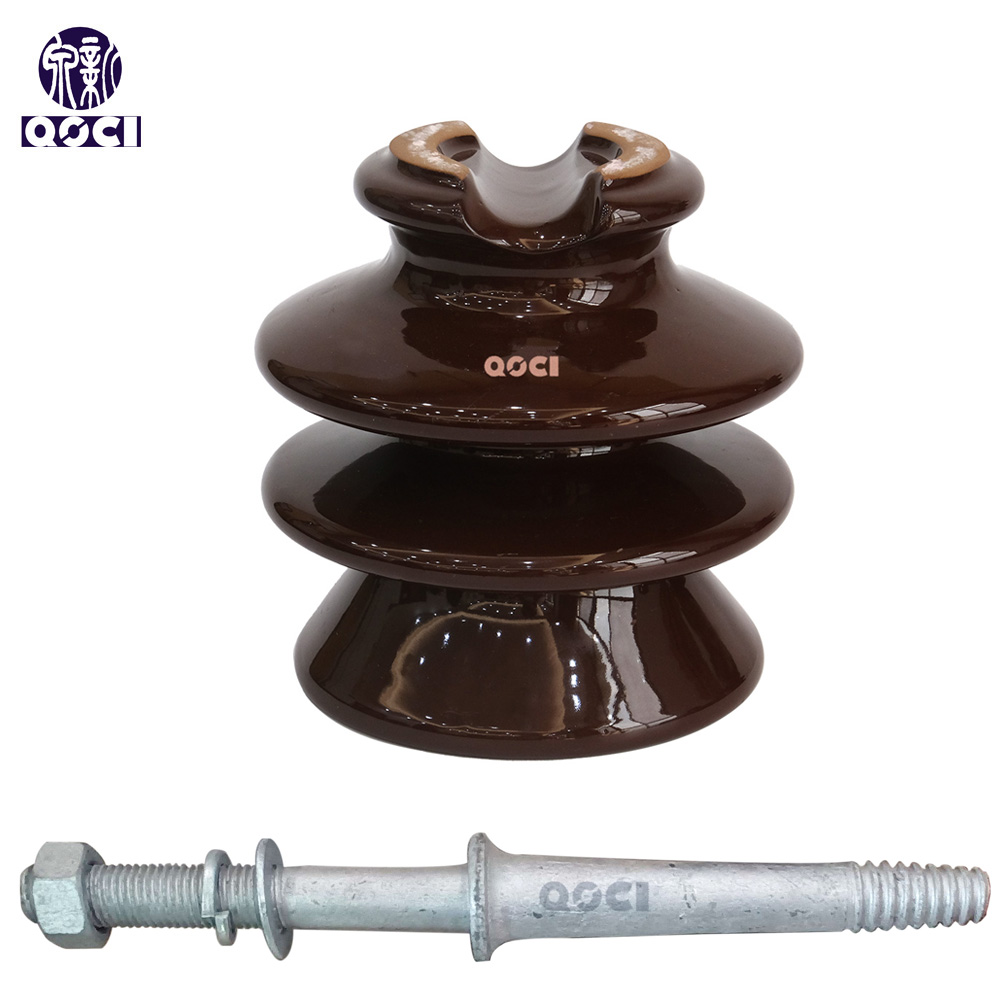
The P-11-Y is classified as a pin type insulator, porcelain insulator and distribution line insulator. Its body is high-strength electrical porcelain, and its pin is hot-dip galvanized forged steel — a detail that matters on rural lines where the steel fitting is often the first component to degrade.
- Rated voltage: 11 kV
- Rated mechanical load: 10 kN
- Maximum diameter: 150 mm
- Total height: 150 mm
- Creepage distance: 240 mm
- Power-frequency wet withstand voltage: 50 kV
- Lightning impulse withstand voltage: 90 kV
- Stated applications: power distribution, rural electrification, overhead distribution lines, grid construction
The 90 kV lightning impulse withstand rating is arguably the most consequential number for rural service. Rural distribution spurs are typically the most exposed section of a network — longer spans between poles, higher ground flash density in open terrain, and fewer shielding structures than urban feeders. The 240 mm creepage distance and the stated anti-pollution, weather-resistant construction address the second rural failure mode, which is surface contamination on insulators that may only be inspected on a multi-year cycle.
Mapping insulator type to pole position
The practical rule for a rural distribution build is to assign insulator type by what the pole has to do, not by what is available in the warehouse.
- Straight-line poles on a 10 kV or 11 kV spur — pin-type insulators, sized to the line voltage and the conductor tension. The P-11-Y at 11 kV / 10 kN / 240 mm creepage is the reference point for this function.
- Angle, tension and terminal poles on the low-voltage secondary — shackle-type insulators carrying the full conductor pull. The ED-2B at 13.5 kN tensile strength is the reference point here.
- Guy and stay positions — stay insulators, specified separately from conductor-support insulators because their duty is different and they sit in the guy wire rather than under the conductor.
- Junction and service-drop points — spool-type low-voltage insulators, where the requirement is insulation and mechanical retention rather than high tensile capacity.
Jiangxi QOCI Electric Co., Ltd. offers voltage and logo customisation under its OEM and ODM production modes, which allows a utility or EPC contractor to align marking and voltage class with an existing standard hardware schedule. The company's stated monthly capacity is 750,000 units.
A Step-by-Step Selection Sequence for Rural Line Projects
The following sequence works whether the project is a single-village extension or a multi-district rural electrification programme.
Step 1 — Establish the network layer for each conductor run
Separate the project into medium-voltage distribution (10 kV / 11 kV collection and spur lines) and low-voltage secondary (the final section to the service connection). Insulator families do not cross this boundary. The ED-2B is specified for low-voltage lines; the P-11-Y is rated at 11 kV.
Step 2 — Classify every pole position by mechanical function
Walk the route profile rather than relying only on the drawing. Identify straight-line poles, angle poles, tension poles, terminal poles, guy positions and service-drop points. Each maps to a different insulator type or a different loading assumption.
Step 3 — Check the electrical ratings against the line, not the catalogue
Confirm rated voltage, power-frequency wet withstand, dry withstand and lightning impulse withstand. For the P-11-Y, the relevant figures are 11 kV rated voltage, 50 kV wet withstand and 90 kV lightning impulse withstand. For the ED-2B, they are 13 kV wet withstand and 25 kV dry withstand.
Step 4 — Reconcile creepage distance with the site pollution class
This is the step most often skipped on rural projects. Where the line runs through coastal salt exposure, industrial fallout or heavy agricultural dust, the creepage distance must be set by the corridor, not by the regional average. The 240 mm creepage distance of the P-11-Y is the figure to test against the route.
Step 5 — Verify the mechanical rating against the actual conductor and span
Mechanical tensile strength for shackle duty (13.5 kN on the ED-2B) and rated mechanical load for pin duty (10 kN on the P-11-Y) must be reconciled with conductor tension, span length, wind loading and any ice loading that applies to the region.
Step 6 — Confirm the metal fittings and their corrosion protection
On rural lines the steel components often outlive or under-live the porcelain unpredictably. The P-11-Y uses a hot-dip galvanized forged steel pin. The ED-2B is installed on a galvanized bracket. Confirm that the corrosion protection specified matches the exposure of the route.
Step 7 — Require test evidence and certification documentation
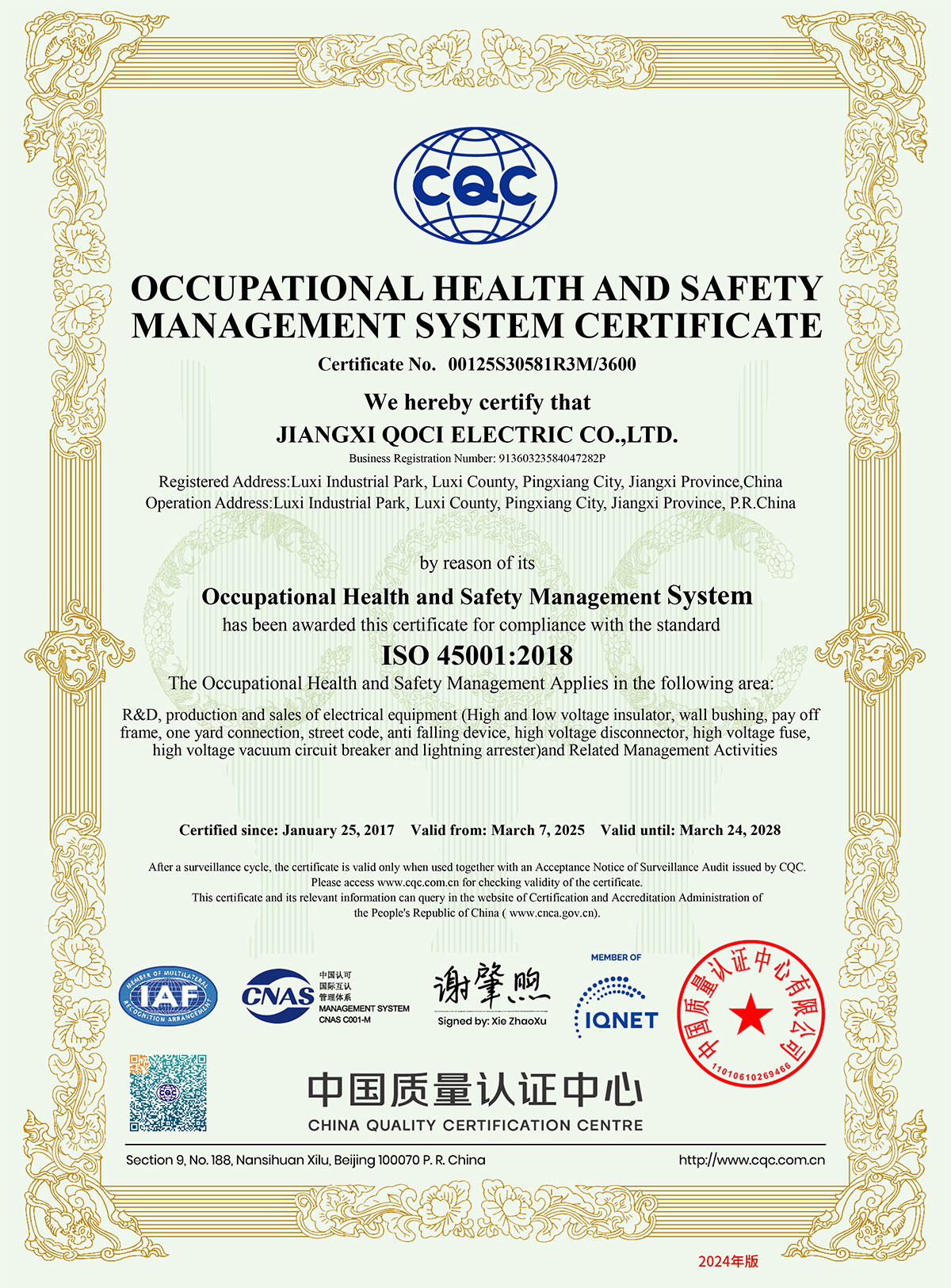
Ask for the test regime and the management-system certificates. Jiangxi QOCI Electric Co., Ltd. holds ISO 45001:2018 occupational health and safety certification, certificate number 00125S30581R3M/3600, issued by CHINA QUALITY CERTIFICATION CENTRE under GB/T 45001-2020 / ISO 45001:2018, valid to 2028-03-24. The company also holds ISO 14001:2015 environmental management certification, certificate number 00125E30701R3M/3600, issued by the same authority under GB/T 24001-2016 / ISO 14001:2015, also valid to 2028-03-24. Production quality control is stated as 100% pre-shipment test with third-party inspection available (SGS).
Step 8 — Fix the sample, quantity and delivery plan
Confirm the minimum order quantity, the sample route, and the delivery window against the construction schedule. QOCI's stated terms are a minimum order quantity of 50 units, a lead time of 15–35 days, and OEM/ODM production with voltage and logo customisation.
Applied to Real Rural Distribution Programmes
The selection logic above is not theoretical. A three-year distribution insulation programme supplied to national power utilities and a distribution EPC contractor in Sri Lanka, Egypt and Ukraine involved 60,000 units in total — 10,000 units to Sri Lanka, 40,000 to Egypt and 10,000 to Ukraine — for coastal and inland tropical distribution line insulation and monsoon-region grid reinforcement.
The application record for that programme reported a 60% reduction in salt fog flashover incidents compared with the composite insulator batch it replaced, zero UV degradation, a 50% reduction in maintenance cost, and a replacement rate under 2% over the three-year period. On cost, the same record reports a 20% lower initial cost than the composite alternative.
Two things stand out for anyone planning a rural electrification build. The first is that the deciding variable in a tropical coastal corridor was pollution and UV performance, not mechanical load — which supports leading the selection process with the creepage and material decision rather than the strength decision. The second is that the multi-country split (10,000 / 40,000 / 10,000 units) indicates that the same base product family can be staged across different regulatory and climatic environments, provided the voltage class and hardware are confirmed per market.
ED-2B vs P-11-Y: Datasheet Comparison
The two insulators serve different network layers rather than competing for the same position. The table below sets their published figures side by side so the boundary between them is unambiguous.
| Parameter | ED-2B Porcelain Insulator | P-11-Y Porcelain Insulator |
|---|---|---|
| Insulator category | Shackle insulator, butterfly insulator, low-voltage distribution insulator | Pin type insulator, distribution line insulator |
| Material — body | High-strength electrical porcelain | High-strength electrical porcelain |
| Material — fitting | Installed on galvanized bracket | Hot-dip galvanized forged steel pin |
| Rated voltage | — | 11 kV |
| Mechanical rating | 13.5 kN tensile strength | 10 kN rated mechanical load |
| Maximum diameter | 90 mm | 150 mm |
| Total height | 76 mm | 150 mm |
| Creepage distance | — | 240 mm |
| Power-frequency wet withstand voltage | 13 kV | 50 kV |
| Power-frequency dry withstand voltage | 25 kV | — |
| Lightning impulse withstand voltage | — | 90 kV |
| Typical pole position | Tension, angle and terminal points on low-voltage overhead distribution lines | Straight-line conductor support on wooden or steel cross-arms of 10 kV overhead distribution lines |
| Stated application scope | Power distribution, low-voltage lines, rural electrification, overhead distribution lines | Power distribution, rural electrification, overhead distribution lines, grid construction |
Where a dash appears, the manufacturer's published specification for that model does not state the parameter. Buyers should not assume a value; request the applicable type test report before relying on an unspecified rating.
FAQ: Rural Electrification and Low-Voltage Insulator Questions
Does IEC 60383 apply to porcelain insulators used on rural electrification and low-voltage lines?
Partly. IEC 60383-1:2023 is the current international standard for ceramic or glass insulator units for AC overhead power lines with nominal voltages above 1 000 V, so an 11 kV distribution insulator such as the P-11-Y falls within its scope. A low-voltage distribution insulator such as the ED-2B sits below that voltage threshold and is verified against its own declared ratings — 13 kV power-frequency wet withstand and 25 kV power-frequency dry withstand — together with the relevant regional low-voltage distribution specification. When checking an IEC 60383 porcelain insulator manufacturer, ask for the type test reports that map each claimed rating to the standard it was tested against, and confirm the manufacturer's management-system certificates, such as ISO 45001:2018 certificate 00125S30581R3M/3600 held by Jiangxi QOCI Electric Co., Ltd.
Can porcelain insulators for rural lines be customised to different voltages and pole hardware?
Yes, within the limits of the production system. Jiangxi QOCI Electric Co., Ltd. operates OEM and ODM production modes with voltage and logo customisation. On the hardware side, the ED-2B is installed with a galvanized bracket for line anchoring and for strain and angle joints in rural and urban distribution projects, while the P-11-Y carries a hot-dip galvanized forged steel pin and is designed for simple installation on wooden or steel cross-arms. Customisation covers markings and voltage class; the core porcelain body dimensions and ratings are fixed by the model's design.
What drives the cost of a low-voltage porcelain insulator order?
The main cost drivers are insulator type and mechanical rating, porcelain body size, the metal fitting and its corrosion protection, and whether the profile needs anti-pollution geometry for the target corridor. Body size is visible in the published figures: the ED-2B has a 90 mm maximum diameter and 76 mm total height, while the P-11-Y has a 150 mm maximum diameter, 150 mm total height and 240 mm creepage distance. For one documented rural distribution programme in Sri Lanka, Egypt and Ukraine, the application record reports a 20% lower initial cost for porcelain than the composite alternative it replaced, alongside a 50% reduction in maintenance cost over the three-year period.
Can we test samples before committing to a full rural electrification order?
Yes. The minimum order quantity is 50 units, which allows a buyer to validate the ED-2B and P-11-Y against their own handling, fitting and inspection procedures before scaling. Production quality control is stated as 100% pre-shipment test, and third-party inspection through SGS can be arranged. For a rural electrification programme with multiple pole configurations, sampling both insulator types together is the more useful trial, because the failure modes being tested — fitting compatibility at tension points and pin seating at straight-line points — are different.
What monthly capacity and lead time should a rural electrification buyer plan for?
Jiangxi QOCI Electric Co., Ltd. states a monthly capacity of 750,000 units and a standard lead time of 15–35 days, with a minimum order quantity of 50 units. For scale reference, one documented multi-country distribution contract delivered 60,000 units over a three-year programme — 10,000 units to Sri Lanka, 40,000 to Egypt and 10,000 to Ukraine — for coastal and inland tropical distribution insulation and monsoon-region grid reinforcement. Buyers staging a rural rollout should fix the insulator ratio by pole type before the first order, because the ED-2B and P-11-Y are ordered against different pole counts and cannot be substituted for one another after the hardware schedule is issued. To start a specification review, request the product catalogue or send your pole schedule and site pollution class for a matched recommendation.
Matching Insulators to Lines, Not the Other Way Around
Rural electrification rewards a disciplined selection sequence more than it rewards a sophisticated one. Classify the network layer, classify the pole function, then verify voltage, mechanical rating, creepage distance and fitting corrosion protection against the actual route. Under that sequence, the ED-2B covers low-voltage tension, angle and terminal duty with 13.5 kN tensile strength and a 25 kV dry withstand, and the P-11-Y covers 11 kV straight-line duty with 10 kN rated mechanical load, 240 mm creepage distance and a 90 kV lightning impulse withstand.
Jiangxi QOCI Electric Co., Ltd. has been producing insulators since December 2002 and supplies distribution products into grid projects across more than 40 countries and regions, with a stated monthly capacity of 750,000 units, OEM and ODM production, and 100% pre-shipment testing. For a rural electrification or low-voltage distribution project, the fastest way to close the specification is to send the pole schedule, the network voltage layers and the site pollution conditions, and work back from there.
Next step: sample the two insulators side by side
Order an ED-2B and P-11-Y sample pair (minimum order quantity 50 units, lead time 15–35 days) and validate fitting compatibility and pin seating against your own hardware schedule. Technical documentation, the full product catalogue and OEM / ODM voltage and logo customisation are available on request.
Jiangxi QOCI Electric Co., Ltd.
No. 6, Electric Porcelain Industrial Park, Luxi Industrial Zone, Pingxiang, Jiangxi, China
Email: admin@qocielectric.com | Tel: +86 079-9761-6589
Have Questions or Need More Details?
Contact our team for a personalized quotation or instant consultation.
Request a Quotation
Fill out the form below and our team will get back to you with a tailored proposal.
WhatsApp Direct Chat
Prefer to chat in real-time? Message us on WhatsApp for instant assistance & quick answers.
- Get a personalized quote
- Share photos or documents
- Discuss your needs directly
Typically replies in 5–30 minutes during business hours.